What Causes Water Damage in Charlotte Homes: Pipes, Storms and Aging Lines
What to Do First When Water Gets Into Your Charlotte Home
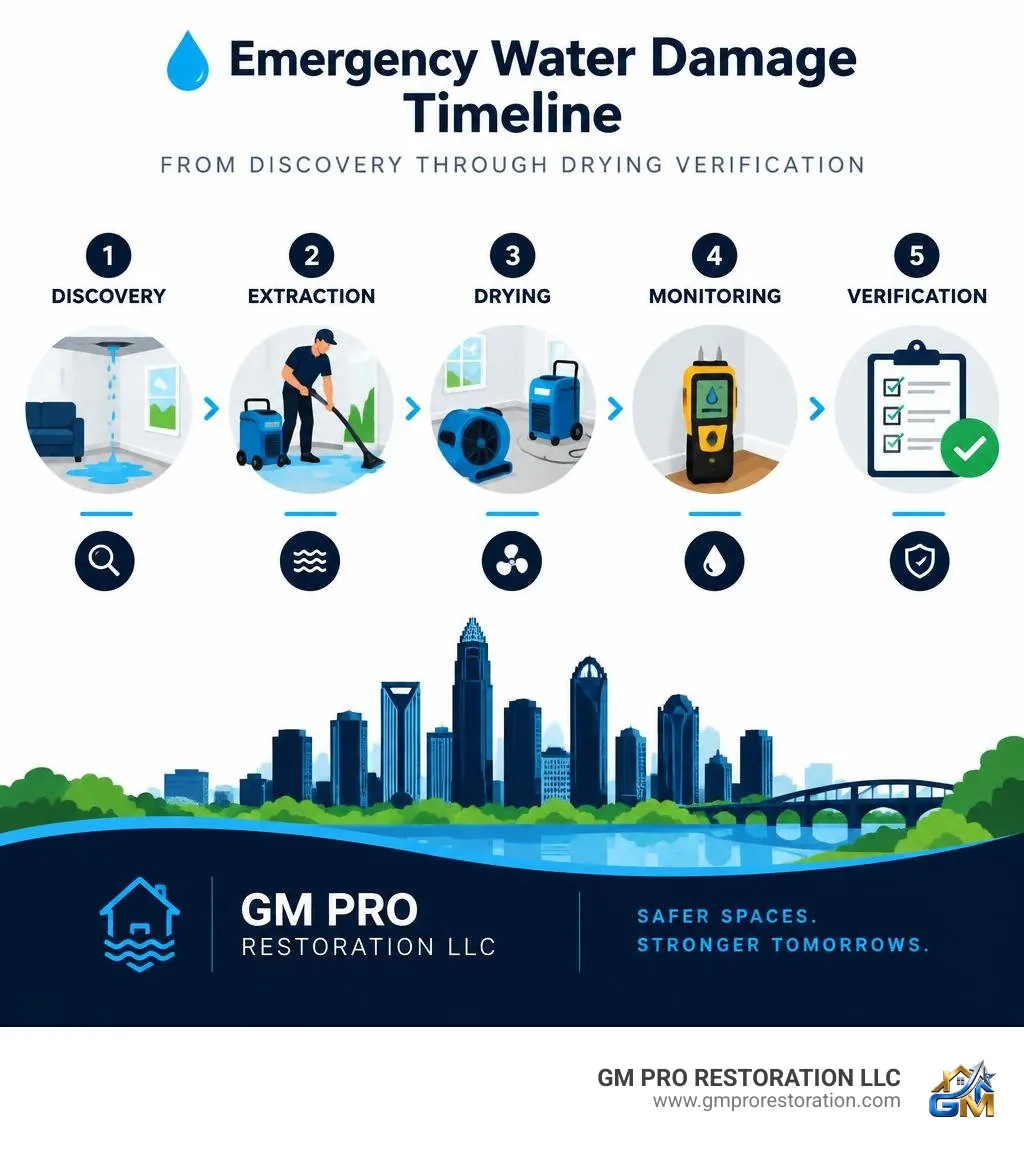
When water gets into a Charlotte property the first minutes matter: stop the water source if it is safe, avoid standing water near electricity, document the damage, and call a qualified restoration team for extraction and drying. Quick water removal helps limit mold, warped floors, damaged drywall, and larger repair costs.
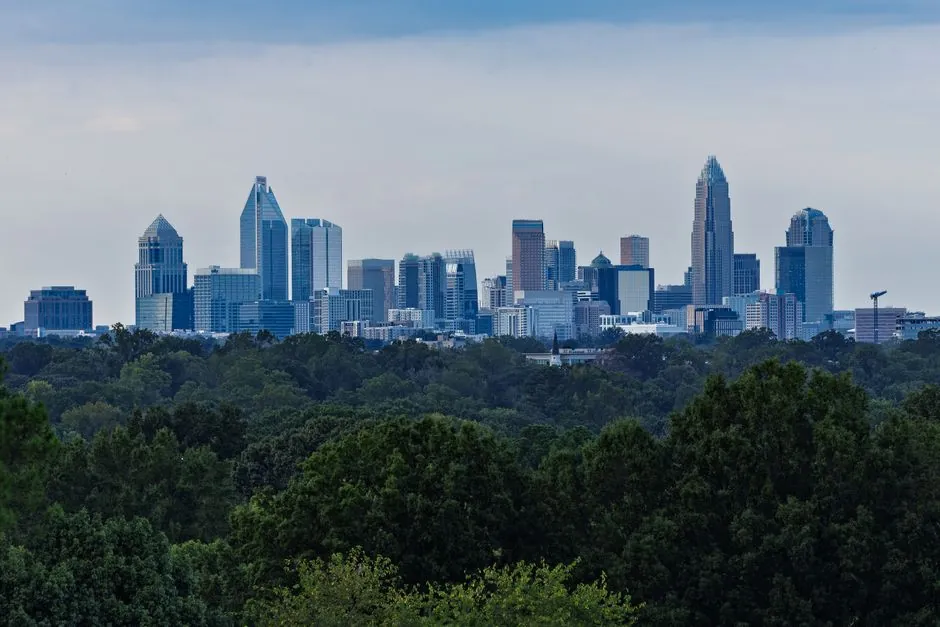
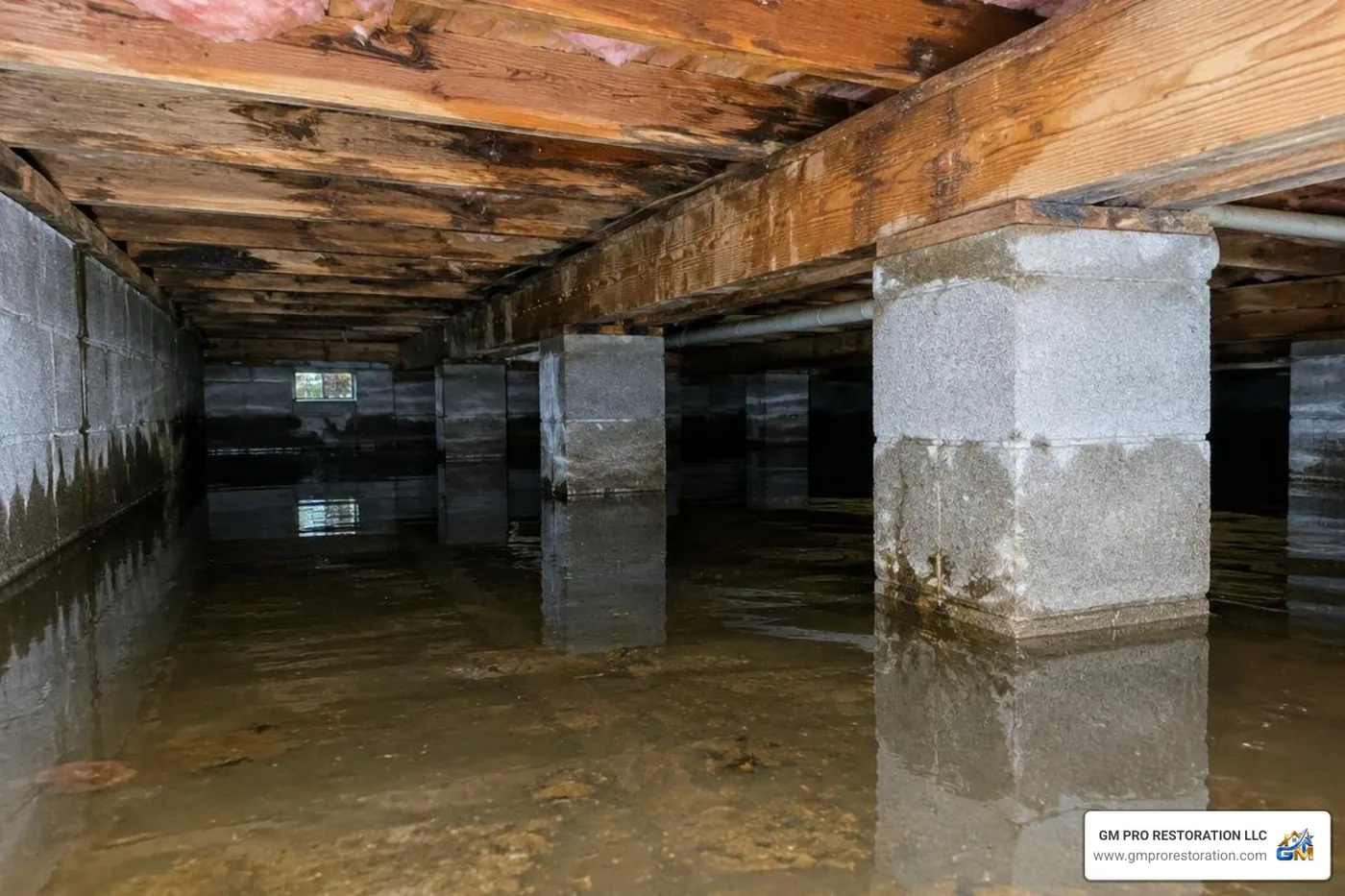
Charlotte homes and businesses can face water loss from burst pipes, roof leaks, appliance failures, sewer backups, and heavy storms. The region's humid conditions and flash-flood potential can make hidden moisture harder to dry, especially in crawl spaces, walls, and under flooring.
A professional response should identify the source, classify whether the water is clean, gray, or sewage-contaminated, remove standing water, dry affected materials, and verify moisture levels before repairs begin. If an older water line is involved, restoration may also need to coordinate with safe plumbing replacement and water-quality testing, particularly where lead-containing components are suspected. According to the U.S. Environmental Protection Agency, lead can enter drinking water when plumbing materials that contain lead corrode, making testing and replacement an important part of major water repairs.
Regional Infrastructure and Climate Threats Driving Water Losses in the Queen City
Property damage across Mecklenburg County frequently stems from a mix of intense subtropical weather patterns and aging municipal infrastructure. As the Piedmont region experiences severe summer thunderstorms and rapid winter temperature swings, properties face significant hydraulic stress.
Compounding these weather events is North Carolina's aging plumbing landscape. Statewide, approximately 300,000 legacy lead service lines remain in service out of roughly 9 million nationwide. Through the Bipartisan Infrastructure Law, the federal government committed $3 billion nationwide to replace toxic pipes, with North Carolina receiving a $250 million allocation to accelerate line removals. When aging supply lines fail under pressure, they do more than flood basements; they create complex restoration scenarios where lead toxicity and plumbing modernization intersect.
Beyond physical pipe failures, regional environmental challenges like industrial PFAS ("forever chemicals") contamination in North Carolina river basins, including the Cape Fear River watershed, emphasize the importance of thorough environmental testing during major water events. Knowing the immediate steps to take during water emergencies can dramatically reduce the risk of structural deterioration and environmental exposure.
The Physics of Seasonal Pipe Failures and Flooding Events
Water behaves in unique ways that directly influence structural damage. As liquid water approaches freezing, its density shifts: at 25°C, water density measures approximately 0.9970 g/mL, peaking at 0.9998 g/mL near 0°C. Upon freezing, water forms a rigid hexagonal crystalline matrix that forces a 9% volume expansion.
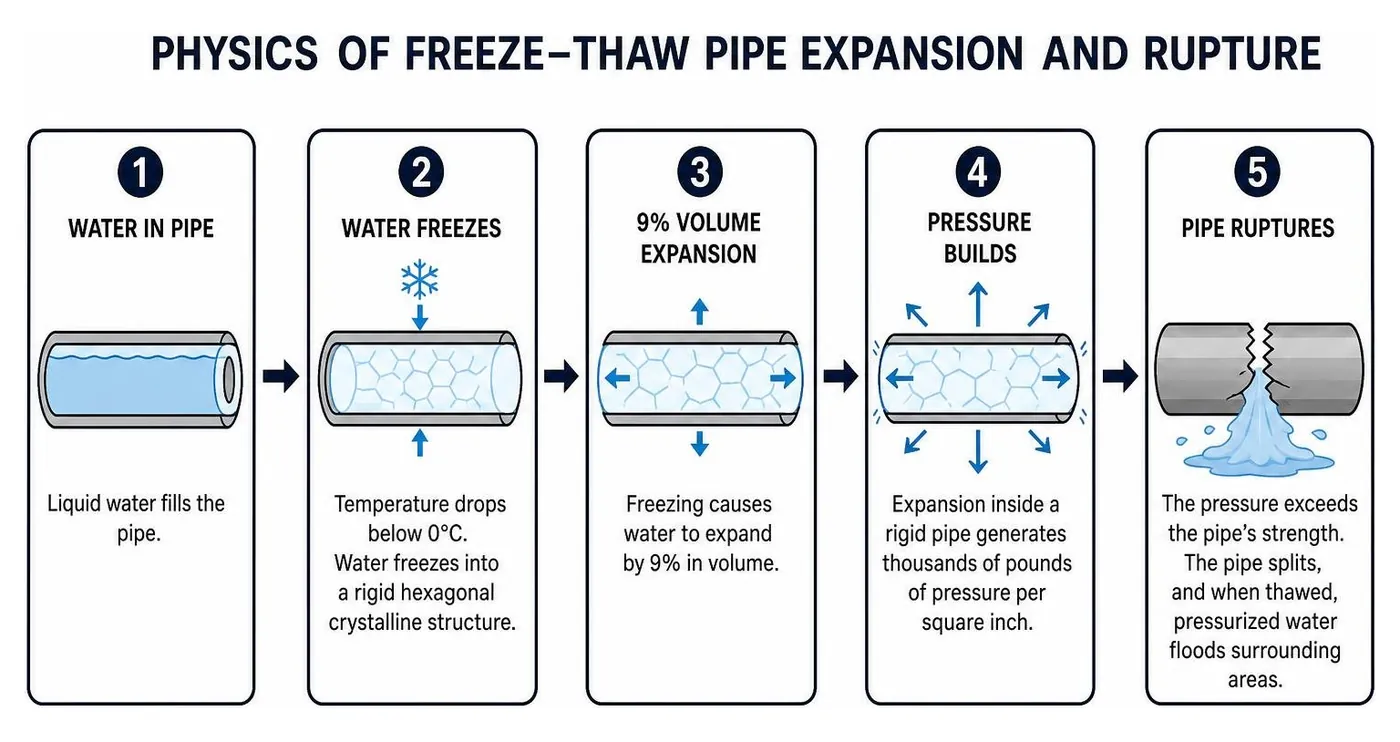
When trapped inside rigid copper, galvanized steel, or uninsulated PVC lines, this 9% expansion generates thousands of pounds of hydrostatic pressure per square inch. The pipe splits, and once the thaw arrives, pressurized water discharges directly into wall cavities, crawl spaces, and finished living areas. In summer, heavy precipitation overwhelms urban drainage systems, sending stormwater runoff straight into crawl spaces and subfloors across the Charlotte metro area.
The Standards a Restoration Crew Should Work To
Restoring a flooded property requires precise environmental science rather than simple surface cleanup. At GM PRO RESTORATION LLC, our team adheres to the strict standards established by the Institute of Inspection, Cleaning and Restoration Certification (IICRC), specifically the IICRC S500 Standard for Professional Water Damage Restoration.
Scientific restoration relies on psychrometry—the study of air, temperature, and water vapor interactions. We use non-invasive moisture meters and sensitive infrared thermal imaging cameras to track moisture travel behind baseboards, beneath hardwood floors, and inside ceiling assemblies. Our professional water damage mitigation protocols guarantee that every drop of hidden structural moisture is mapped, targeted, and dried thoroughly to prevent structural rot.
Categorizing Contamination: Clean, Gray, and Black Water
Water intrusions are classified into three distinct categories based on biological and chemical contaminants. The remediation plan depends entirely on this classification:
| Water Category | Common Sources | Potential Contaminants | Required Restoration Protocol |
|---|---|---|---|
| Category 1: Clean Water | Broken supply lines, sink overflows with no additives, falling rainwater | Minimal initial health risk; contains no immediate pathogens | Rapid physical extraction, structural dehumidification, air movement; salvage of porous materials if addressed promptly |
| Category 2: Gray Water | Dishwasher discharge, washing machine overflows, sump pump failures | Detergents, chemical residues, skin cells, early microbial growth | Extraction, targeted antimicrobial treatments, removal of saturated padding, controlled drying of structural elements |
| Category 3: Black Water | Sewage backups, river/ground flooding, standing Category 2 water (>48 hrs) | Fecal coliform, heavy metals, viral pathogens, toxic biohazards | Complete removal of porous materials (drywall, carpet, insulation), biocide application, containment barriers, negative air scrubbing |
What Separates a Thorough Crew From a Quick One
When water compromises your property, choosing the right restoration partner prevents unnecessary structural demolition and recurring health hazards. Property owners should partner with teams offering:
- 24/7 Rapid Emergency Dispatch: Rapid arrival limits moisture absorption into structural framing.
- IICRC-Certified Technicians: Specialized credentials ensure adherence to national safety and drying standards.
- Root-Cause Diagnostics: Finding the actual point of failure rather than just masking the symptoms.
- Comprehensive Service Capabilities: Full-spectrum containment across our comprehensive remediation services, addressing mold, sewage, and structural recovery under one roof.
- Direct Insurance Coordination: Detailed moisture logs and thermal documentation simplify claims handling.
Scientific Water Extraction and Environmental Remediation Protocols
Water possesses an exceptionally high specific heat capacity, meaning it retains thermal energy and evaporates slowly without controlled airflow, heat, and dehumidification. Leaving a flooded space to dry on its own almost guarantees secondary structural damage.
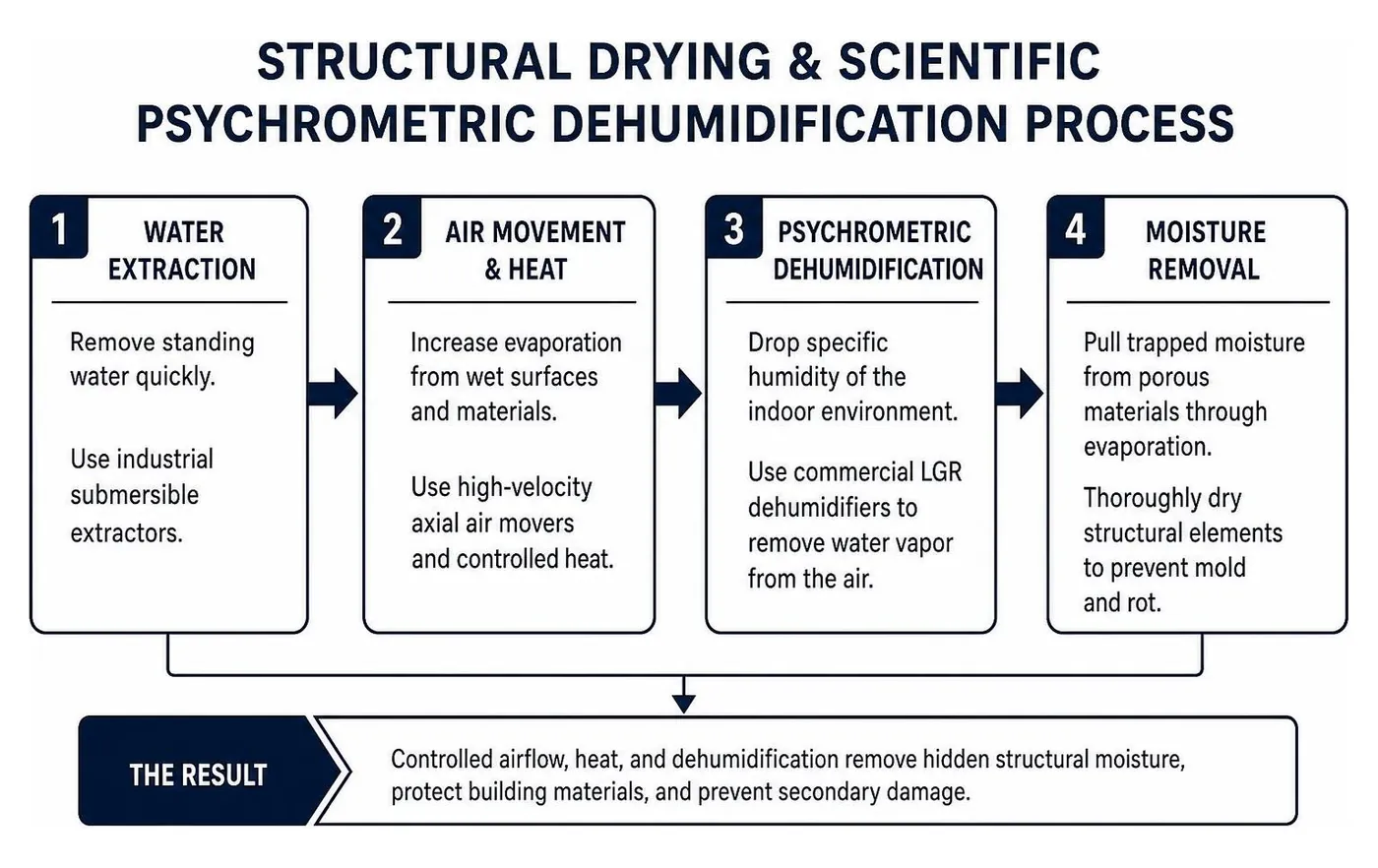
Our process combines industrial submersible extractors with commercial-grade Low-Grain Refrigerant (LGR) dehumidifiers and high-velocity axial air movers. By dropping the specific humidity of the indoor environment, we pull trapped moisture out of porous wood and drywall through evaporation. We maintain dedicated regional emergency response teams, ensuring rapid deployment via our specialized emergency response in Huntersville and full restoration coverage in Matthews.
Why Rapid Extraction Comes First
Speed is essential because microbial amplification begins almost immediately. Within 24 to 48 hours of water contact, dormant mold spores—including allergenic Aspergillus, Penicillium, and toxic Stachybotrys chartarum—germinate on damp cellulose surfaces like drywall and wood framing.
Prolonged moisture saturation also causes hygroscopic materials to swell, warp subflooring, and delaminate engineered wood. Extracting standing water within the first few hours protects structural stability, preserves salvageable building components, and prevents costly structural replacements.
Long-Term Property Protection: Mitigation, Regulations, and Water Safety
Effective water damage management involves long-term mitigation, building code compliance, and modern infrastructure safety. The North Carolina State Building Code requires proper crawl space vapor barriers, functioning backflow preventers, and drainage slopes that direct water away from residential foundations.
Property owners should routinely inspect sump pumps, service backflow valves, and modernize outdated plumbing connections. If your building contains older lead-soldered pipes or galvanized service lines, integrating modern plumbing materials during water repairs improves water quality and reduces future rupture risks. We support communities across the region through our ongoing regional service expansion, delivering dependable service options in Concord and tailored restoration solutions in Gastonia.
Frequently Asked Questions About Charlotte Water Damage
How do local lead service lines impact water line repairs and restoration?
Older neighborhoods across Charlotte and greater North Carolina still utilize some of the estimated 300,000 legacy lead service lines across the state. When a high-pressure line breaks, repairing the supply involves both water extraction and safe plumbing upgrades. Federal programs, supported by $250 million in state-allocated funding, help communities remove these toxic lines, preventing heavy metal exposure while restoring clean drinking water.
What is the difference between clean, gray, and black water categories?
Category 1 (clean) water originates from sanitary sources like broken supply pipes. Category 2 (gray) contains chemical or physical contaminants from dishwashers or washing machines. Category 3 (black) water contains dangerous biological pathogens from sewer backups, rising river water, or long-standing water. Each progressive category requires more aggressive containment, disposal of porous materials, and specialized antimicrobial treatments.
How quickly does mold develop after a water intrusion event in North Carolina?
In Charlotte's warm, humid climate, mold colonies can establish within 24 to 48 hours on damp organic substrates such as drywall backing, insulation, and wooden studs. Rapid water extraction, paired with industrial air movers and LGR dehumidifiers, stops spore germination and preserves healthy indoor air quality.
Conclusion
Water emergencies demand an immediate, scientifically sound response to protect your building's structural integrity and indoor air quality. At GM PRO RESTORATION LLC, we deliver honest root-cause assessments, 24/7 emergency dispatch, and certified structural drying across the Queen City. Whether you are dealing with a burst winter supply line, an appliance overflow, or heavy storm flooding, explore our expert water damage restoration services in Charlotte or use our direct emergency contact to dispatch our emergency mitigation team today.