How to Find Emergency Water Damage Service in Charlotte
Fast Action Limits Water Damage in Charlotte
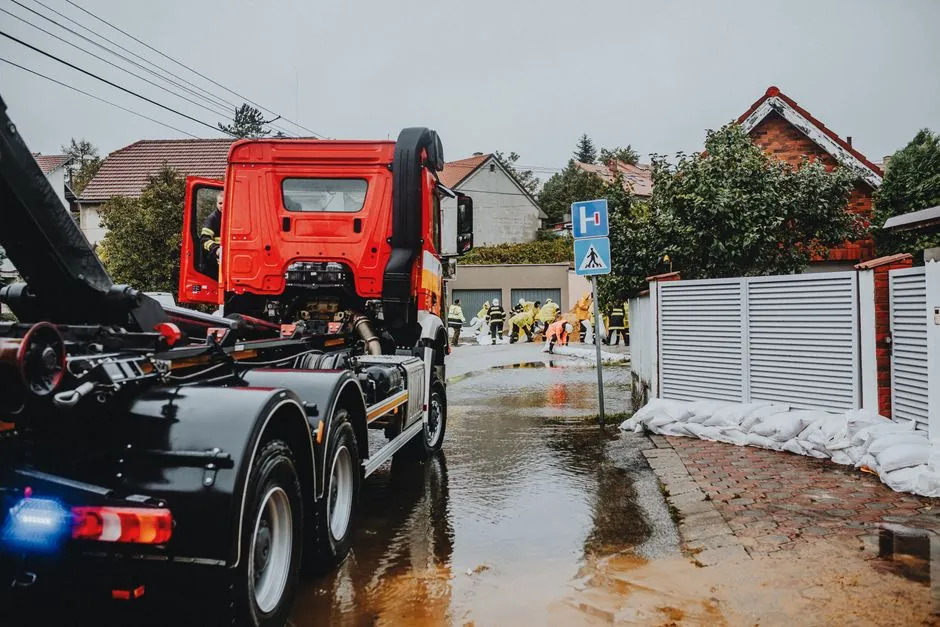
If your home or business has standing water, a burst pipe, roof leak, or sewer backup, contact an emergency water damage service in Charlotte right away. Then, if it is safe, stop the water source, move valuables from wet areas, document the damage with photos, and avoid using electrical equipment near water.
Fast response matters because moisture can soak into drywall, flooring, insulation, and framing long after visible water is removed. In Charlotte's humid climate, delayed drying can raise the risk of mold growth, material damage, and more costly repairs. According to the Federal Emergency Management Agency, mold can begin developing on damp surfaces within 24 to 48 hours, making immediate mitigation essential.
A professional restoration team should assess the source and contamination level, extract water, locate hidden moisture, dry the structure with commercial equipment, and document the work for your insurance claim. Do not treat sewage, floodwater, or water near electrical systems as a simple cleanup job.
Common Causes of Sudden Water Ingress in Charlotte Properties
Charlotte experiences a unique mix of weather patterns and infrastructure dynamics. From intense summer downpours rolling off the Piedmont to rapid winter freezes, local properties face constant exposure to moisture risks. In our experience responding to emergencies across Mecklenburg County, sudden water ingress typically stems from several distinct sources:
- Heavy Storm Runoff and Flash Flooding: Charlotte’s rapid urban development has expanded impermeable surfaces, leading to sudden storm surges that overwhelm municipal storm drains and residential grading. Low-lying properties near creek basins like Briar Creek, Little Sugar Creek, and McAlpine Creek face heightened vulnerability during intense weather events.
- Aging Municipal and Residential Infrastructure: Many historic neighborhoods, such as Dilworth, Plaza Midwood, and Elizabeth, feature legacy plumbing systems. Cast iron, galvanized steel, and aging clay drain lines deteriorate over decades, eventually suffering catastrophic ruptures under standard municipal water pressure.
- Sudden Plumbing Failures: Supply lines under high pressure—particularly braided stainless-steel hoses connecting to washing machines, dishwashers, and water heaters—frequently fail without warning, releasing hundreds of gallons of water in a matter of hours.
- Sewer Main Backups: Heavy regional rainfall can surcharge municipal sanitary systems, forcing biohazard-laden wastewater backward through basement floor drains, ground-floor toilets, and shower traps.
- HVAC Condensate Line Clogs: During the long, humid North Carolina summer, cooling systems extract gallons of moisture daily. When drain lines become clogged with algae or dust, overflow pans spill directly through ceilings and down interior wall cavities.
Understanding the origin of water ingress helps determine the level of environmental contamination present. Restoration science classifies water into three distinct categories based on biological and chemical risk:
| Water Category | Contamination Level | Common Charlotte Sources | Immediate Health Risk |
|---|---|---|---|
| Category 1: Clean Water | Sanitary; free from substantial biological or chemical hazards | Burst supply lines, broken sink faucets, overflowing bathtubs | Minimal initially, but degrades into Category 2 within 24 to 48 hours |
| Category 2: Gray Water | Significant chemical, biological, or physical contamination | Dishwasher overflows, washing machine discharges, sump pump failures | Moderate; may cause discomfort or illness if ingested or contacted |
| Category 3: Black Water | Grossly contaminated; contains pathogenic agents, toxins, or raw sewage | Rising floodwaters from creeks, sewer backups, ground surface runoff | High; severe risk of infection, gastrointestinal illness, or chemical exposure |
When dealing with Category 3 black water, self-cleanup poses serious health hazards. In these critical scenarios, our specialized sewage backup cleanup in Charlotte technicians deploy antimicrobial sanitization, negative air filtration, and strict biohazard containment protocols to make the environment safe again.
Why Fast Emergency Water Damage Service in Charlotte Matters
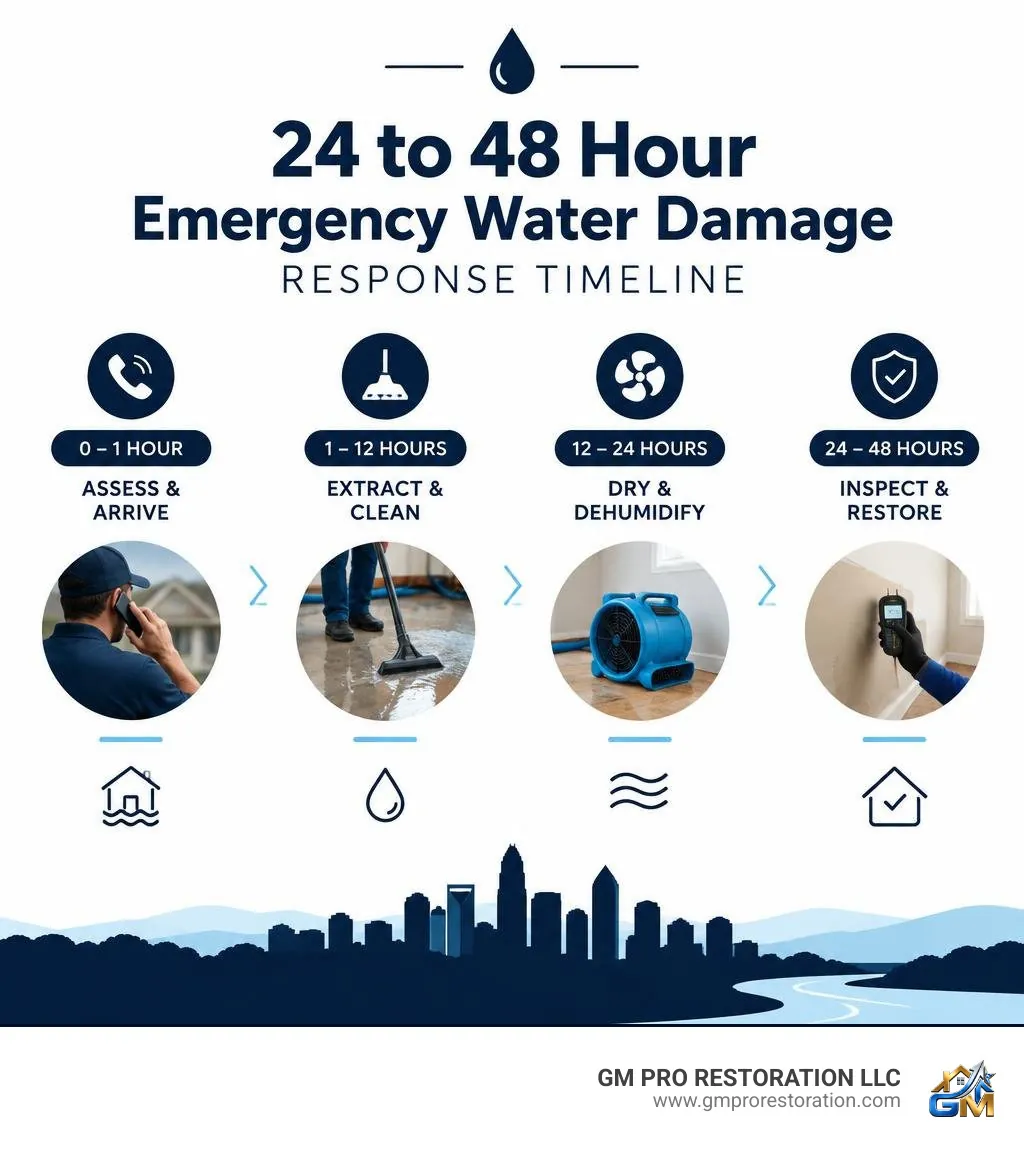
Time is the single most critical variable in water disaster recovery. When water enters a structure, it immediately begins migrating through porous building materials via capillary action. Porous drywall wicks moisture upward, wooden studs swell and lose dimensional stability, and synthetic carpet backing begins delaminating.
The first 24 to 48 hours represent the golden window for structural mitigation. Charlotte’s sub-tropical climate, characterized by elevated summer humidity levels frequently exceeding 70%, creates an ideal incubator for microbial spores. Fungal spores naturally exist in dormant states within indoor environments; all they require to germinate is sustained moisture, an organic cellulose food source (such as paper-faced drywall or subflooring), and ambient warmth.
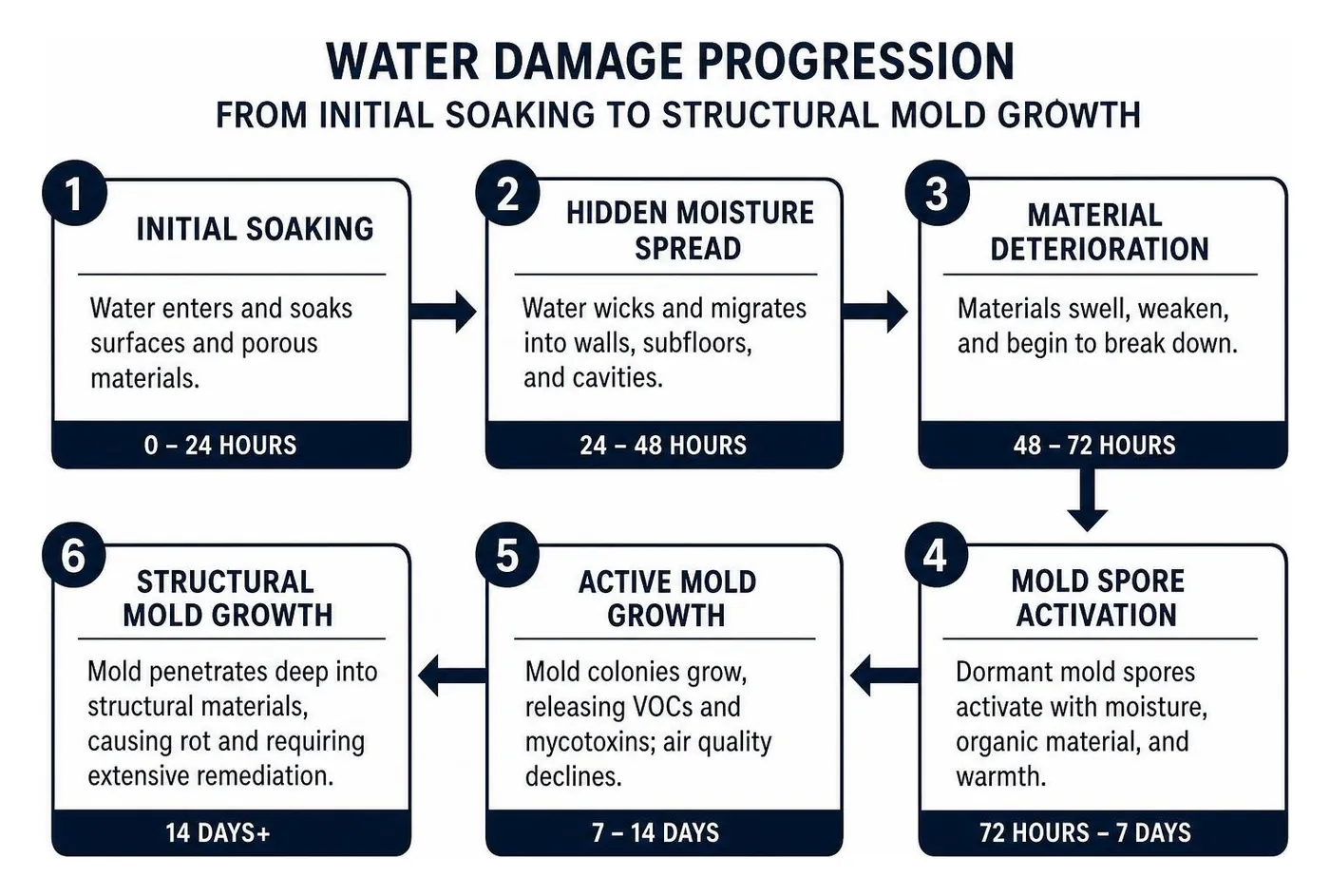
When drying is delayed past the 48-hour mark, several severe consequences unfold:
- Active Fungal Proliferation: Mold colonies establish roots within building materials, releasing volatile organic compounds (VOCs) and mycotoxins that degrade indoor air quality.
- Permanent Structural Degradation: Subfloors, joists, and structural load-bearing timbers warp, buckle, or begin rotting, requiring complete tear-out rather than simple restoration.
- Compounded Financial Costs: Mitigating a simple Category 1 clean water spill involves straightforward extraction and drying. Once mold develops, the scope expands into extensive containment, air scrubbing, and controlled demolition.
If structural drying is delayed or unaddressed moisture lingers behind wall assemblies, scheduling a comprehensive mold inspection in Charlotte is essential to identify hidden fungal growth before it spreads through HVAC systems. For detailed step-by-step guidance on securing your property immediately following a pipe burst or leak, read our practical guide on what to do after water damage.
Essential Criteria for Choosing a Water Damage Service in Charlotte
When standing water is actively damaging your home, choosing the right restoration partner requires clear evaluation rather than panic. You need a team equipped with industrial drying technology, proven credentials, and transparent communication.
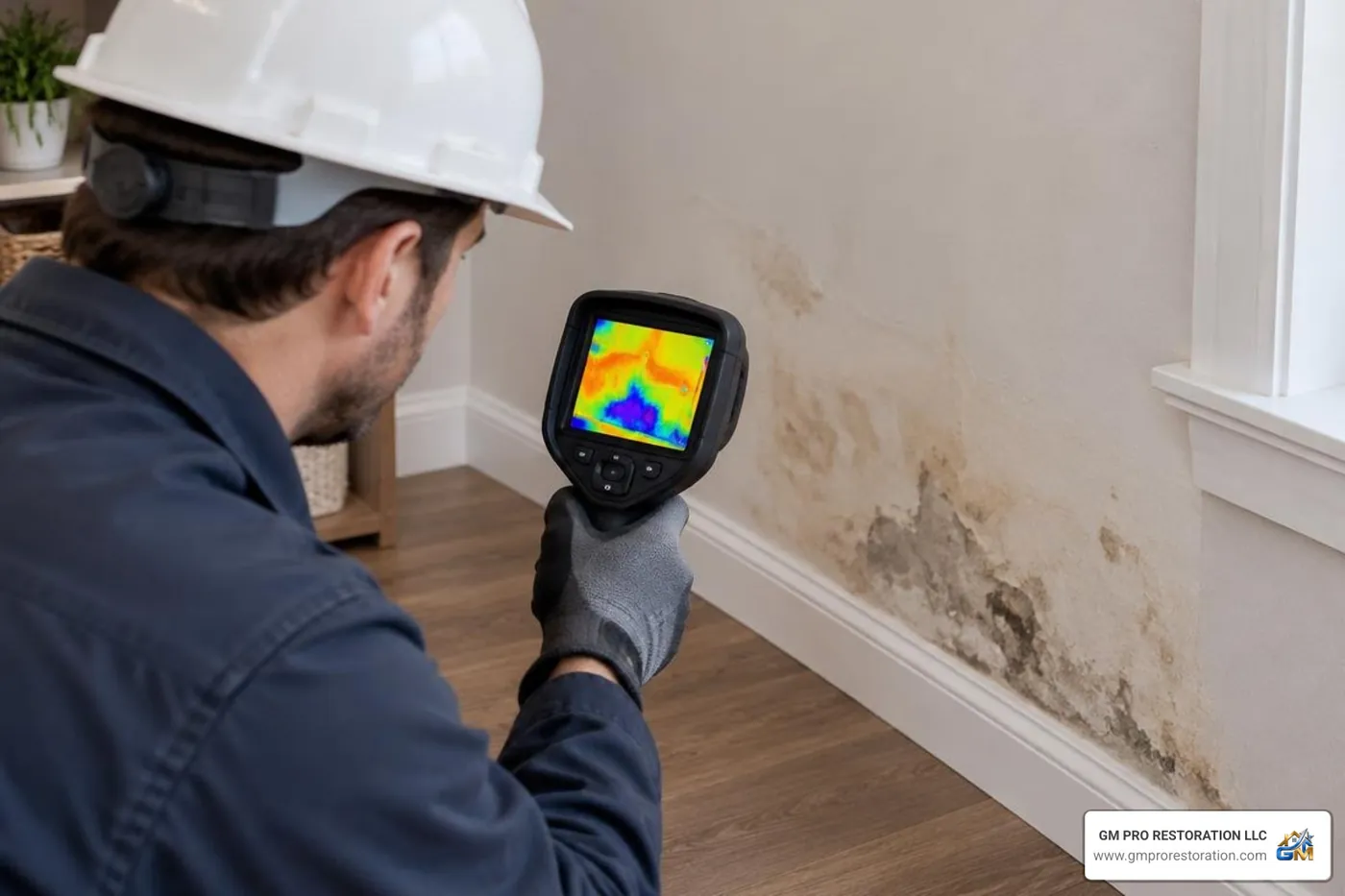
Key benchmarks to look for when evaluating an emergency restoration provider include:
- Certified Technical Competency: Ensure the company's technicians hold certifications from the Institute of Inspection, Cleaning and Restoration Certification (IICRC). Credentials such as Water Restoration Technician (WRT) and Applied Structural Drying (ASD) ensure the team understands psychrometric drying principles rather than relying on guesswork.
- True 24/7 Rapid Mobilization: Water damage does not adhere to standard business hours. An emergency provider should offer round-the-clock live dispatch with rapid arrival times across the metro area.
- Advanced Moisture Diagnostic Tools: Quality restoration relies on advanced diagnostic instruments, including non-invasive moisture meters, penetrating pin probes, thermo-hygrometers, and forward-looking infrared (FLIR) thermal cameras to track hidden migration pathways behind walls and under finished floors.
- Commercial-Grade Drying Fleets: Residential box fans and household dehumidifiers cannot pull deep-seated moisture out of saturated structural framing. Reliable contractors utilize high-velocity air movers, Low-Grain Refrigerant (LGR) dehumidifiers, and desiccant drying systems.
- Direct Insurance Coordination: Navigating property damage claims can be overwhelming. A reputable team works directly with your insurance adjuster, providing comprehensive psychrometric logs, itemized scopes of work, and photographic documentation.
When facing unexpected structural flooding, our team at Water Damage Restoration Charlotte provides 24/7 emergency response, honest root-cause assessments, and industrial-grade restoration across Mecklenburg County.
Comparing Costs and Estimates for Water Damage Service in Charlotte
Restoration pricing varies based on the water category, the extent of structural migration, and the types of materials impacted. Standard pricing across the restoration industry utilizes standardized estimating software (such as Xactimate), which calculates costs based on prevailing local labor, material, and disposal rates in the Charlotte metropolitan area.
A professional estimate should always include:
- Detailed Moisture Mapping: Clear data showing moisture readings across all affected rooms, establishing a baseline against dry standards.
- Itemized Scopes of Work: Specific breakdowns of labor hours, extraction square footage, equipment placement (dehumidifiers, air movers, HEPA scrubbers), and antimicrobial sanitization.
- Controlled Demolition Thresholds: Honest assessments of what can be salvaged through structural drying versus what must be removed (such as wet baseboards or saturated batt insulation).
We believe in complete transparency, ensuring our water damage restoration plans provide clear documentation that aligns directly with insurance adjuster requirements to minimize out-of-pocket delays.
Regional Service Coverage Across Mecklenburg and Neighboring Counties
Plumbing catastrophes and localized flash floods do not stop at city limits. Rapid response requires localized vehicle staging and strategic technician dispatch across the greater Charlotte region. Our dedicated teams provide emergency restoration throughout the metropolitan area, including:
- Fast emergency dispatch for homeowners and commercial spaces needing water damage restoration in Pineville, NC.
- Comprehensive water mitigation and structural drying via our Matthews, NC water damage restoration specialists.
- Rapid North Mecklenburg response through our Huntersville, NC water damage restoration division.
- Extended regional disaster support with full water damage restoration in Gastonia, NC.
The Step-by-Step Professional Restoration Process
Effective structural restoration is an exact science rooted in psychrometrics—the study of thermodynamic properties of moist air. We follow a structured, multi-phase protocol to return properties to safe, dry, and healthy conditions:
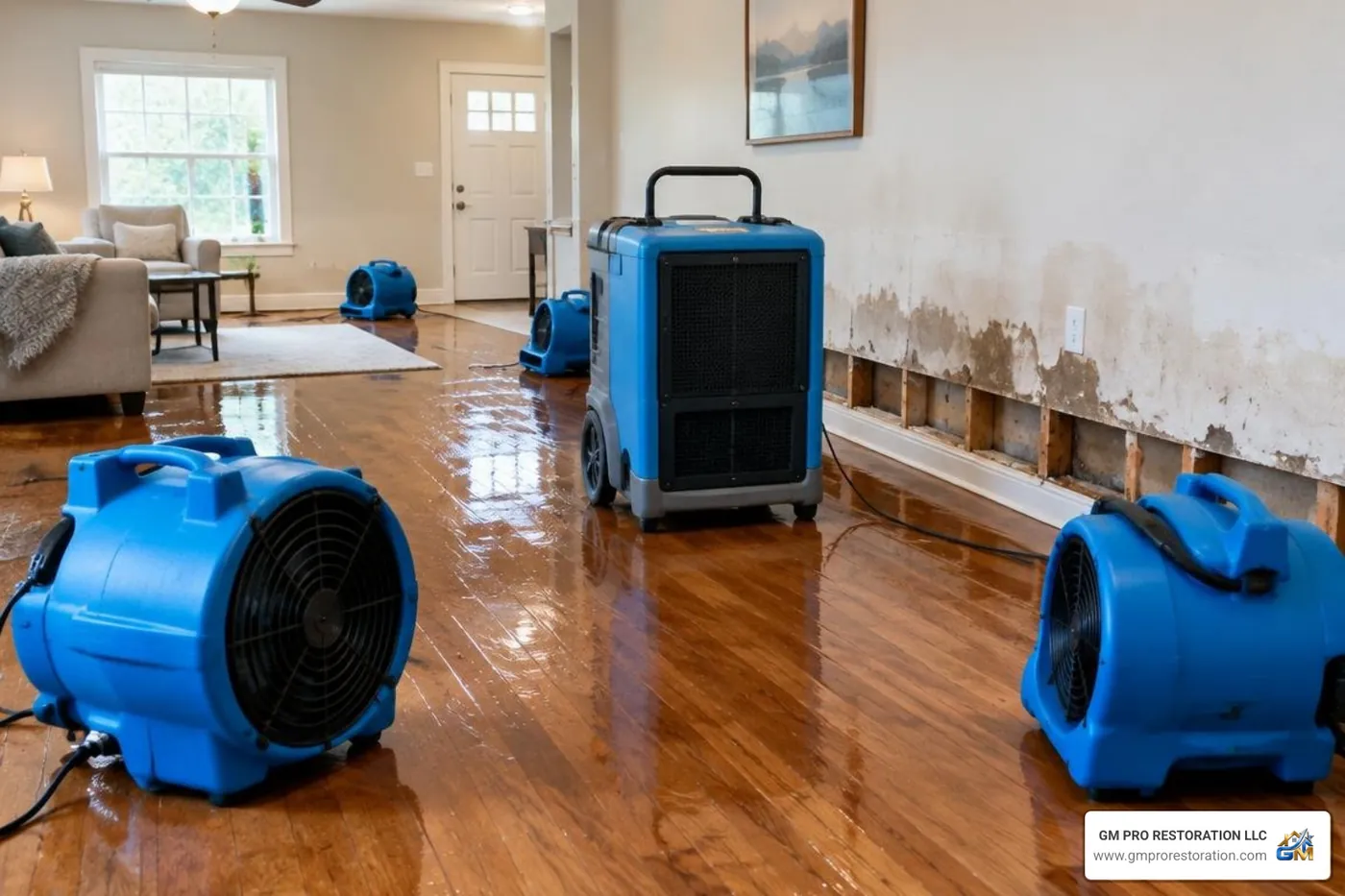
- Comprehensive Site Inspection & Moisture Mapping: Upon arrival, we identify the water source, classify the water category, and use thermal imaging and moisture meters to map the full boundary of migration.
- Bulk Water Extraction: We remove standing water using industrial truck-mounted or portable extraction units. Removing water in liquid form is hundreds of times faster and more energy-efficient than evaporating it into the air.
- Targeted Material Removal: Saturated materials that cannot be dried in place (such as non-salvageable drywall, wet insulation, or delaminated pad) are carefully removed using controlled flood cuts to expose internal framing.
- Antimicrobial Treatment: We apply EPA-registered botanical or broad-spectrum antimicrobial agents to exposed framing and subfloors to inhibit microbial amplification.
- Engineered Structural Drying: We position high-velocity air movers to blow across wet surfaces, transforming bound moisture into water vapor, while LGR dehumidifiers pull that moisture from the air and pump it away.
- Daily Monitoring & Psychrometric Logging: Technicians visit the property daily to measure relative humidity, temperature, and material moisture content, adjusting equipment configurations until all building components reach established dry standards.
- Final Reconstruction & Hand-off: Once structural equilibrium is certified, structural repairs, drywall patching, painting, and trim reinstallation restore the property to its pre-loss state.
Understanding Extraction vs. Complete Structural Drying
A common mistake property owners make is assuming that once the standing water is vacuumed up, the job is done. However, extraction addresses only surface-level water.
Complete structural drying focuses on the moisture trapped inside structural timber, concrete slabs, subflooring, and wall assemblies:
- Surface Water Extraction: Removes standing liquid from floors and carpets using suction equipment.
- Bound Moisture Evaporation: Uses high-velocity air movement to draw deeply absorbed water out of porous building framing.
- Dehumidification and Vapor Pressure Control: Dehumidifiers continuously lower the ambient specific humidity (grains per pound of air), maintaining a vapor pressure differential that pulls trapped water out of structural materials.
- Equilibrium Moisture Content (EMC): Drying continues until wood framing returns to its normal regional baseline (typically between 8% and 12% moisture content in North Carolina interior structures).
Navigating North Carolina Homeowners Insurance and Water Damage Claims
Filing a property insurance claim in North Carolina requires understanding the distinctions between covered perils and standard policy exclusions.
Standard HO-3 homeowners insurance policies generally cover water damage when it is sudden and accidental. Examples include a ruptured water supply line, a frozen pipe bursting during an unexpected winter freeze, or water entering directly through a roof puncture caused by a fallen tree limb during a storm.
Conversely, standard policies typically exclude:
- Gradual Leaks and Deferred Maintenance: Water damage occurring over weeks or months from a slow, neglected plumbing leak or leaking shower pan is often denied under standard neglect clauses.
- Surface Water Flooding: Damage caused by rising rivers, overflowing creeks, or overland street runoff is not covered by standard homeowners insurance. This protection requires a separate flood policy through the National Flood Insurance Program (NFIP) or private flood underwriters.
- Sewer and Drain Backups: Standard policies exclude municipal sewer or drain backups unless the homeowner has purchased a specific "Water Backup and Sump Overflow" endorsement.
To support your claim, take immediate action: take extensive photographs and videos of all standing water and affected belongings before cleanup begins, keep all damaged components for adjuster inspection, and maintain daily moisture logs from your restoration contractor. When you need help navigating documentation, you can contact our team for direct assistance and comprehensive reporting for your adjuster.
Frequently Asked Questions About Charlotte Water Restoration
How quickly does mold start growing after a water leak in Charlotte?
In Charlotte’s humid climate, mold spores can germinate within 24 to 48 hours of initial water contact. When relative humidity exceeds 60% and indoor temperatures are warm, dormant spores rapidly develop hyphae on moist organic surfaces such as drywall paper, wood framing, and carpet backing. Immediate water extraction and rapid dehumidification are essential to prevent widespread contamination. If you have additional questions regarding emergency restoration procedures, visit our detailed restoration FAQ section.
Does standard homeowners insurance in North Carolina cover water damage?
Standard North Carolina homeowners insurance policies cover sudden and accidental water damage, such as a burst supply line, appliance overflow, or ruptured water heater. However, policies routinely exclude flood damage from rising surface water, damage resulting from gradual long-term leaks, and sewer backups unless a specific backup endorsement was added to the policy.
What certifications should a local Charlotte restoration company have?
A professional restoration company should hold certifications from the Institute of Inspection, Cleaning and Restoration Certification (IICRC). Key certifications include Water Damage Restoration Technician (WRT), Applied Structural Drying (ASD), and Applied Microbial Remediation Technician (AMRT). Additionally, technicians working on lead-era homes should maintain EPA Lead-Safe Certification, and the company should carry comprehensive general liability and pollution insurance.
Conclusion
When water enters your home or business, every hour counts. Delayed response compromises structural framing, damages finished surfaces, and creates an environment where mold thrives. Protecting your property requires rapid water extraction, thorough structural drying, and certified moisture tracking from start to finish.
At GM PRO RESTORATION LLC, we provide dependable, 24/7 emergency restoration services across Mecklenburg County and surrounding areas. Our IICRC-certified technicians use commercial-grade drying technology and honest root-cause diagnostics to restore your property safely and efficiently. If you are experiencing sudden flooding, a burst pipe, or a plumbing emergency, explore our Charlotte service locations to connect with our emergency dispatch team.