Whole Home Mold Removal Cost Breakdown and Claim Strategies
What Whole House Mold Remediation Really Involves
Whole house mold remediation means finding and fixing the moisture source, removing contaminated materials, controlling airborne spores, and verifying that the home is clean before rebuilding. It is more than spraying visible mold. When growth affects several rooms, wall cavities, attic insulation, crawlspaces, or HVAC ducts, a full-home plan may be needed to stop spores from spreading back into cleaned areas.
For Charlotte homeowners, the first priorities are simple:
- Stop the leak, humidity problem, or water intrusion.
- Get a detailed inspection to map visible and hidden damage.
- Compare itemized remediation estimates and document the cause for a possible insurance claim.
- Do not close walls or move back into affected areas until remediation and clearance checks are complete.
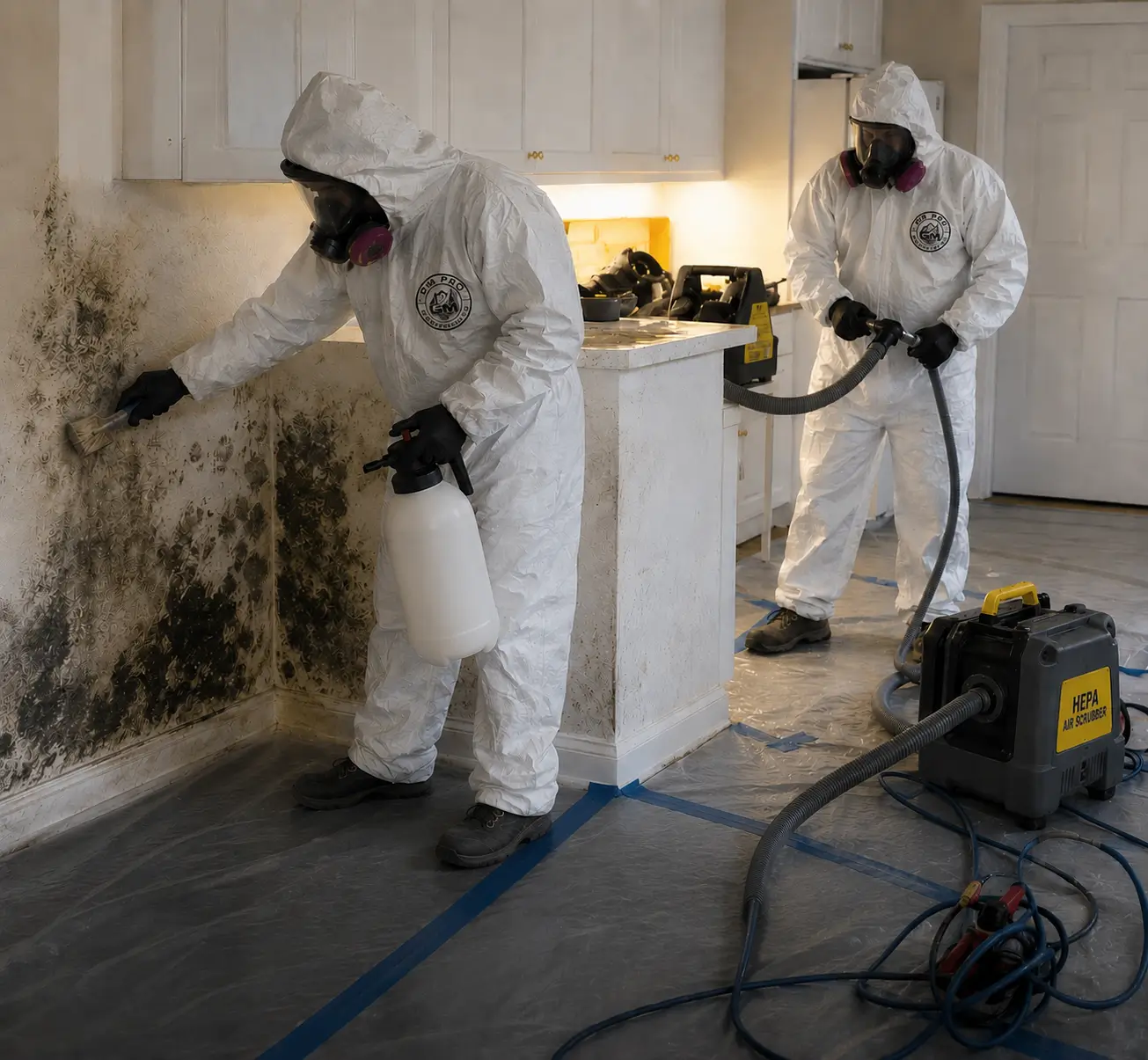
Localized mold removal may address one small, contained area. Whole house mold remediation uses sealed work zones, negative air pressure, HEPA filtration, removal of damaged porous materials, and post-remediation verification when contamination has spread beyond one space.
Costs can range from several thousand dollars to $25,000 or more for large homes with widespread damage. The final number depends on square footage, access, demolition, HVAC involvement, containment needs, testing, and the repair needed to prevent recurrence. This guide explains how to manage the scope, budget, and claim documentation without losing sight of the most important goal: a dry, safe home.
Understanding Whole House Mold Remediation Costs
When dealing with widespread contamination, budgeting requires looking at the entire structural picture rather than just the visible patches. According to pricing benchmarks for 2026, whole-home projects typically range between $4,000 on the lower end to upwards of $25,000 for complex, multi-story structures.
On average, square footage rates fluctuate between $2.50 and $12.00 per square foot. The wide range stems from the intensity of containment required, the volume of structural demolition necessary, and hazardous waste disposal fees. If mold has penetrated porous framing, subflooring, and ceiling assemblies across multiple levels, labor hours climb quickly.
Key Drivers of Whole House Mold Remediation Pricing
Every home tells a unique story, and so does every remediation estimate. The primary cost driver is not just the physical removal of growth, but the protective measures that keep the rest of your home safe during the cleanup.
- Containment Barriers and Negative Air: Building thick polyethylene containment zones with zippered transition doors prevents billions of disturbed spores from settling into clean living areas.
- Negative Air Pressure and HEPA Scrubbing: Running industrial air scrubbers continuously ensures that air moves inward toward contaminated zones and exhausts safely outdoors.
- Demolition and Structural Stripping: Non-salvageable porous items (drywall, carpet padding, blown insulation) must be bagged, sealed, and discarded.
- Antimicrobial and Mechanical Cleaning: Hard surfaces and framing lumber receive HEPA vacuuming, sanding or wire brushing, and application of registered antimicrobial agents.
Choosing specialized mold remediation services guarantees that your project adheres to strict IICRC S520 standards, ensuring structural integrity is preserved while eliminating microbial reservoirs.
Regional Variables and Labor Considerations
Geography plays a significant role in final project pricing. Urban and coastal markets frequently carry a 10% to 25% premium due to higher labor rates, stricter disposal regulations, and elevated ambient humidity. In humid climates, structural drying requires extended equipment run times to reach safe moisture thresholds.
Crew configurations typically consist of two to four certified technicians working over several consecutive days. Projects requiring complex staging in areas like regional remediation in Charlotte NC or suburban solutions in Concord NC demand strategic equipment deployment to maintain negative pressure throughout sprawling floor plans.
The Multi-Stage Remediation Protocol and Containment
A proper whole-home project does not cut corners. In a notable case study on multi-room residential remediation, technicians faced an eight-room contamination crisis stemming from hidden ceiling leaks that migrated into the central air handler. Resolving the problem required engineering custom containment zones, stripping wet fiberglass insulation, and decontaminating the framing before the home was declared safe for reconstruction.
Initial Assessment and Moisture Mapping
Remediation cannot succeed if the root moisture source remains a mystery. We begin every project by establishing a complete moisture profile using non-invasive tools.
- Thermal Imaging: Infrared cameras identify hidden temperature differentials behind drywall, pinpointing active moisture pockets.
- Moisture Meters: Calibrated pin and pinless meters measure moisture content percentages in wood framing and subfloors.
- Cavity Inspection: Borescopes inspect interior wall voids without unnecessary demolition.
Homeowners learning how to tell if you have mold often notice musty odors or minor staining first. Understanding the difference outlined in our mold inspection vs mold testing guide helps clarify whether you need physical moisture mapping or laboratory spore analysis. For comprehensive diagnostic evaluation, scheduling thorough mold inspection services is the critical first move.
Air Quality Clearance and HVAC Decontamination
If mold infiltrates your central HVAC system, the ductwork acts as a highway distributing spores to every corner of the house. Remediating the HVAC system involves sanitizing supply and return plenums, cleaning blower fans, and treating or replacing contaminated flex ducting.
Once remediation and drying are complete, independent verification is non-negotiable. Utilizing certified mold testing alongside post-remediation indoor air quality testing confirms that indoor airborne spore concentrations are statistically lower than, or equal to, outdoor baseline levels before containment walls come down.
Insurance Coverage Strategies for Whole House Mold Remediation
Navigating property insurance claims for extensive mold damage requires an understanding of policy language. Most homeowner policies contain strict mold caps (often limited to $5,000 or $10,000) or exclude mold entirely unless it directly results from a covered peril.
- Covered Perils: Sudden and accidental water discharge, such as a burst supply line, water heater rupture, or sudden roof failure from a fallen limb.
- Common Exclusions: Long-term deferred maintenance, unresolved chronic plumbing drips, high ambient humidity, and rising floodwaters (which require separate flood insurance).
Reviewing our restoration FAQ resources can help you prepare for initial conversations with your insurance adjuster.
Documenting Root Causes for Claims Success
The success of an insurance claim hinges on objective proof that the mold developed rapidly from an acute, covered water event.
- Detailed Moisture Logs: We log daily psychrometric readings, tracking temperature, relative humidity, and structural moisture content decline.
- High-Resolution Photo Logs: Clear visual documentation of the failed plumbing component or storm entry point before demolition begins.
- Itemized Waste Manifests: Detailed lists of all non-salvageable materials removed from the property.
- Chain of Custody Lab Reports: Third-party laboratory analysis proving the fungal species and air quality impacts.
Preventing Recurrence: Moisture Control and Structural Maintenance
Eradicating mold is only half the battle; ensuring it never returns preserves your investment and health. Because mold spores exist naturally everywhere outdoors, indoor growth only happens when spores find sustained moisture and an organic food source.
- Maintain Indoor Relative Humidity: Keep indoor humidity strictly between 30% and 50% year-round using whole-house dehumidifiers.
- Attic and Crawlspace Management: Ensure adequate soffit and ridge ventilation in attics, and consider full vapor barrier encapsulation with dedicated dehumidification in crawlspaces.
- HVAC Maintenance: Change high-efficiency MERV filters regularly and inspect condensation drain pans and lines for blockages.
- Exterior Water Shedding: Clean gutters, extend downspouts at least six feet away from foundation walls, and ensure landscape grading slopes away from the home.
Explore our full-scope mold services to implement proactive prevention and long-term indoor environmental management.
Frequently Asked Questions About Residential Mold Abatement
How long does a full home mold remediation project typically take?
A full-home remediation project generally takes between 3 to 7 business days. Day 1 focuses on setting up negative air containment and HEPA filtration. Days 2 through 4 involve selective demolition, material bagging, and structural cleaning. Days 5 through 7 are dedicated to structural drying, antimicrobial application, and third-party post-remediation verification testing.
Can homeowners remain in the house during extensive mold remediation?
For whole-house projects involving multi-room containment and central HVAC decontamination, we strongly advise homeowners to relocate temporarily. Running industrial negative air machines and dehumidifiers creates significant noise and drafts. More importantly, disturbing large colonies of mold elevates airborne spore counts within active work zones, presenting respiratory risks.
What distinguishes standard mold removal from post-remediation verification?
Standard surface removal merely wipes away visible discoloration, often leaving hidden root structures (hyphae) and elevated airborne spore loads behind. Post-remediation verification (PRV) is a formal clearance process conducted under IICRC S520 guidelines. It includes strict visual inspection and third-party laboratory air sampling to verify that the home has reached an acceptable, clean ecology before rebuilding.
Conclusion
Remediating widespread mold across an entire residence is a major undertaking that requires technical discipline, specialized equipment, and adherence to proven 2026 industry standards. Attempting to mask the issue with retail sprays or surface cleanups only permits hidden colonies to degrade structural lumber and compromise indoor air quality.
At GM PRO RESTORATION LLC, our team provides honest, root-cause moisture assessments, transparent pricing, and rapid emergency service across the greater Charlotte metropolitan area. When your family's health and property value are on the line, partner with local Charlotte NC restoration experts to eliminate microbial threats completely. Contact our certified team today to schedule a comprehensive evaluation and start restoring your home to a clean, safe standard.