Why Charlotte's Humidity Grows Mold and How to Keep It Out
Why Charlotte's Climate Creates Serious Mold Challenges
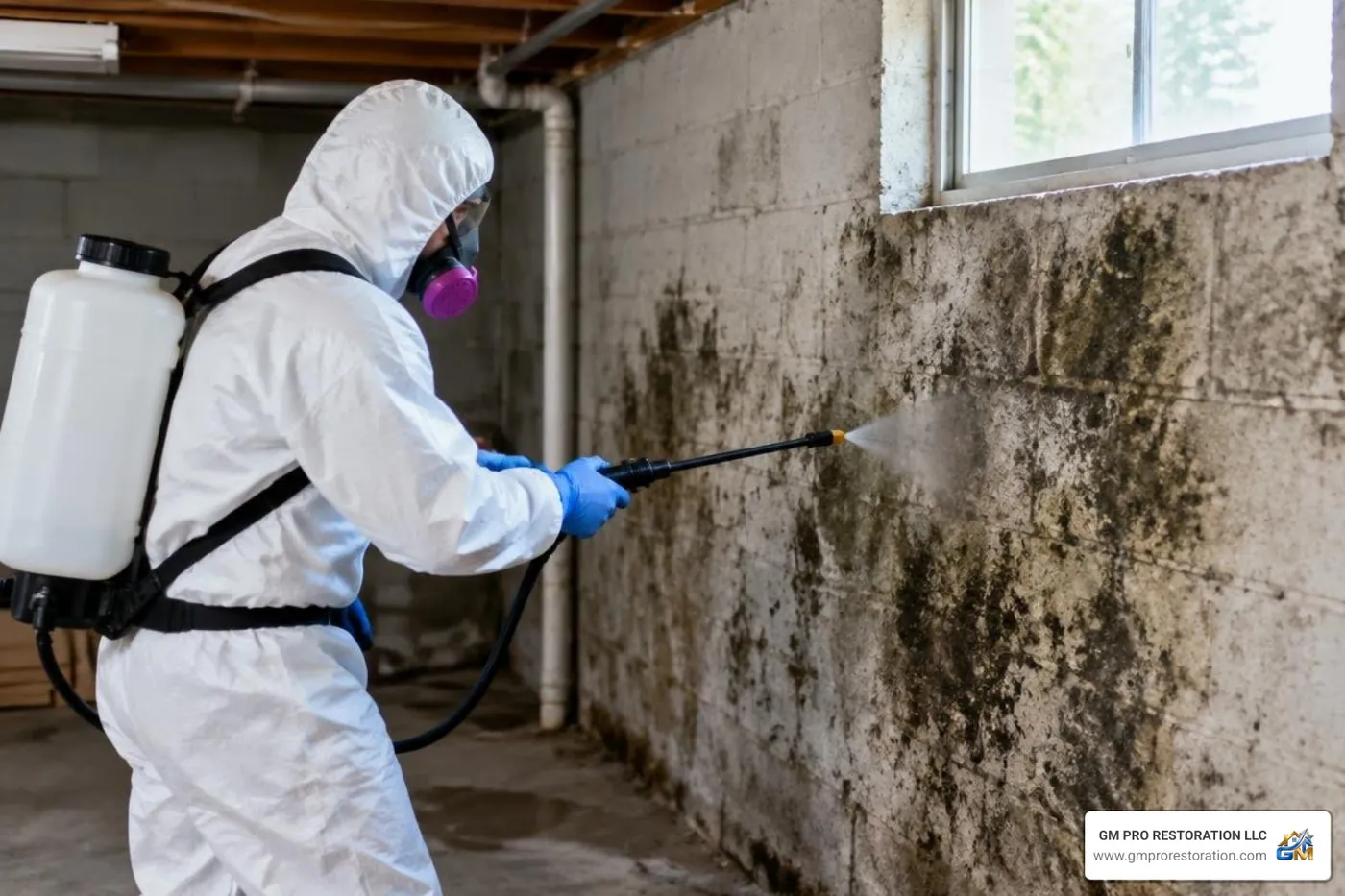
Getting mold out of a Charlotte home for good starts with identifying the moisture source, containing the affected area, removing contaminated porous materials, cleaning structural surfaces with HEPA equipment and antimicrobial treatments, and drying the space to prevent regrowth. Because mold can germinate within 24 to 48 hours of moisture intrusion, fast action is essential. For more on the standards that guide this process, see the IICRC S520 Standard for Professional Mold Remediation.
Living in the Queen City has plenty of perks—gorgeous tree-lined neighborhoods, booming culinary scenes, and mild winters. However, the Piedmont region's weather brings distinct environmental challenges for local property owners. Charlotte sits in a humid subtropical climate zone where summer temperatures frequently climb into the upper 80s and 90s, paired with high ambient humidity levels. When warm, moisture-laden outdoor air clashes with air-conditioned indoor spaces, condensation quickly forms on building materials.
Mecklenburg County also experiences steady year-round rainfall, averaging over 43 inches annually. Heavy summer thunderstorms and prolonged rainy spells in the spring and fall drive high exterior moisture loads against foundations, roofs, and exterior walls. Without adequate building envelope protection, that exterior dampness finds its way inside, where indoor mold colonies can germinate within 24 to 48 hours of initial moisture intrusion.
Humid Subtropical Climate Impacts
In Charlotte, summer dew points frequently exceed 70°F, creating high vapor pressure that pushes outdoor moisture through porous exterior surfaces like brick, siding, and wood sheathing. When this moisture reaches interior drywall or subflooring cooled by air conditioning, relative humidity spikes locally.
Winter brings its own complications. While our winters are generally mild, cold snaps cause rapid indoor temperature fluctuations. Warm, humid indoor air from cooking, showering, and unvented laundry areas rises into cold attics or condenses against chilly exterior walls, leading to winter condensation cycles that support fungal growth out of sight.
Common Moisture Hotspots Across Queen City Properties
Certain areas in Charlotte homes are particularly susceptible to fungal colonization due to regional construction styles and climate factors.
- Vented Crawl Spaces: Traditional vented crawl spaces allow humid outdoor summer air to enter cool subfloor areas, causing heavy condensation on wood framing and floor joists.
- Basement Foundations: Charlotte's clay-heavy soil expands when wet and shrinks when dry, placing pressure on foundation walls and letting groundwater seep through hairline cracks.
- HVAC Condensation Pans and Ducts: Air conditioning systems work overtime in North Carolina summers. Clogged drain pans, uninsulated ductwork, and dirty coils create moist environments where mold thrives and circulates into living spaces.
- Attic Roof Spaces: Poor attic ventilation traps rising heat and moisture, while roof penetrations around flashing and plumbing vents can develop small leaks during severe summer storms.
- Plumbing and Appliance Leaks: Slow leaks behind supply lines, water heaters, dishwashers, and washing machines often go unnoticed until structural wood or subflooring is visibly damaged.
What Professional Remediation Actually Involves
Professional mold remediation is far more involved than scrubbing a dark spot off a wall. True remediation addresses the airborne spores, hidden colonization, and underlying moisture source to ensure long-term structural integrity and clean indoor air.
At GM PRO RESTORATION LLC, our technicians adhere to the IICRC S520 Standard for Professional Mold Remediation, the industry benchmark for safe, effective environmental restoration.
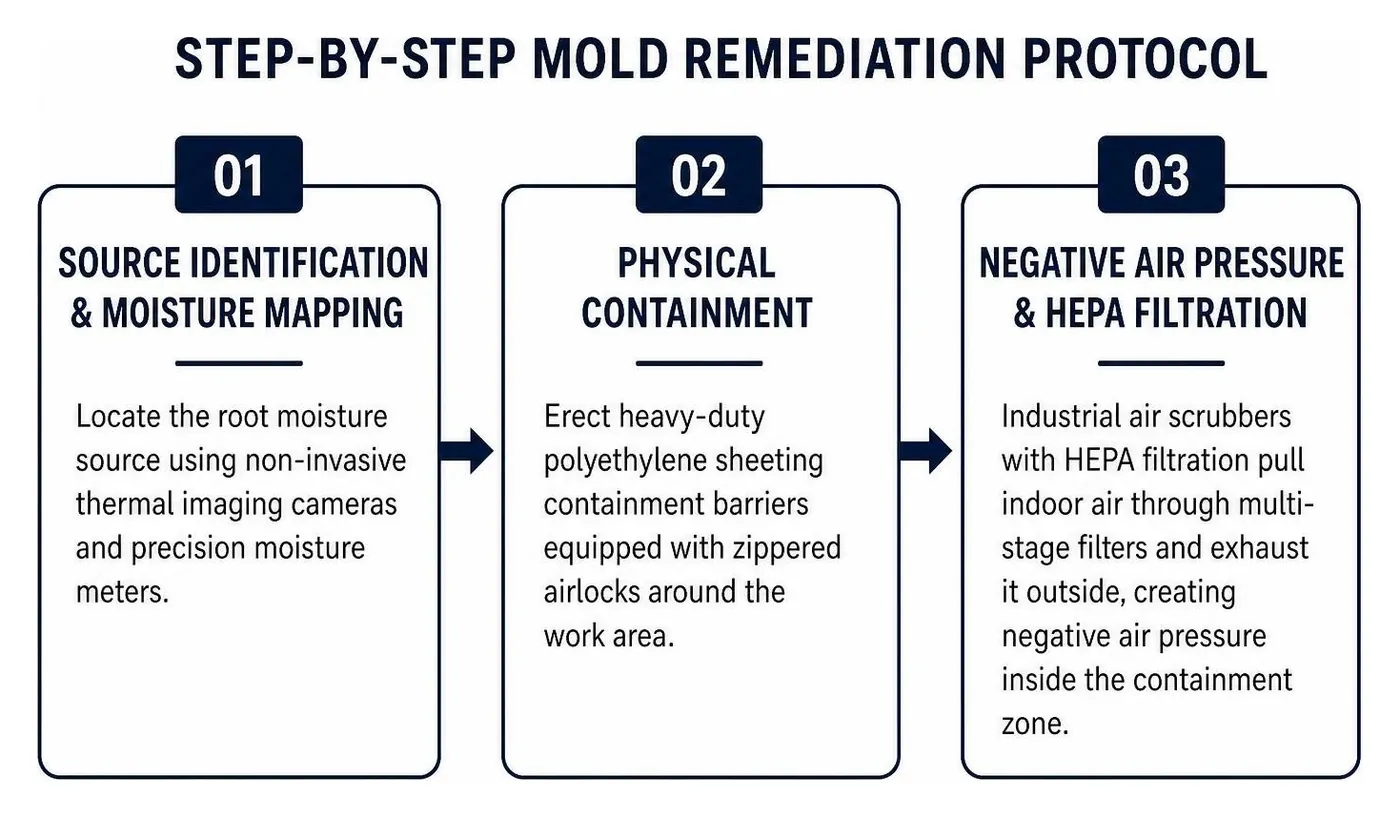
The Remediation Protocol, Step by Step
- Source Identification & Moisture Mapping: Before touching any physical mold, we locate the root moisture source using non-invasive thermal imaging cameras and precision moisture meters.
- Physical Containment: We erect heavy-duty polyethylene sheeting containment barriers equipped with zippered airlocks around the work area. This isolates contaminated zones from clean living spaces.
- Negative Air Pressure & HEPA Filtration: Industrial air scrubbers equipped with certified HEPA filtration pull indoor air through multi-stage filters and exhaust it outside. This creates negative air pressure inside the containment zone, preventing disturbed spores from migrating into unaffected rooms.
- Removal of Porous Materials: Porous materials that harbor deep fungal roots (hyphae)—such as saturated drywall, carpet padding, and blown-in insulation—are carefully bagged, sealed in heavy plastic, and safely removed from the property.
- HEPA Vacuuming & Antimicrobial Sanitization: Non-porous and semi-porous structural elements (like subfloor joists and wall studs) are thoroughly cleaned using HEPA vacuums, wire brushing or sanding, and EPA-registered antimicrobial agents.
- Structural Drying & Deodorization: High-velocity air movers and commercial-grade dehumidifiers extract residual moisture from structural framing until moisture readings match dry target baselines.
- Post-Remediation Clearance Verification: Once cleaning and drying are complete, visual inspections and optional third-party air sampling verify that indoor spore counts have returned to normal, healthy ecological levels.
Professional Remediation vs. DIY Cleanup Risks
Many homeowners initially attempt to tackle mold growth using household cleaners like chlorine bleach. While bleach might lighten surface discoloration on non-porous tiles, it often worsens problems on porous surfaces like drywall and wood. Bleach consists mostly of water; the chlorine evaporates rapidly on the surface while the water penetrates deep into the porous material, feeding the fungal roots beneath.
| Factor | Professional Mold Remediation | DIY Bleach / Surface Cleaning |
|---|---|---|
| Primary Standard | IICRC S520 Industry Guidelines | Unregulated trial and error |
| Spore Containment | Negative air pressure & physical barriers | Open air; allows cross-contamination |
| Air Filtration | Industrial HEPA air scrubbers (99.97% capture) | Standard HVAC or home vacuums spread spores |
| Porous Material Treatment | Safe removal or structural remediation | Surface bleaching leaves living roots intact |
| Root-Cause Moisture Analysis | Infrared thermal imaging & moisture mapping | Moisture source often remains unaddressed |
| Personal Protective Equipment | Full-face respirators, Tyvek suits, gloves | Basic dust mask or no protection |
| Health Safety Risk | Low (contained and safely exhausted) | High risk of acute inhalation and skin exposure |
Health Risks of Indoor Mold Exposure and Warning Signs
Indoor mold colonization does more than compromise building materials; it can degrade indoor air quality and affect building occupants. Mold reproduces by releasing microscopic airborne spores along with microbial volatile organic compounds (mVOCs) and, in some cases, mycotoxins.
Recognizing Mold-Related Respiratory and Allergy Symptoms
When mold spores are inhaled or come into contact with skin, they can trigger allergic reactions and respiratory irritation. Individuals with preexisting allergies, asthma, compromised immune systems, or chronic respiratory conditions are particularly sensitive.
Common warning symptoms include:
- Persistent, unexplained coughing, sneezing, and throat irritation
- Chronic sinus congestion and allergic rhinitis
- Frequent asthma attacks or worsening shortness of breath
- Red, itchy, watery eyes and skin rashes
- Recurring headaches and morning grogginess
- A pervasive, earthy, or musty odor that lingers even after routine cleaning
When to Stop Cleaning and Call a Professional
Some moisture and mold scenarios require immediate professional intervention rather than routine scheduling.

Reach out for professional support immediately if you experience:
- Widespread Visible Growth: Mold growth covering more than 10 contiguous square feet (the standard threshold set by the EPA for professional containment).
- Recent Flooding or Sewage Backups: Category 2 (gray water) or Category 3 (black water) intrusions introduce dangerous bacteria and pathogens alongside mold spores.
- Hidden Growth After Leaks: You smell a continuous musty odor inside rooms where a roof or plumbing leak occurred weeks or months prior.
- Persistent Health Ailments: Family members or employees experience respiratory symptoms that improve when leaving the building and return upon re-entering.
Long-Term Strategies to Prevent Mold Recurrence in Charlotte Homes
Remediating mold is only half the battle; ensuring it never returns is the ultimate goal. In Charlotte's humid environment, long-term mold control comes down to active moisture management and building maintenance.
Crawl Space Encapsulation and Dehumidification
Because roughly 50% of the air on your first floor rises directly from your crawl space due to the "stack effect," an unsealed crawl space poses a constant threat to your indoor air quality.
To protect your subflooring and living areas:
- Install a Heavy-Duty Vapor Barrier: Cover the entire crawl space floor and foundation walls with a durable, puncture-resistant 12- to 20-mil reinforced vapor barrier, sealing all seams with waterproof tape.
- Seal Foundation Vents: Close off exterior foundation vents to prevent hot, humid outdoor air from entering the cool subfloor space during summer months.
- Add a Dedicated Crawl Space Dehumidifier: Install an automated, energy-efficient commercial dehumidifier designed to maintain crawl space relative humidity below 55%.
- Manage Groundwater: Use interior perimeter drainage tracks and heavy-duty sump pump systems to collect and pump out standing water before it puddles on foundation soil.
HVAC Maintenance and Indoor Humidity Control
Your home's heating and cooling system acts as its central respiratory tract. Keeping it properly serviced prevents mold spores from cycling throughout your living spaces.
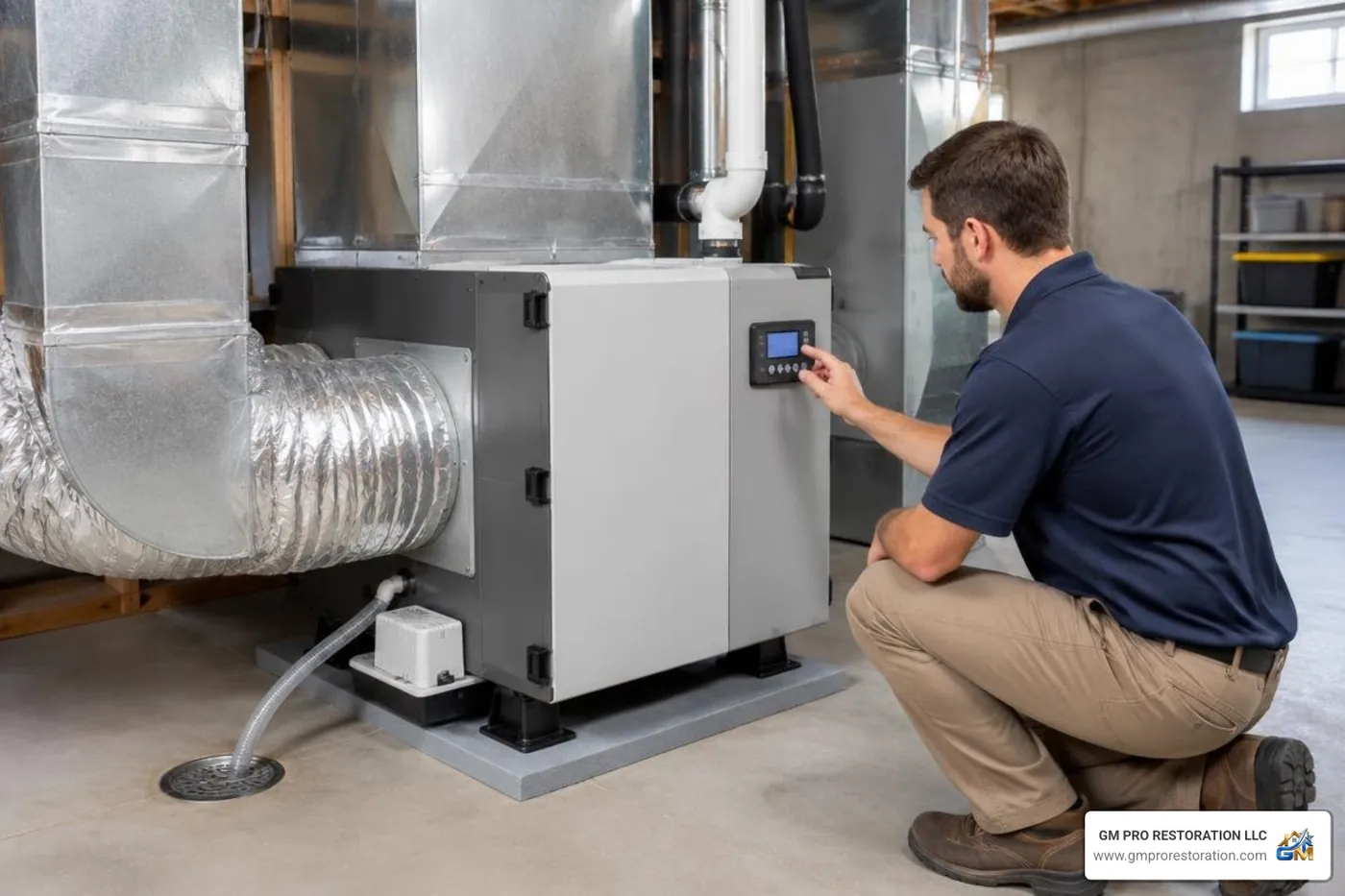
- Target Indoor Relative Humidity: Use digital hygrometers to monitor indoor humidity. Aim to keep indoor levels between 30% and 50% year-round; never allow relative humidity to sit above 60% for extended periods.
- Upgrade Air Filtration: Install high-efficiency pleated filters (MERV 8 to MERV 11) in your HVAC unit and change them every 60 to 90 days.
- Inspect Condensate Lines: Regularly flush your air conditioner's condensate drain line with white vinegar or install an automated float switch that shuts off the unit if the drain line blocks.
- Use Exhaust Fans Diligently: Run bathroom exhaust fans during showers and for at least 20 minutes afterward. Ensure kitchen range hoods and clothes dryers vent directly to the exterior, not into attics or crawl spaces.
- Seal Ductwork: Inspect accessible ductwork in attics and crawl spaces. Leaky return ducts can pull moist, dusty air from unconditioned zones and distribute it throughout the house.
Frequently Asked Questions About Charlotte Mold Remediation
How much does mold remediation cost in the Charlotte area?
The cost of mold remediation in Charlotte typically ranges from several hundred dollars for localized, surface-level containment jobs to several thousand dollars for extensive, whole-home or crawl space structural remediations. Key factors influencing total cost include:
- The total square footage of affected space
- The accessibility of the mold (e.g., open drywall vs. tight attic rafters or crawl space joists)
- The type and volume of structural materials requiring removal and reconstruction
- The need for specialized containment equipment, air scrubbing, and post-clearance testing
Honest, transparent assessments help isolate the exact scope of work so you only pay for necessary remediation steps.
Can I stay in my home during professional mold removal?
In many cases involving small or localized containment—such as a single isolated bathroom or laundry room—homeowners can remain safely inside the home while technicians work. The heavy containment barriers and negative air pressure machines prevent spores from escaping into unaffected living areas.
However, if mold contamination is widespread throughout multiple rooms, involves the central HVAC system, or requires full subfloor removal, temporary relocation for a few days may be recommended for comfort and safety. Occupants with severe respiratory conditions, infants, or elderly family members should generally avoid active remediation zones.
What certifications should a Charlotte mold specialist have?
When hiring a mold remediation provider in North Carolina, look for:
- IICRC Certification: Verification of credentials like Water Damage Restoration (WRT) and Applied Microbial Remediation Technician (AMRT).
- Comprehensive Insurance: Active general liability and dedicated pollution/environmental liability coverage.
- Clear Protocols: A transparent remediation plan following industry standards rather than vague "spray-and-walk-away" promises.
- Local Track Record: Verifiable customer reviews and established roots in the greater Charlotte and Mecklenburg County community.
Conclusion
Indoor mold growth is a common consequence of Charlotte's warm, humid climate and seasonal storms, but it doesn't have to compromise your property's value or your family's health. By identifying moisture sources early, maintaining balanced indoor humidity, and avoiding the pitfalls of temporary DIY fixes, you can keep your home safe and dry throughout every season.
When you need an honest, root-cause assessment and fast emergency response, our team at GM PRO RESTORATION LLC is here to help. Contact us today for expert mold remediation in Charlotte, NC and let our certified specialists restore your property's safety and indoor air quality.