
Indoor Mold Spore Testing Methods and Results Decoded
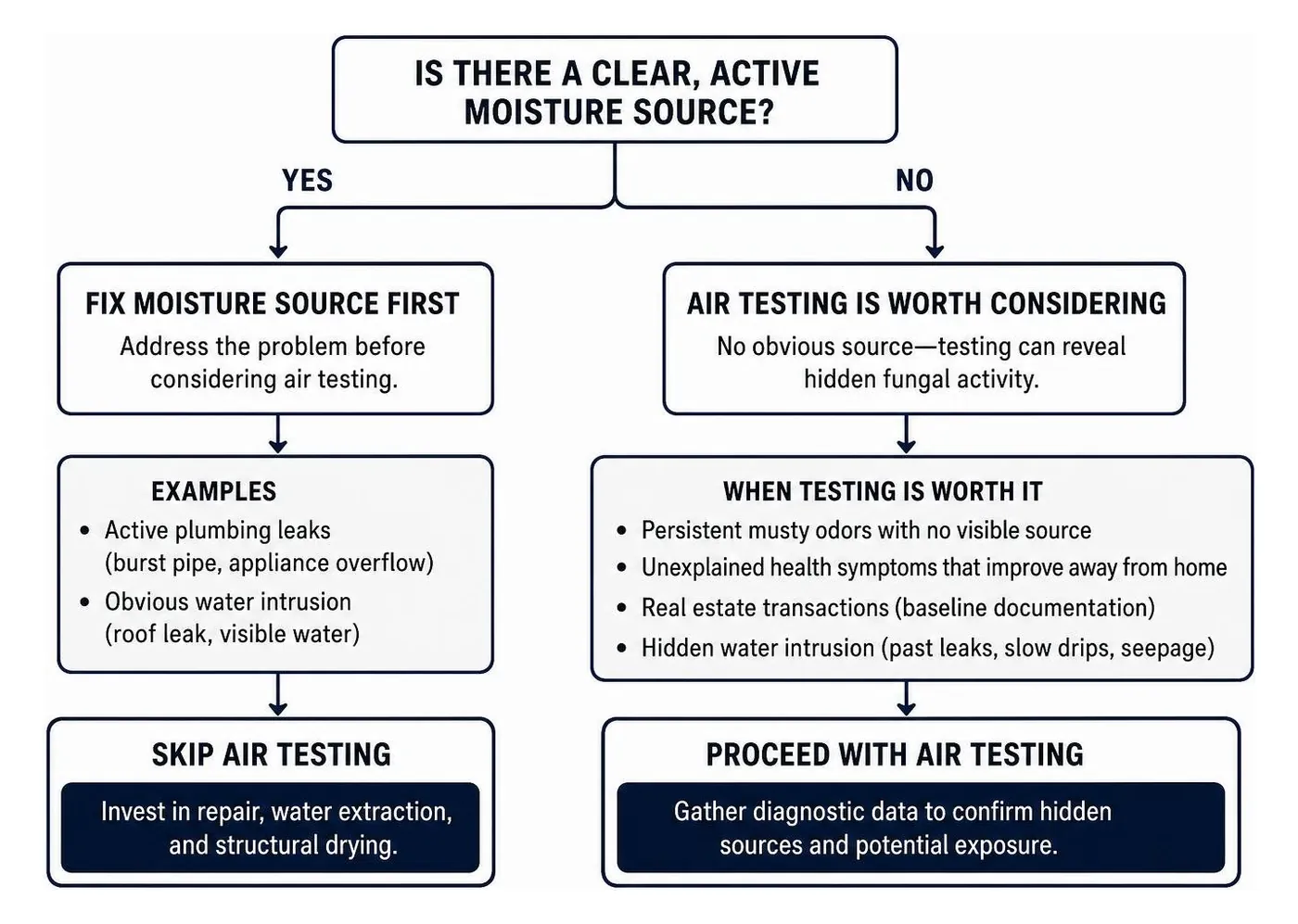
When to Evaluate Indoor Air vs. When to Skip Testing
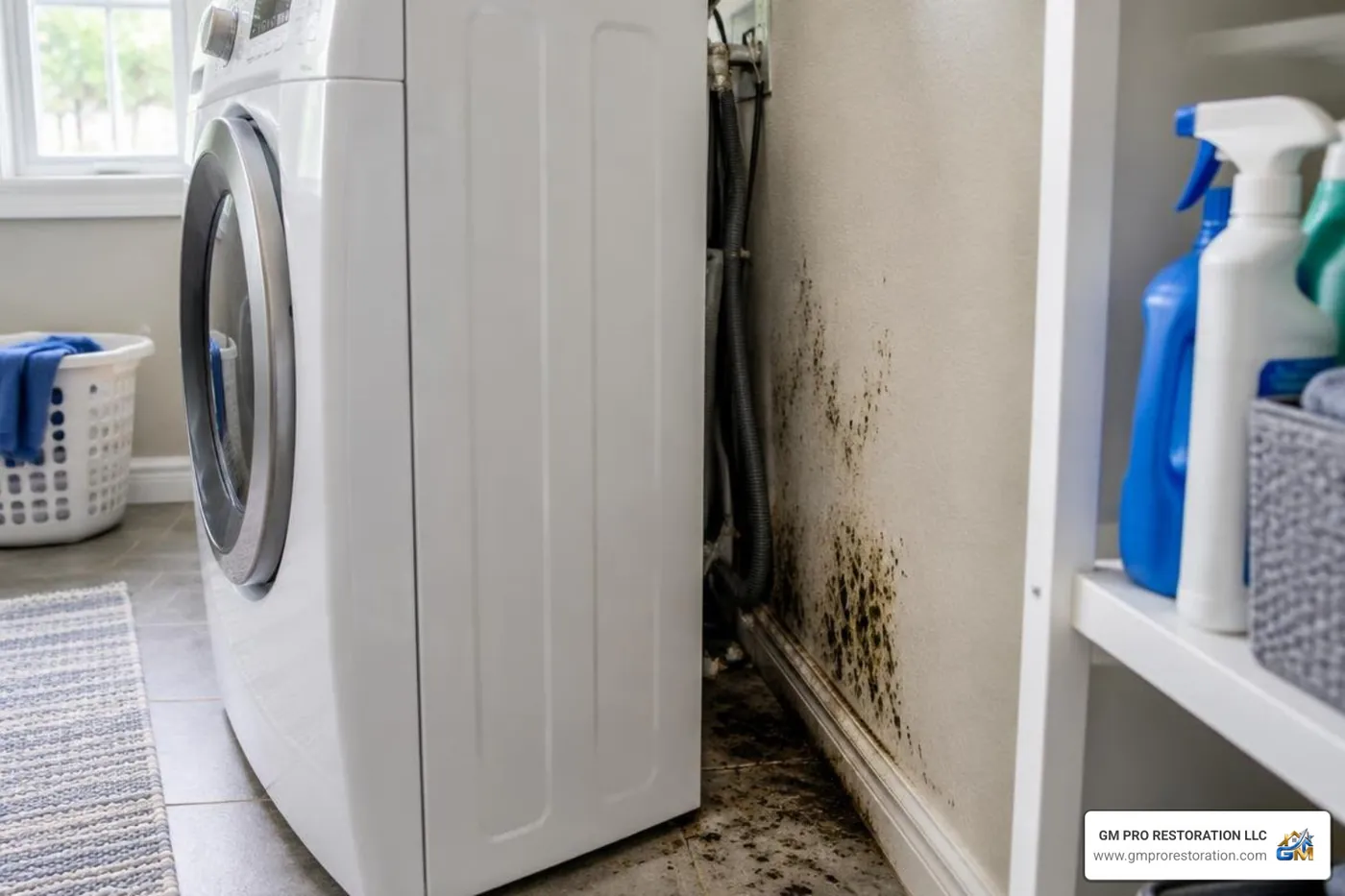
Mold air quality testing measures airborne spore concentrations per cubic meter—primarily via active spore-trap cassettes—and results are interpreted by comparing indoor species and counts against an outdoor baseline control. Understanding when to test saves both time and financial resources.
When Air Testing Is Worth the Investment
Testing indoor air provides actionable diagnostic data under specific circumstances:
- Persistent Musty Odors Without Visible Source: An earthy, sour smell signals volatile organic compounds (microbial VOCs) generated by active colonies. When walls look pristine but the smell persists, air testing helps confirm whether an active fungal source is tucked away inside wall cavities, crawlspaces, or HVAC ductwork.
- Unexplained Health Symptoms: If household members experience recurring respiratory irritation, coughing, or sinus congestion that improves when leaving the house, testing helps evaluate potential exposure levels.
- Real Estate Transactions: Documenting baseline air quality gives buyers and sellers objective, legally defensible information regarding indoor fungal ecology during property transfers.
- Hidden Water Intrusion: Past roof leaks, slow pipe drips, or foundation seepage often produce colonies inside subfloors or behind baseboards that remain invisible to the naked eye.
When to Skip Testing Completely
Testing is often an unnecessary expense in scenarios where the problem and solution are already obvious:
- Small, Visible Growth: According to Environmental Protection Agency (EPA) guidelines, if visible mold covers less than 10 square feet (roughly a 3-foot by 3-foot patch), formal air testing is rarely needed before cleanup.
- Active Plumbing Leaks: If a pipe bursts or an appliance overflows, testing the damp air before repairing the leak accomplishes little. The money is far better allocated toward immediate plumbing repair, physical extraction, and rapid structural drying.
Core Mold Air Quality Testing Methods Compared
Evaluating indoor fungal ecology relies on several sampling approaches, each measuring distinct environmental parameters.
| Method | Turnaround Time | 2026 Typical Cost | Primary Diagnostic Value | Main Limitation |
|---|---|---|---|---|
| Active Spore Trap | Same-day to 3 days | $300–$700 (bundle) | Quantifies total airborne spores (alive & dead) per m³ | Snapshot in time; transient fluctuations |
| Passive Settle Plates | 5 to 7 days | $10–$40 per kit | Low-cost screening; captures what falls by gravity | Misses non-culturable species; biased toward heavy spores |
| Surface Tape/Swabs | 1 to 3 days | $20–$50 (lab fee) | Confirms surface fungal genus and structure | Does not quantify airborne inhalation exposure |
| ERMI Dust Analysis | 2 to 3 weeks | $150–$300 per sample | DNA quantification of 36 indicator species; historical record | Reflects past accumulation; cannot confirm current airborne levels |
Active Spore-Trap Sampling
Active spore-trap sampling serves as the standard field method for assessing inhalation exposure. An investigator pulls a precise volume of air through a specialized cassette—such as an Air-O-Cell—using a calibrated vacuum pump operating at a set flow rate (typically 15 liters per minute for 5 to 10 minutes).
Inside the cassette, airborne particulates impact an optically clear, sticky glass slide. The laboratory calculates volumetric spore concentrations, reported as raw counts and converted to spores per cubic meter (spores/m³). This approach captures both viable (living) and non-viable (dead or dormant) spores, providing an accurate evaluation of total particulate load in the room's air volume.
For homeowners evaluating at-home sampling options, commercial consumer kits like the GOT MOLD? Test Kit utilize similar professional-grade spore-trap principles to categorize airborne exposure.
Limitations of DIY Petri Dish and Passive Settling Kits
Retail gravity-settling kits (often called petri dish tests) cost between $10 and $30 at hardware stores, but they carry fundamental scientific limitations:
- Gravity Settling Bias: These dishes rely on spores settling out of the air onto an agar gel. Heavy, large spores fall quickly, while lighter spores (such as Aspergillus or Penicillium) remain suspended and escape capture.
- Culturable-Only Limitation: Only living spores that thrive on that specific agar recipe will grow. Dead or dormant spores—which still contain allergenic proteins and mycotoxins—fail to grow entirely.
- High False Positive Rates: Because mold spores naturally exist everywhere outdoors and indoors, leaving an open petri dish exposed for an hour will almost always grow colonies, often triggering false alarms.
For passive monitoring over extended multi-day windows without culture media, products like the MoldKit - At Home Mold Test Kit collect settling dust and particulates directly for microscopic review rather than relying on agar growth.
Surface Swabs, Tape Lifts, and ERMI Dust Analysis
When visible discoloration appears on joists, baseboards, or drywall, direct surface sampling confirms whether the stain is active fungal growth, efflorescence, or soot. Tape lifts preserve the delicate fruiting structures of mold colonies, allowing a microbiologist to identify the exact genus under a microscope.
For chronic exposure assessments, Environmental Relative Moldiness Index (ERMI) testing uses mold-specific quantitative polymerase chain reaction (MSQPCR) to analyze settled dust. Developed alongside EPA researchers using a national database of 1,096 homes, ERMI quantifies 36 specific indicator species:
- 26 Group 1 Species: Fungi associated with water-damaged buildings (Stachybotrys chartarum, Chaetomium globosum, Aspergillus versicolor).
- 10 Group 2 Species: Common outdoor fungi found in typical homes (Cladosporium herbarum, Alternaria alternata).
The lab calculates an ERMI metric ranging from roughly -10 to +20. While valuable for evaluating historical accumulation, ERMI does not differentiate between an old resolved leak and an active, airborne hazard.
Traditional Slide Microscopy vs. AI-Powered Lab Diagnostics
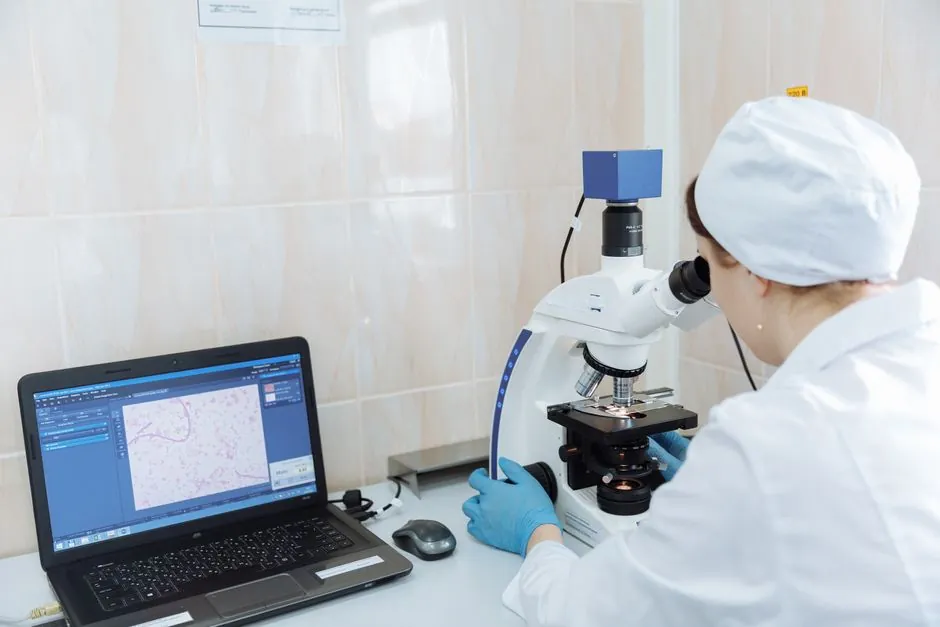
Once spore traps reach an environmental testing laboratory, the slides undergo microscopic analysis.
In traditional manual microscopy, a laboratory technician visually reviews a portion of the slide trace—frequently just 20% to 30% of the total impaction area—and mathematically extrapolates the full count.
Modern analytical facilities have integrated automated high-resolution optical scanning with artificial intelligence algorithms. AI systems scan 100% of the slide trace, categorizing more than 90 distinct spore types and particle classifications while reducing human fatigue errors. This automation enables same-day reporting at competitive lab price points. Comprehensive field overviews on these testing mechanics can be found in resources like the Testing for Mold in House: 2026 Complete Homeowner Guide - InspectandTest.
How to Decode Mold Lab Reports and Spore Counts
A mold lab report presents a breakdown of identified fungal structures, raw counts, and calculated concentrations per cubic meter (counts/m³). Reading these documents requires looking past total numbers to examine specific species patterns.
Key Indicator Species
Not all fungal spores carry the same significance:
- Aspergillus / Penicillium: Common indoor air contaminants associated with moisture problems. While low levels are normal, sharp indoor spikes relative to outdoors suggest hidden reservoir amplification.
- Stachybotrys chartarum: A slow-growing, heavy-spored mold requiring sustained, high moisture saturation (such as soaked cellulose drywall or subflooring). Finding even low concentrations (e.g., 20–100 spores/m³) in indoor air indicates an active or disturbed moisture source, as these spores do not easily aerosolize without airflow disturbance.
- Chaetomium: Another primary indicator of ongoing water intrusion, commonly found in sheetrock paper and baseboards following chronic condensation or unresolved plumbing leaks.
The Essential Role of the Outdoor Baseline Control
Indoor air is not sterile. Outdoor air naturally contains thousands of fungal spores per cubic meter, predominantly Cladosporium, Alternaria, and basidiospores from soil and decaying plant matter.
An air test cannot be interpreted without an outdoor reference sample collected at the same property under identical environmental conditions. The outdoor baseline serves as the ecological control:
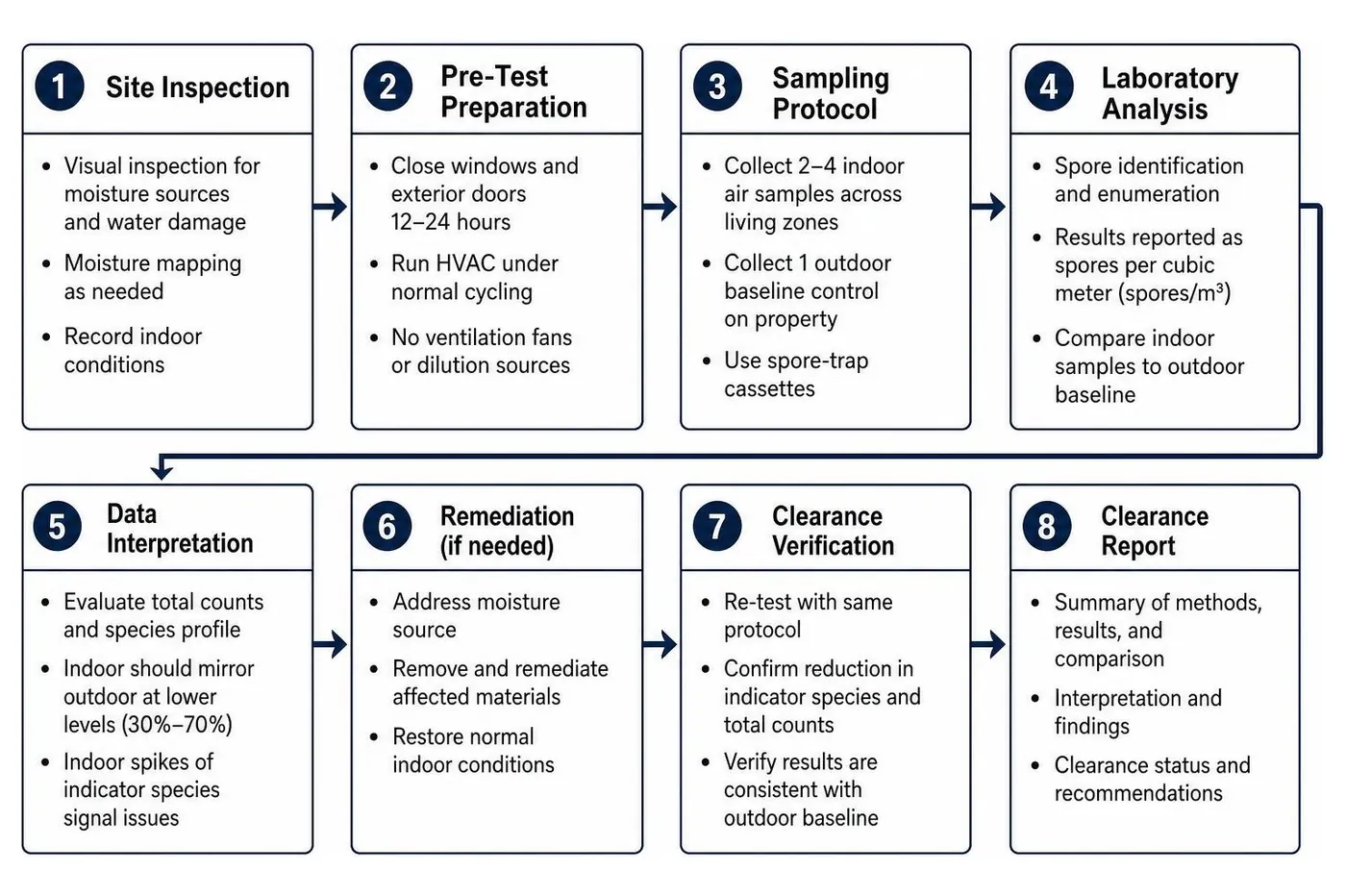
- Normal Conditions: Indoor air should mirror outdoor flora composition at lower total concentrations (typically 30% to 70% of outdoor levels), with outdoor-dominant species like Cladosporium remaining dominant indoors.
- Atypical Ecology: An indoor environment exhibiting lower total counts than outdoors can still indicate an indoor air problem if the indoor air is dominated by water-damage indicator species that are absent outdoors.
Environmental Influences and Relative Humidity Thresholds
Testing results are heavily influenced by ambient indoor and outdoor conditions:
- Relative Humidity (RH): When indoor RH climbs above 60% to 65%, ambient conditions foster surface spore germination on household dust and fabrics even without a localized pipe leak.
- Closed-Building Conditions: Accurate residential testing requires windows and exterior doors to remain closed for 12 to 24 hours prior to sampling. Operating ventilation fans or leaving windows open dilutes indoor air with outdoor air, skewing sample data.
- HVAC Operation: Central air systems should run under normal cycling modes during testing to evaluate everyday distribution patterns across living zones.
What It Costs, and How to Vet Who Does It
What the Different Sampling Routes Cost
Residential mold diagnostic costs vary based on scope, instrumentation, and diagnostic complexity:
- DIY Retail Petri Dishes: $10 to $30 (without lab analysis); $40 to $80 per kit if mailing to an external lab for genus identification.
- Professional Air Sampling Packages: $300 to $700 for a standard residential package, which typically includes an on-site physical inspection, moisture mapping, 2 to 4 indoor spore-trap cassettes, and an outdoor baseline control.
- Single Professional Sample Add-on: $75 to $150 per additional room cassette beyond the base inspection package.
- ERMI Dust Sample Processing: $150 to $300 per sample, plus site collection fees if sampled by a technician.
- Post-Remediation Clearance Verification: $300 to $600 for containment visual verification, moisture logging, and independent clearance air cassettes.
Mistakes That Make a Lab Report Useless
Flawed sampling protocols yield uninterpretable lab data that can lead to misdirected remediation. Common testing mistakes include:
- Omitting the Outdoor Control: Attempting to evaluate indoor spore counts without an outdoor reference collected on the same day invalidates the findings.
- Sampling During Severe Weather Events: High winds, heavy snow, or active torrential rain disrupt natural outdoor spore release, rendering outdoor baseline ratios temporarily inaccurate.
- Failing to Calibrate Pumps: Uncalibrated flow meters draw unknown air volumes, making volumetric math (spores/m³) inaccurate.
- Hiring Conflicted Contractors: Using the same company to perform initial diagnostic testing, execute remediation, and write the final clearance report creates an inherent conflict of interest. Testing and remediation oversight should maintain independent checks and balances.
Post-Remediation Clearance and Chain of Custody
Following professional structural remediation, clearance testing verifies that the building has returned to a normal fungal ecology (Condition 1 status under the IICRC S520 standard).
The clearance process involves:
- Visual Inspection: Ensuring all containment areas, framing, and surfaces are clean and free of visible dust, debris, and staining.
- Moisture Equilibrium Checks: Confirming structural framing has dried below 15% wood moisture equivalent (WME).
- Clearance Spore-Trap Samples: Running active air cassettes within contained work zones while air scrubbers are turned off.
Every sample must travel with a formal Chain-of-Custody (COC) document. The COC records sample identification numbers, collection dates, exact sampling times, pump flow rates, total liters drawn, physical location coordinates, and transfer signatures. This paperwork establishes an unbroken, legally defensible record required by insurance carriers and real estate legal disclosures.
Frequently Asked Questions About Indoor Mold Spore Testing
What is the difference between air sampling and surface sampling?
Air sampling measures the concentration of fungal spores suspended in your breathing zone, capturing both viable and non-viable particles floating in the room. Surface sampling (swabs or tape lifts) evaluates visible physical growth or residue on building materials to confirm whether a localized stain is fungal and identify its structural genus. Air sampling answers what is in the air, while surface sampling answers what is growing on that spot.
How long does it take to get mold air test results back?
Standard turnaround for professional spore-trap cassette analysis is 2 to 3 business days once the laboratory logs the physical samples. Laboratories utilizing automated AI image analysis often return verified electronic data within 24 hours or same-day if received before midday. Passive culture-based methods require 5 to 7 days for fungal colonies to incubate, while ERMI DNA analyses typically require 1 to 2 weeks.
Can an air quality test pinpoint the exact location of hidden mold?
Air sampling alone indicates the presence and relative concentration of airborne spores within a room, but it cannot pinpoint the exact wall cavity housing the colony. Pinpointing hidden growth requires combining room-by-room volumetric spore gradients with non-invasive diagnostic tools, including thermal imaging cameras to spot cold moisture patterns and pinless moisture meters to detect wet drywall or subflooring.
Conclusion
Understanding indoor air quality requires looking beyond raw numbers to evaluate the complete environmental context. Interpreting mold air quality testing depends on comparing indoor spaces to outdoor ecological baselines, recognizing water-damage indicator species, and following disciplined sampling protocols.
When tests reveal atypical spore concentrations or persistent moisture hazards, effective recovery focuses on identifying the root moisture source, executing proper physical containment, and safely removing compromised materials. For comprehensive diagnostic assessments, water extraction, structural drying, and certified mold remediation services in Charlotte, NC, our team at GM PRO RESTORATION LLC provides thorough root-cause evaluations and emergency response to restore clean, healthy indoor air.