
Breathing Easy Without Going Broke on Air Quality Testing Costs
Indoor Air Quality Testing Cost: What to Budget First
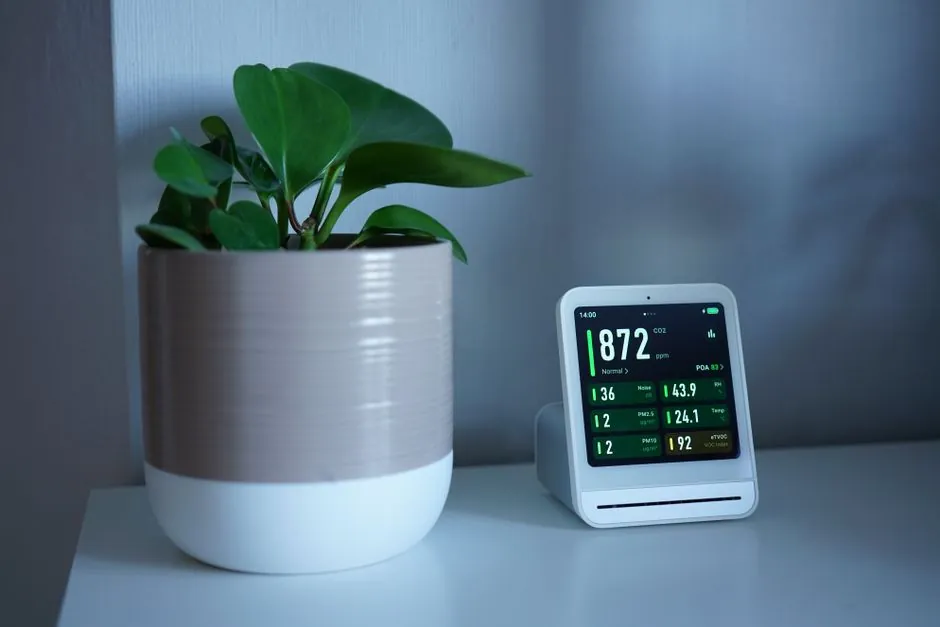
For most homes, professional indoor air quality testing starts around $200 to $600 for a basic test in a small area or single room. A more complete whole-home assessment often runs $600 to $2,000. The price can rise when testing for several pollutants, sending samples to a lab, inspecting HVAC systems, or verifying mold cleanup after water damage.
If you are dealing with a musty odor, visible mold, recent flooding, or ongoing respiratory irritation, ask for an itemized quote. It should clearly state:
- How many rooms or air samples are included
- Which pollutants are being tested, such as mold spores or VOCs
- Whether laboratory analysis and a written report are included
- Whether clearance testing or ventilation inspection costs extra
A low initial price may cover only one sample. Comparing the full scope of two or three quotes helps Charlotte-area homeowners avoid surprise lab, travel, or follow-up charges and choose testing that actually answers the problem.
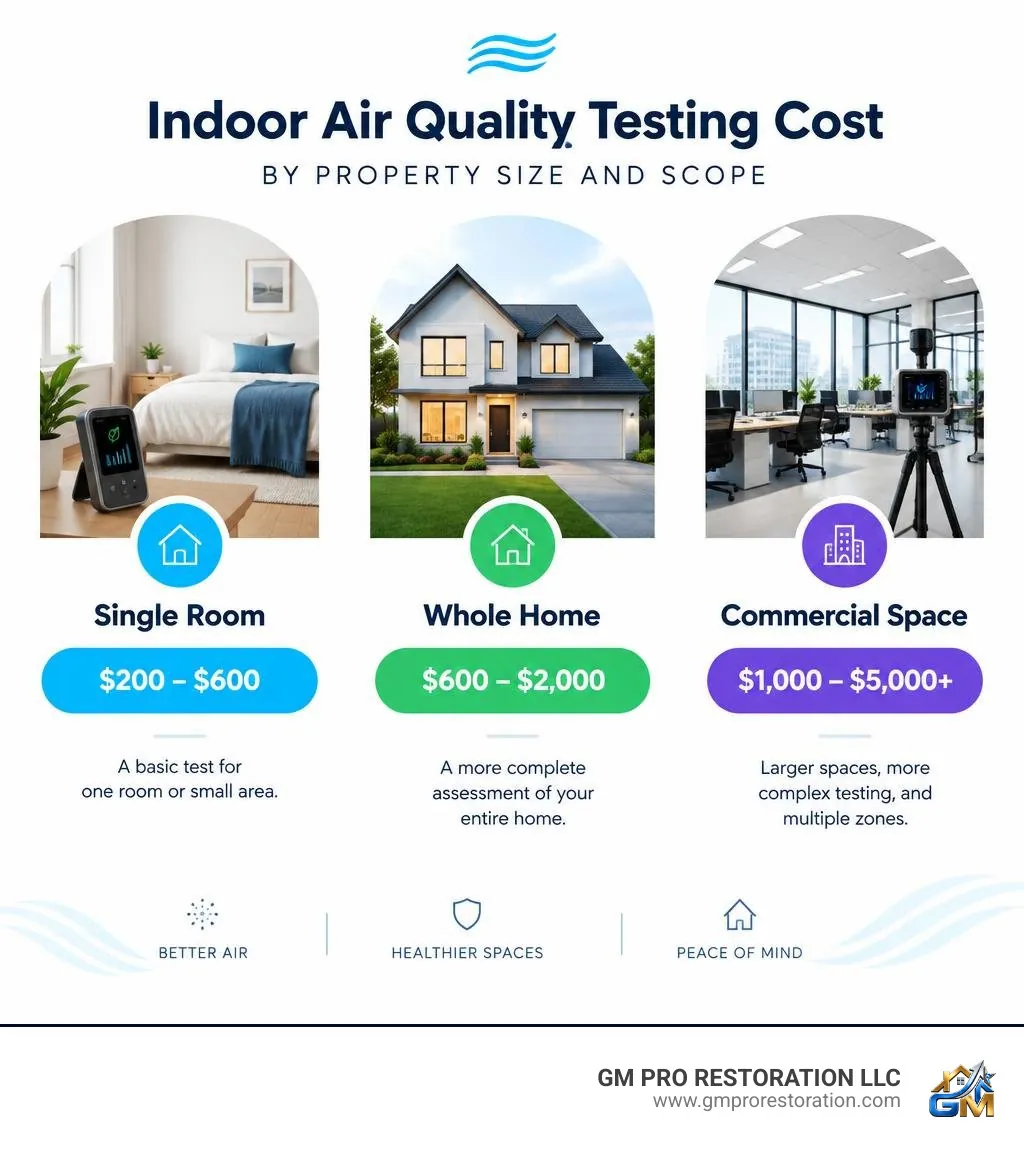
Typical Pricing by Property Size and Scope
When planning your budget, the total square footage and overall layout of your property play a central role in shaping testing expenses. Air does not simply sit still; it circulates across distinct zones, gets trapped in basements, and interacts with different building materials. As a result, assessing a compact apartment requires a vastly different approach than evaluating a multi-story house or a bustling commercial facility.
Industry pricing frameworks generally scale according to the time spent collecting samples, the specialized gear required, and the volume of physical cassettes sent to accredited laboratories. To help plan your investment, consider these typical industry ranges:
| Property Size / Project Scope | Estimated Price Range | What Is Typically Included |
|---|---|---|
| Targeted Spot Check (Single Room) | $200 – $600 | 1–2 indoor air samples, 1 outdoor baseline sample, visual check of suspect area |
| Small Home / Condo (< 1,500 sq. ft.) | $400 – $800 | 2–3 indoor samples, 1 outdoor baseline, moisture screening, particulate counts |
| Standard Single-Family (1,500 – 3,000 sq. ft.) | $600 – $1,200 | 3–5 indoor samples across living zones, outdoor control, comprehensive report |
| Large Estate (3,000+ sq. ft.) | $1,200 – $2,000+ | Multi-level zoning, extended HVAC sampling, VOC screening, thermal imaging |
| Commercial Space / Office (< 5,000 sq. ft.) | $1,000 – $2,500 | Multi-occupant zone sampling, airflow analysis, regulatory compliance documentation |
| Large Commercial / Industrial Complex | $3,000 – $6,000+ | Full facility mapping, dedicated HVAC plenum testing, comprehensive multi-gas logging |
Beyond square footage, factors like property layout, the number of independent heating and cooling zones, and specific occupant health concerns will determine the required sample count and final price.
Single Room vs. Whole-Home Assessments
Homeowners often ask whether they can save money by testing just one problematic room. If you notice a distinct musty smell confined to a guest bathroom or suspect a leak behind a laundry room wall, an isolated spot check is an economical starting point. A basic single-room test generally includes one or two indoor air samples paired with an outdoor baseline sample to compare background spore counts.
However, air moves dynamically throughout a home via central ductwork and natural pressure differences. What starts as a hidden problem in a crawl space can quickly disperse particulates into upstairs bedrooms.
A whole-home evaluation provides a complete cross-section of your living environment. We evaluate indoor humidity, monitor particulate matter across several zones, and capture comparative samples on every finished level. For homeowners seeking comprehensive air quality testing in Charlotte NC, whole-home diagnostics offer lasting peace of mind by pinpointing hidden contaminants before they spread.
Commercial Space and Multi-Building Pricing
Commercial buildings, retail spaces, and educational facilities involve higher testing stakes and logistical complexity. In commercial environments, assessments must account for high-volume foot traffic, complex multi-zone commercial HVAC systems, and strict workplace safety guidelines.
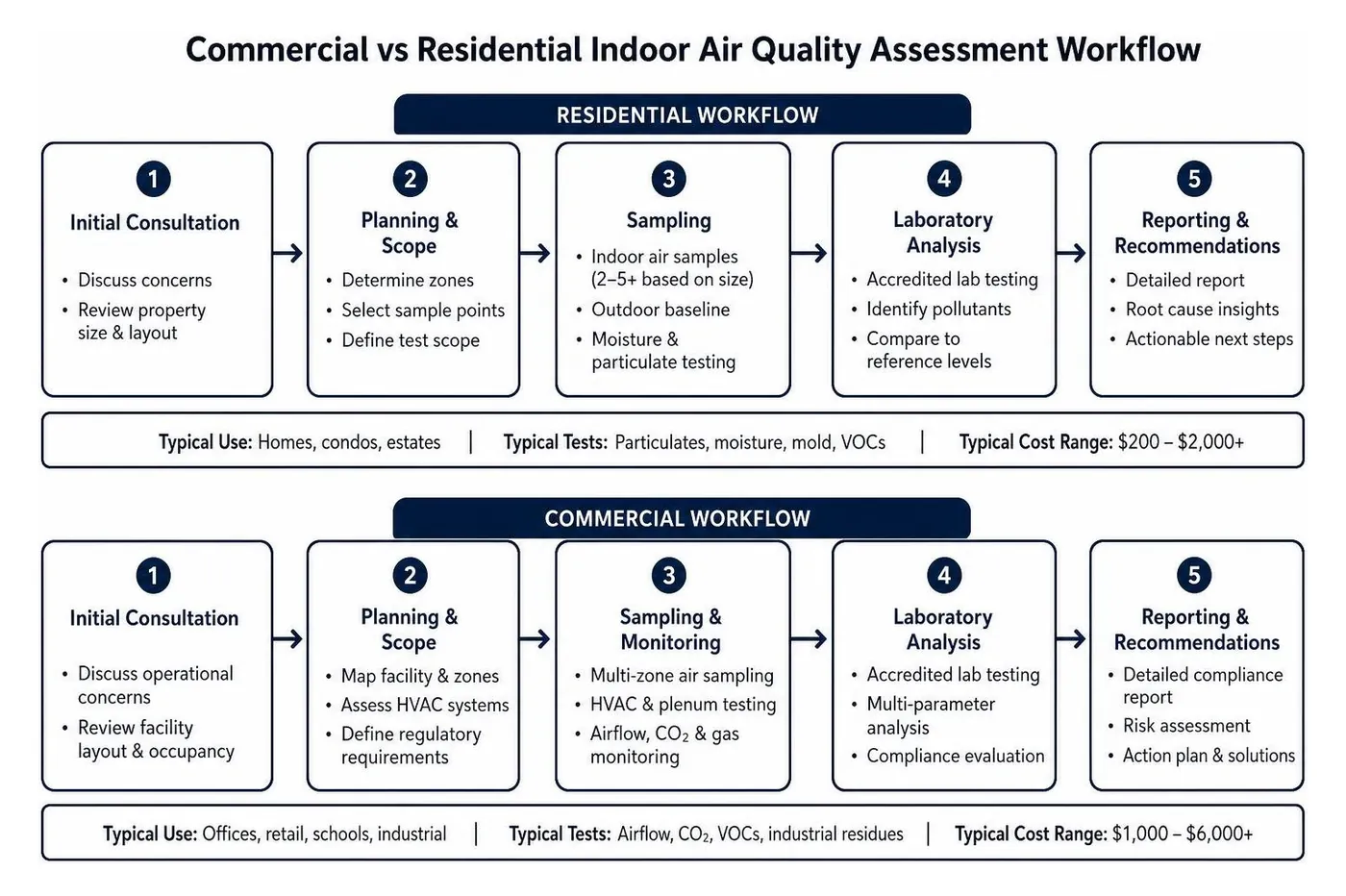
Commercial assessments typically start at $1,000 and can exceed $6,000 for large corporate campuses or manufacturing facilities. Testing protocols in these settings evaluate airflow dynamics, monitor carbon dioxide buildup from occupancy, screen for industrial chemical residues, and verify ventilation compliance. Detailed reporting provides facility managers with actionable data to maintain occupant safety and satisfy commercial property standards.
Major Factors Influencing What You Pay for Environmental Air Assessments
The final invoice for an environmental assessment reflects several technical elements beyond property size. Understanding these variables ensures you select the right scope of service without overpaying for unnecessary add-ons.
- Number of Physical Samples Collected: Third-party accredited laboratories charge a direct processing fee for every air cassette, swab, or direct lift examined under a microscope or gas chromatograph.
- Diagnostic Tools and Technology: High-precision instruments—such as calibrated calibrated sampling pumps, laser particle counters, photoionization detectors (PIDs), and thermal imaging cameras—require regular calibration and upkeep.
- Turnaround Time Expectations: Standard laboratory processing takes between 3 to 5 business days. If you require emergency 24-hour rush processing for real estate deadlines or severe health events, labs apply a surcharge ranging from 50% to 100% per sample.
- Physical Inspection Depth: A standalone air test measures ambient particles, but finding the root source often requires checking wall cavities, checking crawl spaces, and using thermal imaging to identify hidden moisture pockets.
To explore the broader context of building diagnostics, review our detailed guide on environmental restoration services.
Pricing by Contaminant: Mold, VOCs and Particulates
Different indoor airborne hazards require specialized collection protocols and laboratory instruments:
- Mold Spore Trap Analysis ($250 – $650): Air is drawn through a calibrated cassette where airborne mold spores adhere to a glass slide. A licensed microbiologist identifies the specific genera (such as Stachybotrys, Aspergillus/Penicillium, or Cladosporium) and calculates spore concentrations per cubic meter. For targeted assessments, schedule professional mold testing services alongside a comprehensive mold inspection.
- Volatile Organic Compounds (VOC) Screening ($400 – $900): Off-gassing from new carpets, fresh paint, adhesives, and cleaning chemicals releases chemical vapors. Testing typically involves evacuated stainless steel canisters (Summa canisters) or sorbent tubes analyzed via Gas Chromatography-Mass Spectrometry (GC-MS) to detect hundreds of chemical compounds.
- Particulate Matter and Allergen Profiling ($300 – $600): Optical laser counters measure fine particulate matter (PM2.5 and PM10), pet dander, insect fragments, and pollen to evaluate overall indoor air cleanliness.
- Radon Gas Testing ($150 – $350): Continuous electronic radon monitors or charcoal canisters measure radioactive decay products entering through foundations and crawl spaces over a minimum 48-hour period.
Permitting, Regulatory Requirements, and Lab Processing Fees
In select residential and commercial scenarios, testing protocols must satisfy specific local, state, or federal environmental standards. When real estate transactions, tenant-landlord disputes, or insurance claims are involved, testing requires strict adherence to legal chain-of-custody protocols.
Licensed environmental consultants send samples exclusively to labs accredited by organizations such as the American Industrial Hygiene Association (AIHA) or the Environmental Microbiology Laboratory Accreditation Program (EMLAP). These certifications ensure every test result is legally defensible and scientifically accurate.
Comparing Approaches: DIY Testing Kits vs. Professional Inspections
When indoor air concerns arise, hardware store shelves offer retail test kits priced between $20 and $50. While these kits appear budget-friendly at first glance, understanding their limitations helps avoid inaccurate conclusions.
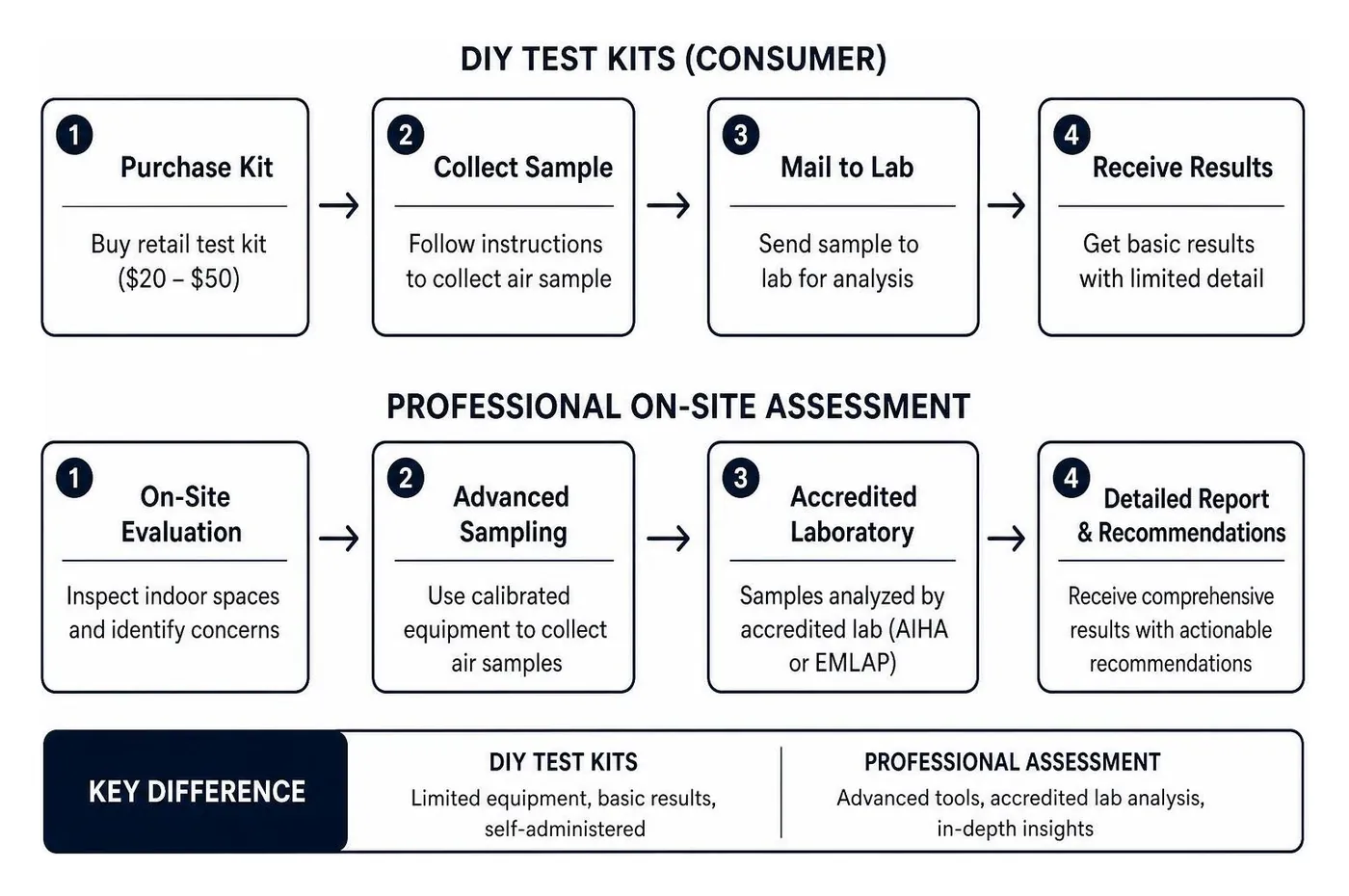
DIY Kits vs. a Professional Assessment
| Feature / Metric | Over-the-Counter DIY Kits | Professional Assessment |
|---|---|---|
| Initial Upfront Cost | $20 – $50 | $300 – $1,200 |
| Hidden Lab Analysis Fees | $40 – $80 per sample (mandatory) | Fully included in upfront quote |
| Sampling Precision | Passive gravity settling (variable) | Calibrated volume air displacement |
| Outdoor Baseline Control | Rarely included or evaluated | Always included for accurate comparison |
| False Positive/Negative Risk | High (naturally occurring spores settle) | Low (controlled scientific collection) |
| Actionable Source Guidance | None (provides only raw names) | Full diagnostic report with root-cause identification |
Consumer Petri dish kits rely on settling: you open a dish, leave it on a table, and wait for mold spores to land. Because mold spores naturally exist in all indoor and outdoor air, something will almost always grow in the dish. This frequently triggers unnecessary panic without revealing whether the spores are benign outdoor varieties or hazardous indoor strains. Furthermore, retail kits do not measure spore concentration per cubic meter, leaving you without context on actual exposure levels.
When to Call a Certified Air Quality Specialist
While a consumer monitor is helpful for tracking daily relative humidity or total particulate trends, professional diagnostic sampling becomes necessary under several key conditions:
- Unexplained, persistent respiratory issues, coughing, headaches, or allergy flare-ups that improve when leaving the house
- Lingering musty odors where no visible source can be located
- Visible microbial growth expanding on baseboards, drywall, or around HVAC supply vents
- Previous unresolved plumbing leaks, roof failures, or crawl space moisture intrusion
- High-stakes real estate transactions requiring documented clearance
If you need localized expertise, our team provides certified air quality assessments in Concord NC as well as dedicated air quality testing in Fort Mill SC.
Additional Air Quality Assessment Considerations
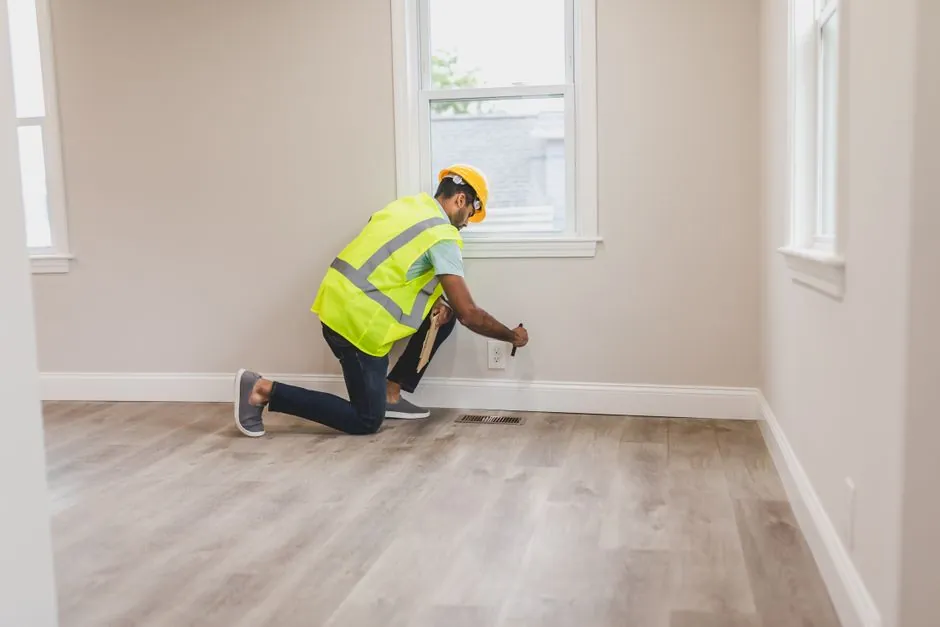
A comprehensive air quality evaluation examines more than just the ambient air in your living room. The structural dynamics and mechanical systems within your home significantly influence indoor environmental health.
HVAC and Ventilation Factors in Air Quality Testing
Your heating and air conditioning system functions as the lungs of your home. If return plenums pull humid air from an unsealed crawl space, or if ductwork contains heavy organic debris, the system can distribute contaminants to every room whenever the blower runs.
A complete assessment includes:
- Checking the integrity of air filtration systems (MERV ratings and filter fit)
- Measuring static pressure differentials and fresh air exchange rates
- Inspecting evaporator coils and condensate drain pans for standing water
- Examining duct lining for particulate accumulation and microbial growth
For homeowners in northern Mecklenburg County, we deliver comprehensive air quality testing in Huntersville NC designed to identify and resolve HVAC-driven air distribution issues.
Clearance and Post-Remediation Testing
Following moisture mitigation or mold cleanup, clearance testing provides objective, scientific proof that the remediation was successful. Known within the restoration industry as post-remediation verification (PRV), this process ensures that containment zones were effective and that indoor air quality has returned to normal ecology.
Clearance testing involves:
- Conducting a visual inspection under high-lumen lighting to ensure work areas are dust-free.
- Collecting comparative air samples inside the containment zone and adjacent living areas.
- Confirming that airborne spore concentrations inside the treated space are equal to or lower than outdoor background levels.
To learn more about professional remediation standards, explore our guide to certified mold remediation.
How to Gather and Compare Quotes for the Best Value
When evaluating estimates from environmental testing companies, clear comparisons prevent unexpected expenses. To get an accurate sense of cost, read this helpful overview on the Cost of Indoor Air Quality Testing: Pricing & Factors | Heating Installation.
Be cautious of estimates that seem unusually cheap—such as a "$99 whole-home special." These promotions often serve as sales leads where the initial fee covers only an inspector stepping through the door. Once inside, fees for physical sample collection, individual lab processing, and written interpretations are billed separately.
Always request an itemized proposal that outlines the total sample count, lab processing fees, moisture mapping diagnostics, and written report delivery. If you need honest, transparent indoor air quality testing services, our experienced technicians provide clear diagnostics and support. We also provide dedicated air quality testing in Matthews NC and surrounding communities.
Frequently Asked Questions About Indoor Air Quality Assessments
How much does a basic indoor air quality test usually cost?
A standard residential indoor air quality test generally costs between $300 and $600. This baseline assessment typically includes visual moisture screening, laser particulate monitoring, and 2 to 3 physical air samples (such as one outdoor reference sample and two indoor samples) sent to an accredited lab with a complete analytical report.
Does insurance cover the cost of air quality testing?
Homeowners insurance may cover testing expenses if the assessment is directly related to a covered peril, such as sudden and accidental pipe bursts, mechanical water failures, or structural fire and smoke incidents. However, insurance policies rarely cover testing for routine maintenance issues, long-term humidity buildup, or gradual foundation seepage. Review our home restoration FAQ for additional details on navigating property insurance claims.
How often should indoor air quality be tested in a home?
Routine testing is not required every year for modern, dry properties. However, testing is recommended whenever:
- You complete major structural renovations or install extensive new building materials.
- Your home experiences plumbing leaks, roof leaks, or crawl space flooding.
- Household members develop chronic, unexplained respiratory symptoms.
- You are buying or selling a residential property.
Conclusion
Investing in your indoor environmental health does not require an excessive budget. By understanding property dimensions, sample counts, and laboratory requirements, you can select an assessment that fits your specific needs while protecting your household.
At GM PRO RESTORATION LLC, we take pride in delivering honest, root-cause assessments across the greater Charlotte region. We do not rely on guesswork or high-pressure tactics. Instead, we use calibrated sampling technology and certified third-party laboratory analysis to identify air quality problems and provide clear, practical solutions.
Whether you need targeted indoor air quality testing in Charlotte NC or complete whole-home diagnostics across the Charlotte metro area, our team is ready to help. Contact our environmental team today to schedule a comprehensive assessment and protect your indoor living space.