
High Indoor Carbon Dioxide: What the Numbers Mean and How to Fix It
Check CO2 Levels in Your House Before Stale Air Becomes a Bigger Problem
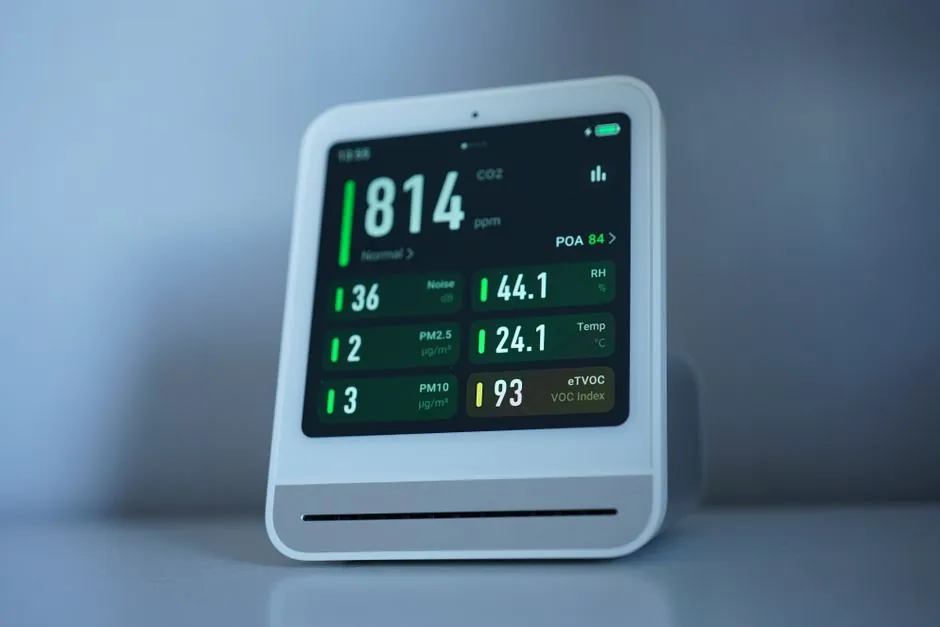
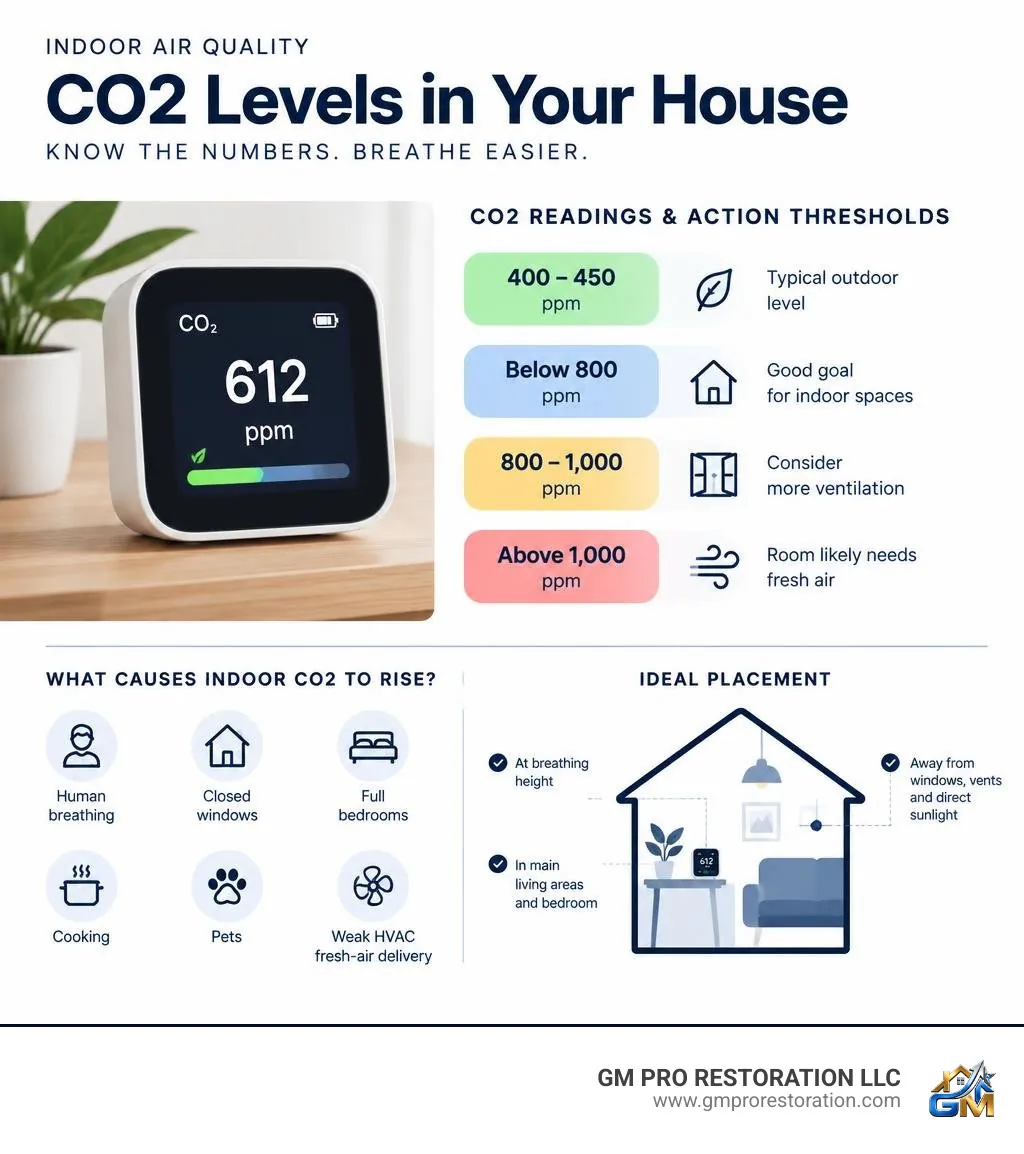
To check the CO2 level in a room, use a reliable NDIR carbon dioxide monitor. Place it at breathing height, away from windows, supply vents, and direct sunlight. Let it run in the bedroom and main living area for several hours, including overnight. Readings below about 800 ppm are generally a good goal; repeated readings above 1,000 ppm often mean the room needs more fresh-air ventilation.
Indoor CO2 rises mainly because people breathe it out. Closed windows, tightly sealed homes, full bedrooms, cooking, and weak HVAC fresh-air delivery can allow it to build up. High readings do not prove a home has mold or other pollutants, but they can be a useful warning sign that stale air and moisture may not be leaving the house effectively.
If you notice morning headaches, stuffiness, sleepiness, or trouble concentrating in certain rooms, measure CO2 first. The numbers can help you decide when simple window ventilation is enough and when a whole-home ventilation or indoor air quality assessment may be needed.
Understanding Indoor Carbon Dioxide: Sources and Thresholds
Carbon dioxide (CO2) is a natural gas produced by living organisms and combustion. In the natural outdoor environment, CO2 levels hover around 400 to 450 parts per million (ppm). Indoors, however, concentrations fluctuate dramatically depending on occupancy, room volume, and mechanical air exchange.
The primary driver of indoor CO2 buildup is ordinary human respiration. An average adult exhales roughly 0.04 cubic meters of carbon dioxide every single hour. In a tightly sealed room with multiple occupants or pets, those exhalations accumulate rapidly. Additional internal sources include:
- Unvented gas stoves and ovens operating during food preparation
- Gas, propane, or kerosene space heaters
- Wood-burning fireplaces and poorly drafted chimneys
- Attached garages lacking proper air sealing
Modern building practices prioritize energy efficiency. While thick insulation and tight building envelopes lower utility bills by preventing air leakage, they also trap metabolic emissions indoors. Without controlled mechanical ventilation, fresh air exchange drops below healthy physiological requirements.
According to guidelines established by industry authorities such as ASHRAE Standard 62.1 (Ventilation for Acceptable Indoor Air Quality), maintaining indoor levels below 800 to 1,000 ppm ensures sufficient fresh air delivery for comfort and cognitive function. If you are experiencing unexplained stuffiness or recurring respiratory irritation, scheduling comprehensive indoor air quality testing can pinpoint whether high carbon dioxide, volatile organic compounds, or moisture imbalances are driving the issue.
| CO2 Level (ppm) | Air Quality Classification | Associated Effects & Physiological Impact |
|---|---|---|
| 400 – 450 | Outdoor Baseline | Normal ambient outdoor concentrations; optimal freshness. |
| 450 – 800 | Good Indoor Air | Ideal range for residential bedrooms and living spaces; optimal oxygen delivery. |
| 800 – 1,000 | Acceptable / Fair | Minor air stagnation; ventilation is adequate but approaching stale thresholds. |
| 1,000 – 1,500 | Warning Zone | Measurable drop in cognitive performance, focus, and perceived air freshness; feelings of drowsiness. |
| 1,500 – 2,000 | Poor Air Quality | Heavy air feeling, lethargy, reduced decision-making speed, and morning headaches. |
| 2,000 – 5,000 | Hazardous / Stagnant | Significant fatigue, nausea, increased heart rate, and severe concentration impairment. |
Health Symptoms and Risks of Elevated CO2
Many people mistake the physical symptoms of high carbon dioxide for ordinary exhaustion, dehydration, or allergies. When CO2 levels rise beyond 1,000 ppm, your lungs must work harder to exchange gases across alveoli, which slightly shifts blood pH levels and reduces oxygen delivery efficiency to the brain.
Common health symptoms linked to elevated residential CO2 include:
- Persistent Drowsiness: Unexplained mid-day sluggishness or the classic "afternoon slump" when working inside a closed home office.
- Morning Headaches: Waking up feeling unrefreshed, congested, or with a dull headache after sleeping in a closed-door bedroom where CO2 accumulated overnight.
- Impaired Decision-Making: Laboratory studies show significant reductions in complex problem-solving, strategic thinking, and information processing when concentrations surpass 1,200 ppm.
- Restless Sleep: Elevated concentrations trigger micro-arousals during sleep cycles, reducing deep REM sleep duration.
- Respiratory Fatigue: Shallow breathing, mild chest tightness, and increased sensitivity to other ambient airborne irritants.
Target Concentration Guidelines and Danger Zones
To keep your home healthy, aim for clear benchmark ranges. We recommend maintaining indoor concentrations between 400 and 800 ppm during normal daytime occupancy and under 900 ppm in closed sleeping quarters.
The range between 1,000 and 1,500 ppm serves as an operational warning zone. While not an immediate medical emergency, this range indicates that your home's air exchange rate has fallen behind occupancy needs. Sustained levels above 2,000 ppm demand immediate ventilation intervention. Commercial OSHA standards establish an 8-hour permissible exposure limit of 5,000 ppm, but residential spaces require much tighter thresholds to support restorative rest, long-term well-being, and sustained mental clarity.
How to Measure Indoor CO2 Accurately
Accurate measurement begins with selecting the proper sensor technology. Many inexpensive multi-gas monitors use metal-oxide semiconductor (MOS) or electrochemical sensors that estimate carbon dioxide based on other volatile gases (often called "equivalent CO2" or eCO2). These estimates are notoriously inaccurate because common household chemicals, cooking vapors, and alcohol wipes produce false spikes.
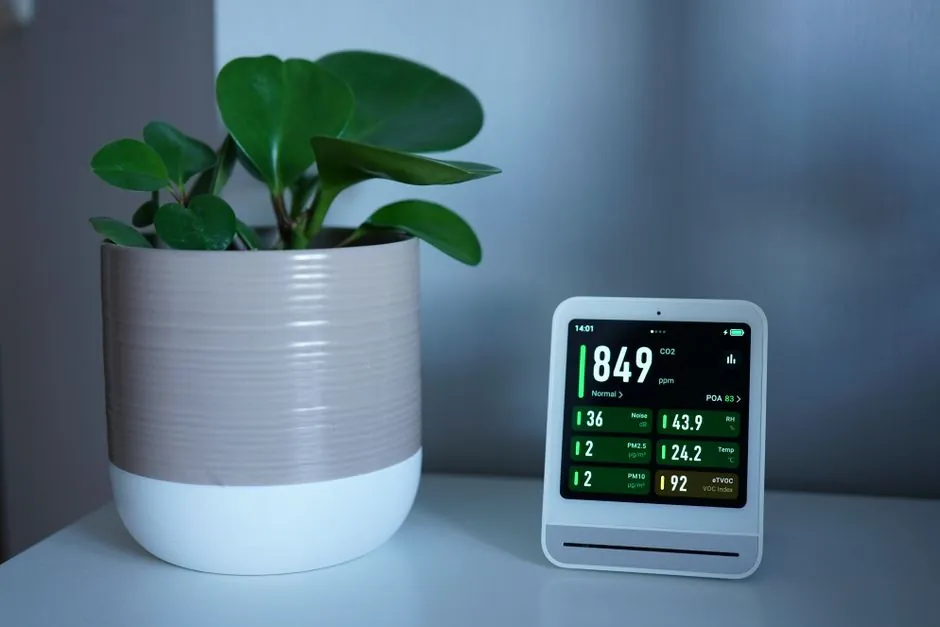
True, scientific measurement requires a Non-Dispersive Infrared (NDIR) sensor. NDIR technology works by passing infrared light through an optical chamber filled with sampled room air. Because CO2 molecules absorb infrared light at a very specific wavelength (4.26 microns), the detector measures how much light reaches the other side. More absorbed light translates to a higher, highly accurate parts-per-million reading.
Which Monitor to Use
When shopping for or utilizing air quality diagnostics, look for these instrument categories:
- Stand-Alone NDIR Monitors: Dedicated tabletop units featuring an onboard optical sensor, real-time digital display, and battery or USB power.
- Smart Air Quality Monitors: Multi-sensor hubs that record CO2, humidity, temperature, and particulate matter (PM2.5), transmitting historical trend lines directly to your smartphone.
- Data-Logging Instruments: Professional-grade tools capable of recording minute-by-minute fluctuations over seven-day continuous cycles.
- Portable Handheld Detectors: Useful for rapid spot-checking across multiple rooms, crawlspaces, or HVAC plenum returns.
Ensure your chosen device features either automatic baseline calibration (ABC) or manual outdoor calibration. If utilizing ABC, the monitor recalibrates its lowest reading to 400 ppm over an 8-day cycle, meaning the room must drop to outdoor baseline levels periodically (such as when the house is empty and ventilated).
Step by Step: Taking a Reading Room by Room
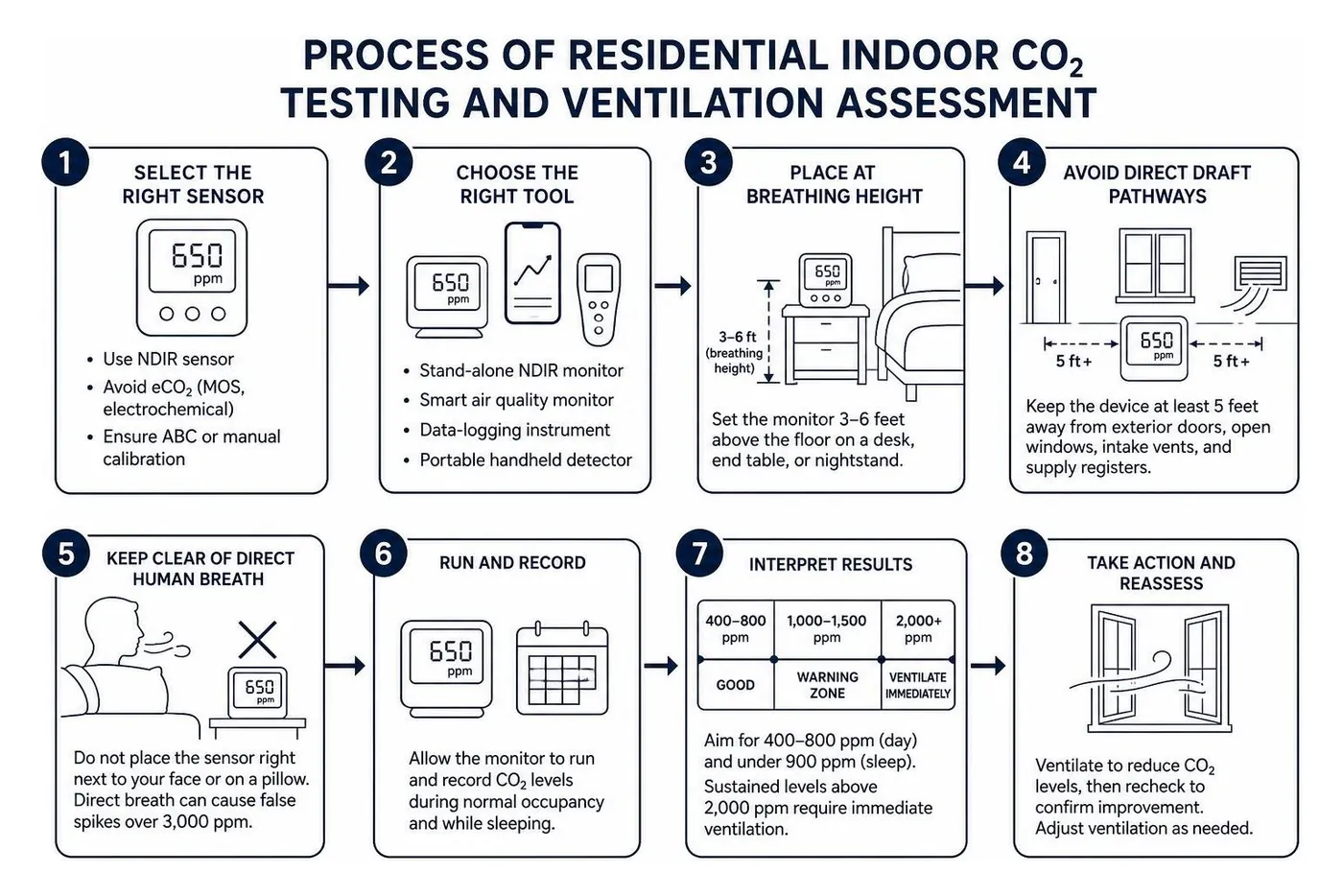
To capture reliable data across your home, follow this testing sequence:
- Place the sensor at breathing height: Set the monitor between 3 to 6 feet above the floor (on a desk, end table, or nightstand), matching where people actually breathe whether sitting or sleeping.
- Avoid direct draft pathways: Keep the device at least 5 feet away from exterior doors, open windows, fresh-air intake vents, and forced-air supply registers.
- Keep clear of direct human breath: Do not place the sensor immediately next to your face or on a pillow, as direct exhaled breath will cause false spikes reading over 3,000 ppm.
- Log overnight bedroom levels: Run the monitor inside primary bedrooms with doors and windows closed under normal sleeping conditions to document peak morning accumulation.
- Monitor multi-room occupancy: Shift the device to living rooms, basements, and home offices during high-occupancy hours (such as family dinners or remote workdays).
- Compare against outdoor baselines: Periodically place the monitor outside in a shaded, protected area for 15 minutes to verify that the sensor reads accurately near 400–450 ppm.
Effective Strategies and Technologies to Reduce High Indoor CO2
Lowering indoor carbon dioxide does not require rebuilding your home. It involves implementing reliable air exchange methods to replace stale, metabolically exhausted air with filtered outdoor air.
HVAC Integration and Fresh Air Delivery
Standard residential split HVAC systems do not bring fresh air inside; they merely heat, cool, and recirculate existing indoor air through a filter. To achieve consistent CO2 dilution throughout the seasons, consider these integrated mechanical upgrades:
- Energy Recovery Ventilators (ERVs): ERVs exchange stale indoor air for fresh outdoor air while transferring heat and humidity between the incoming and outgoing airstreams. This keeps fresh air entering your home without driving up summer humidity or winter utility costs.
- Heat Recovery Ventilators (HRVs): Best suited for colder northern climates, HRVs transfer sensible heat between airstreams to deliver fresh air without thermal loss.
- Motorized Fresh-Air Dampers: Electronically controlled intake dampers installed on your return ductwork that open periodically when the central blower runs to pull in metered volumes of filtered outdoor air.
- Demand-Controlled Ventilation (DCV): Smart thermostat-connected systems that continuously monitor room CO2 levels and automatically activate intake fans whenever levels cross a preset limit (such as 900 ppm).
Daily Source Control and Ventilation Habits
In addition to mechanical systems, consistent daily habits will significantly reduce everyday gas accumulation:
- Run Kitchen Range Hoods: Always turn on your dedicated range hood when cooking on gas ranges, and ensure it vents directly outside rather than recirculating air into the kitchen.
- Maintain Bedroom Door Clearances: Keep interior doors slightly ajar or ensure bedroom doors have a 1-inch undercut clearance above the flooring to allow air to circulate toward central return grilles.
- Practice Cross-Ventilation Flushes: Open opposing windows for 10 to 15 minutes twice daily to create a cross-breeze that purges stale air rapidly without overcooling interior surfaces.
- Manage Indoor Moisture Sources: Because unventilated homes trap both CO2 and excess humidity, unchecked stagnation can create ideal conditions for biological growth. If you observe musty odors or condensation alongside poor air movement, a professional mold inspection will verify whether stagnant conditions have compromised structural materials.
Frequently Asked Questions About Indoor Carbon Dioxide
Review our frequently asked questions page for additional insights on home restoration and air quality diagnostics.
What is the ideal CO2 level to maintain in a bedroom overnight?
The ideal target for an occupied bedroom overnight is between 600 and 800 ppm, with 1,000 ppm serving as the practical upper limit. In tightly sealed bedrooms with closed doors and two adult occupants, carbon dioxide frequently exceeds 2,000 to 2,500 ppm by 5:00 AM.
This severe accumulation disrupts restorative sleep cycles and causes morning brain fog. Leaving the bedroom door cracked open two inches, opening a window slightly, or running an active fresh-air intake can easily keep morning numbers below 900 ppm.
How quickly does opening a window lower indoor CO2?
Opening a single window can drop room CO2 from 1,500 ppm down to near-outdoor baseline (450 ppm) within 10 to 20 minutes, provided there is a slight cross-breeze or temperature differential between indoors and outdoors.
For the fastest dilution kinetics, open two windows on opposite sides of the room or house to induce cross-ventilation. This rapidly purges exhaled gases without altering the temperature of your home's walls and furnishings.
Can high indoor CO2 levels indicate broader ventilation and mold risks?
Yes. Carbon dioxide serves as the premier proxy measurement for overall residential ventilation efficacy. If human respiration cannot readily dissipate, moisture from showers, cooking, and sweating is also trapped inside wall assemblies and living zones.
Sustained relative humidity above 60% paired with stagnant air pockets creates an optimal breeding ground for fungal spores. If you suspect that inadequate ventilation has allowed hidden spore colonization behind drywall, trim, or ductwork, professional mold testing can assess spore concentrations in the air. When active colonies are identified, certified technicians perform targeted mold remediation to safely contain, extract, and sanitize affected structural components.
Conclusion
Managing indoor carbon dioxide is one of the most effective steps you can take to eliminate unexplained fatigue, enhance sleep quality, and maintain a vibrant home environment. By using an accurate NDIR monitor, keeping concentration levels below 800 to 1,000 ppm, and implementing intentional cross-ventilation or mechanical ERV systems, you take control over the air your family breathes every day.
At GM PRO RESTORATION LLC, we specialize in identifying root-cause environmental issues, moisture imbalances, and biological hazards across North Carolina. If you are struggling with persistent stuffiness, unexplained odors, or stagnant air, schedule professional indoor air quality testing in Charlotte, NC or contact our emergency restoration specialists today for an honest, comprehensive property evaluation.