
What You Breathe Indoors: A Home Air Quality Testing Guide
Why to Test Your Home's Air Regularly
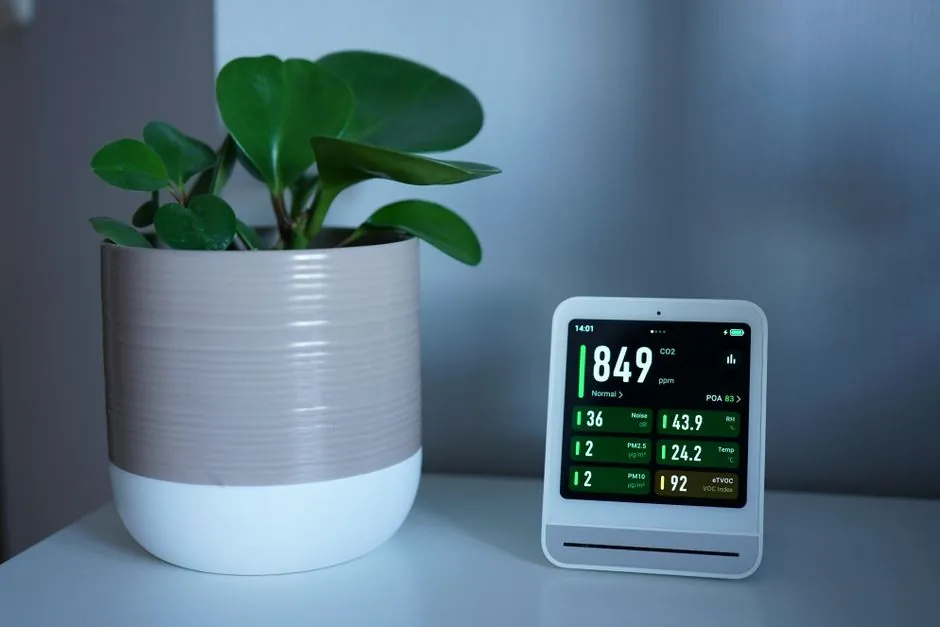
To get a reliable picture of your home's air, use continuous smart indoor air monitors to track daily baselines of PM2.5, carbon dioxide (CO2), and volatile organic compounds (VOCs), paired with dedicated short-term test kits for radon and mold. If persistent symptoms or structural moisture issues arise, professional diagnostic testing provides calibrated spore trap sampling and root-cause analysis.
According to the Environmental Protection Agency (EPA), indoor air can be two to five times more polluted than outdoor air. When you check air quality in house living areas, you uncover invisible environmental factors that directly dictate your daily comfort, sleep quality, and long-term vitality.
Modern construction techniques create airtight buildings designed to maximize thermal efficiency. While this keeps heating and cooling costs down, it also traps indoor allergens, volatile organic compounds (VOCs), and excess moisture inside. Without adequate fresh air exchange, everyday human occupancy leads to steady carbon dioxide accumulation, turning bedrooms and home offices into stagnant environments.
Biological contaminants thrive in these unventilated conditions. A single mattress can harbor between 1 and 2 million dust mites producing roughly 30 million fecal particles daily, alongside shedding up to 200 grams of dead skin cells over time. When combined with elevated moisture from cooking, bathing, and nightly respiration (which adds about 0.5 liters of sweat per person to bedding), relative humidity climbs above healthy thresholds. This elevated moisture creates an ideal breeding ground for hidden mold colonies that release microscopic spores and mycotoxins directly into your breathing zone.
Health Warning Signs That Prompt a Test
Your body often detects poor air quality before basic consumer sensors register a spike. If you or your family members experience chronic, unexplained physical symptoms that seem to vanish when you leave the property, your indoor environment warrants an immediate evaluation.
Pay close attention to these common physiological red flags:
- Airway irritation and chronic coughing: Persistent tickling sensations in the throat, burning nasal passages, or unexplained wheezing that worsens overnight.
- Aggravated seasonal and perennial allergies: Constant sneezing, itchy eyes, and sinus congestion that do not respond predictably to standard antihistamines.
- Unexplained fatigue and brain fog: Waking up tired despite a full night of sleep, often caused by nighttime carbon dioxide spikes or mold-induced inflammation.
- Recurring tension headaches: Frequent morning headaches or midday pressure behind the eyes linked to chemical off-gassing from furniture, paints, or building materials.
- Dermal sensitivity: Sudden bouts of eczema, skin rashes, or hives triggered by airborne dust-mite residues and aerosolized biological irritants.
Key Contaminants to Measure Indoors
An effective residential testing strategy requires knowing precisely which pollutants threaten your home. Rather than looking for a generic "cleanliness" metric, you must evaluate specific chemical, particulate, and biological markers:
- Particulate Matter (PM2.5 and PM10): Fine inhalable particles smaller than 2.5 micrometers travel deep into lung tissue and enter the bloodstream. They stem from cooking oils, wood-burning fireplaces, candles, tobacco smoke, and outdoor infiltration.
- Volatile Organic Compounds (VOCs) and Formaldehyde: Gaseous chemicals emitted by new carpets, engineered flooring, fresh paint, adhesives, aerosol cleaning sprays, and dry-cleaned fabrics.
- Carbon Dioxide (CO2): An essential proxy for overall ventilation adequacy. High CO2 concentrations indicate that stale air is recirculating without adequate outdoor air exchange.
- Carbon Monoxide (CO): A colorless, odorless, and deadly combustion byproduct generated by malfunctioning furnaces, water heaters, gas stoves, and attached garages.
- Radon Gas: A naturally occurring, radioactive soil gas that enters basements and foundations through concrete cracks, serving as the leading environmental cause of lung cancer.
- Relative Humidity: The baseline environmental metric that governs biological growth. Indoor humidity levels consistently above 55% accelerate dust mite reproduction and fungal amplification.
Step-by-Step Methods to Test Your Indoor Air
Evaluating your home's air does not require guesswork. A structured testing methodology combines continuous baseline tracking with targeted contaminant screenings to establish an accurate indoor environmental profile.
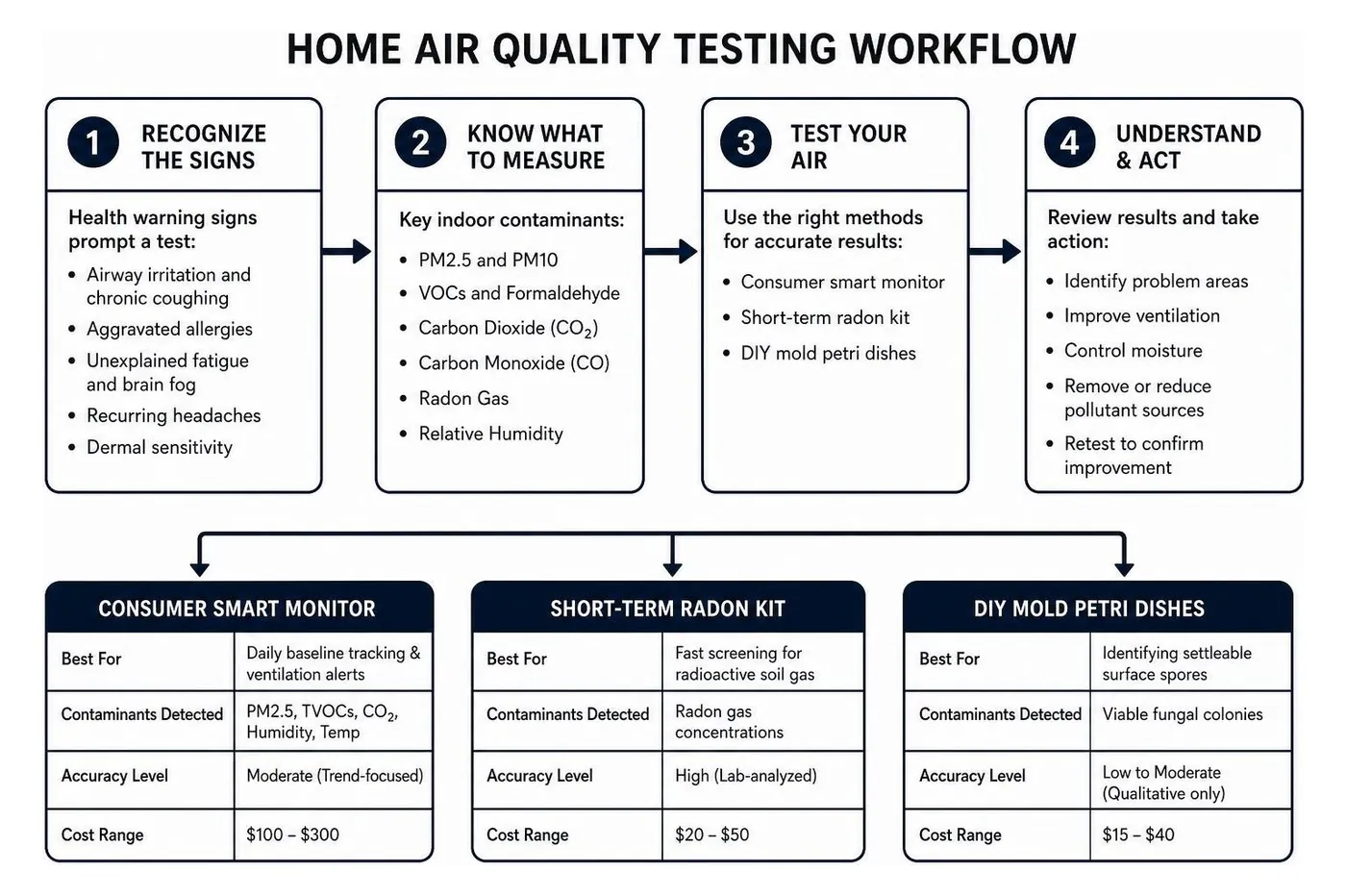
| Method | Best For | Contaminants Detected | Accuracy Level | Cost Range |
|---|---|---|---|---|
| Consumer Smart Monitor | Daily baseline tracking & ventilation alerts | PM2.5, TVOCs, CO2, Humidity, Temp | Moderate (Trend-focused) | $100 – $300 |
| Short-Term Radon Kit | Fast screening for radioactive soil gas | Radon gas concentrations | High (Lab-analyzed) | $20 – $50 |
| DIY Mold Petri Dishes | Identifying settleable surface spores | Viable fungal colonies | Low to Moderate (Qualitative only) | $15 – $40 |
| Professional Spore Trap & IAQ Analysis | Comprehensive diagnostics & water damage | PM, VOCs, Viable/Non-viable Mold, CO | Very High (NIST/AIHA accredited) | $400 – $1,200+ |
Start With a Continuous Smart Monitor
Continuous digital IAQ monitors serve as your first line of defense. These devices run 24/7, providing real-time data trends that show how your daily habits—such as searing a steak, hosting dinner guests, or opening windows—impact the air you breathe.
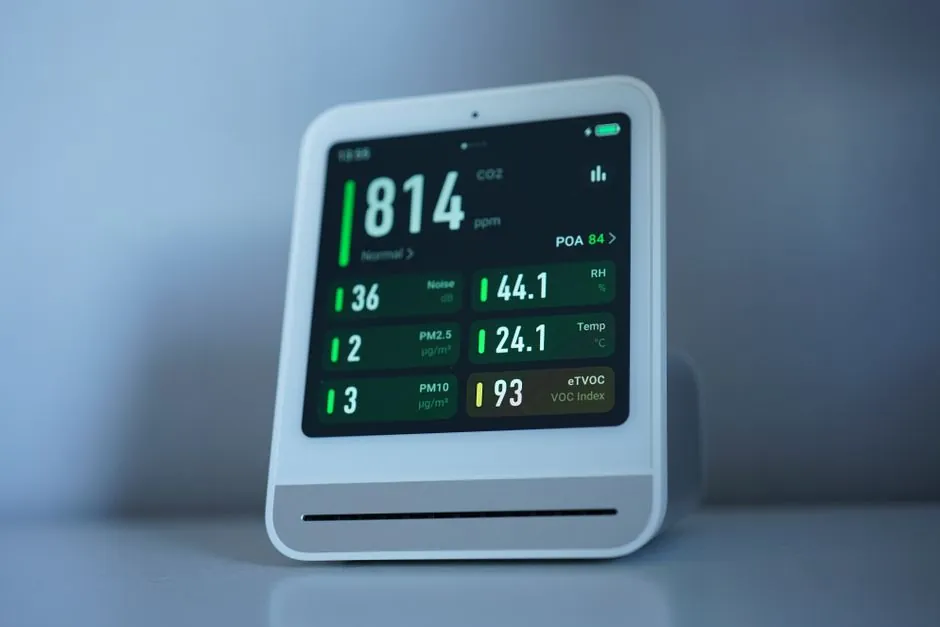
When setting up your digital monitors, place units at breathing height (3 to 5 feet off the floor) in high-occupancy zones like the primary bedroom, living room, and basement. Avoid placing them directly beside exterior doorways, open windows, or cooking ranges to prevent false localized readings.
Modern monitors utilize laser particle counters for PM2.5 detection, non-dispersive infrared (NDIR) sensors for precise CO2 tracking, and metal-oxide semiconductor (MOS) sensors for Total Volatile Organic Compounds (TVOCs). If your monitor reveals CO2 levels consistently climbing above 1,000 ppm during sleep or TVOC levels remaining elevated hours after cleaning, your home suffers from a structural ventilation deficit.
Conduct Targeted Testing for Specific Pollutants
While continuous monitors excel at capturing broad environmental trends, specific hazardous pollutants demand dedicated, targeted testing kits:
- Radon Screening: Deploy a charcoal canister or alpha-track detector on the lowest livable level of your home. Keep all windows and exterior doors closed for 48 hours prior to and during the test, then seal the kit and mail it to a certified radiological laboratory.
- Moisture and Mold Screening: Use pinless moisture meters to check drywall around plumbing fixtures, window frames, and exterior walls. If relative humidity in crawlspaces or basements regularly exceeds 60%, biological growth is likely occurring behind wall cavities.
- Formaldehyde and Specific VOC Badges: Passive sampling badges can be hung in newly renovated spaces for 24 to 72 hours to measure exact parts-per-billion (ppb) concentrations of off-gassing construction chemicals.
- Combustion Gas Verification: Install dedicated, low-level digital carbon monoxide detectors near all sleeping areas and fuel-burning appliances to identify heat exchanger leaks long before standard fire alarms sound.
Professional Testing vs. Home Air Quality Assessments
Consumer monitors and DIY test kits are practical tools for screening and early awareness. However, they cannot establish root causes, detect hidden sub-wall structural hazards, or differentiate between harmless environmental dust and toxic fungal species.
Professional environmental assessments use calibrated laboratory hardware to provide legally defensible, highly granular data. While a DIY petri dish only shows whether airborne spores exist (which is true in every home on Earth), professional spore trap analysis measures exact spore counts per cubic meter of air and compares them against outdoor reference baselines.
What a Professional Assessment Covers
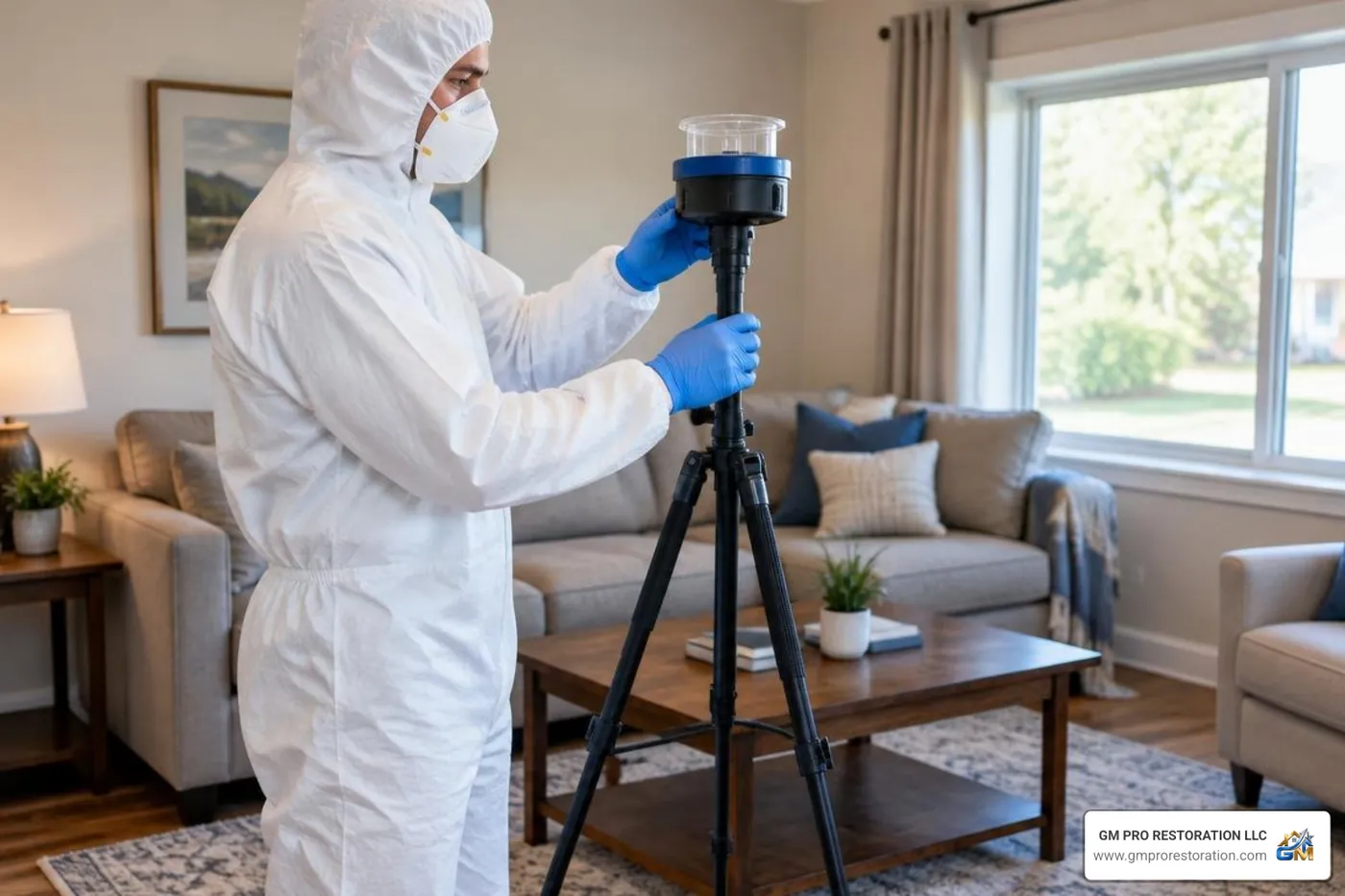
When our certified inspectors conduct a comprehensive indoor environmental assessment, we follow a rigorous diagnostic sequence:
- Visual Building Envelope Inspection: A thorough physical audit of foundations, crawlspaces, attics, roof lines, and HVAC ductwork to spot water intrusion and structural air leakage.
- Thermal Imaging and Moisture Mapping: High-resolution infrared cameras detect hidden moisture pockets behind tiled walls, under floorboards, and inside ceiling assemblies without destructive demolition.
- Spore Trap Air Sampling: Calibrated high-volume vacuum pumps pull precise volumes of air through specialized cassettes, capturing viable and non-viable mold spores, insect fragments, and fiberglass fibers.
- Photoionization Detector (PID) VOC Profiling: Professional-grade spectrometers identify specific chemical classes down to parts-per-billion, isolating the exact materials responsible for chemical off-gassing.
- HVAC Airflow and Static Pressure Testing: Measurement of ductwork static pressure and supply/return balance to verify whether the central system delivers sufficient fresh air exchanges.
Interpreting Air Quality Lab Reports and Readings
Reviewing an accredited laboratory report involves comparing indoor environmental concentrations against established public health standards and outdoor controls.
Key exposure thresholds to understand include:
- Carbon Dioxide (CO2): Outdoor baseline rests near 400–450 ppm. Indoor levels under 800 ppm indicate good ventilation; 800–1,000 ppm reflects acceptable air exchange; levels exceeding 1,200 ppm cause measurable drowsiness, cognitive decline, and headaches.
- PM2.5 Concentrations: The EPA annual standard targets under 9–10 µg/m³. Levels between 12 and 35 µg/m³ can trigger respiratory irritation in sensitive individuals, while spikes above 55 µg/m³ are hazardous.
- Total VOCs (TVOC): Ideal clean indoor air remains below 200 µg/m³ (or <0.3 ppm). Concentrations between 220 and 660 µg/m³ warrant increased ventilation, while readings over 2,200 µg/m³ indicate severe chemical contamination.
- Fungal Spore Baselines: Indoor fungal counts must be qualitatively and quantitatively lower than outdoor reference samples. High indoor concentrations of water-indicator species—such as Stachybotrys chartarum, Chaetomium, or elevated Aspergillus/Penicillium—indicate active indoor amplification fueled by unresolved moisture.
Practical Steps to Improve and Maintain Clean Indoor Air
Once testing clarifies the contaminants present in your living space, use this prioritized hierarchy of environmental controls to restore balanced, healthy indoor air:
- Eliminate Contaminant Sources: Remove chemical sources by switching to zero-VOC paints, solvent-free cleaners, and non-toxic building materials. Avoid synthetic aerosol fragrances, scented candles, and unvented indoor combustion appliances.
- Control Indoor Moisture: Maintain home humidity strictly between 30% and 50%. Install dedicated whole-home dehumidifiers in damp basements and crawlspaces. Always operate kitchen range hoods vented directly outdoors while cooking, and run bathroom exhaust fans for at least 20 minutes following showers.
- Upgrade Central Filtration: Replace standard fiberglass furnace filters with MERV 11 to MERV 13 high-efficiency pleated filters. Ensure your HVAC blower runs periodically throughout the day to continuously scrub ambient air without causing excessive static pressure drops across your furnace coil.
- Introduce Mechanical Fresh Air: In tightly sealed homes, incorporate an Energy Recovery Ventilator (ERV) or Heat Recovery Ventilator (HRV). These balanced mechanical systems continuously expel stale, CO2-laden indoor air while drawing in pre-conditioned, filtered outdoor air.
- Deploy Standalone HEPA Filtration: Place true HEPA air purifiers equipped with dense activated carbon beds in bedrooms and living rooms. True HEPA filters capture 99.97% of airborne particles down to 0.3 microns, removing dust-mite feces, pollen, pet dander, and mold spores from the breathing zone.
Frequently Asked Questions About Home Air Quality
How often should you test indoor air quality?
You should establish an initial air quality baseline immediately, then monitor trends continuously using a smart digital monitor. Conduct formal professional screening annually, or promptly whenever major life events occur: following structural renovations, moving into a new residence, after completing water damage repairs, or when occupants develop unexplained respiratory illnesses.
What is the most common indoor air pollutant in homes?
The most widespread residential pollutants are biological allergens—specifically dust-mite fecal proteins and shedding—followed closely by fine particulate matter (PM2.5) from indoor cooking and volatile organic compounds (VOCs) emitted by commercial cleaning supplies and off-gassing synthetic furnishings.
Can houseplants effectively purify indoor air?
While indoor plants do absorb minor amounts of VOCs through phytoremediation in sealed laboratory chambers, practical residential air exchange rates overwhelm their capacity. You would need a dense jungle of hundreds of plants per room to match the continuous filtration performance of a single standalone HEPA purifier. Furthermore, overwatered houseplant soil can become a breeding ground for biological mold growth, counteracting their intended benefits.
Conclusion
Understanding what you breathe indoors is a cornerstone of proactive home maintenance and personal health. By combining continuous digital monitoring with targeted screenings, you can protect your living space against hidden moisture, chemical off-gassing, and biological allergens before they cause lasting structural or health issues.
When home monitors indicate persistent anomalies, or if your property has a history of water leaks, plumbing failures, or musty odors, standard consumer tools are not enough. Our team at GM PRO RESTORATION LLC specializes in honest, root-cause assessments, moisture mapping, and comprehensive environmental diagnostics across the greater Charlotte area. To schedule a thorough home evaluation, book your professional indoor air quality testing in Charlotte NC with our certified specialists today.