
DIY Mold Spore Testing: When to Check the Air Yourself
How to Do an Air Quality Check for Mold at Home
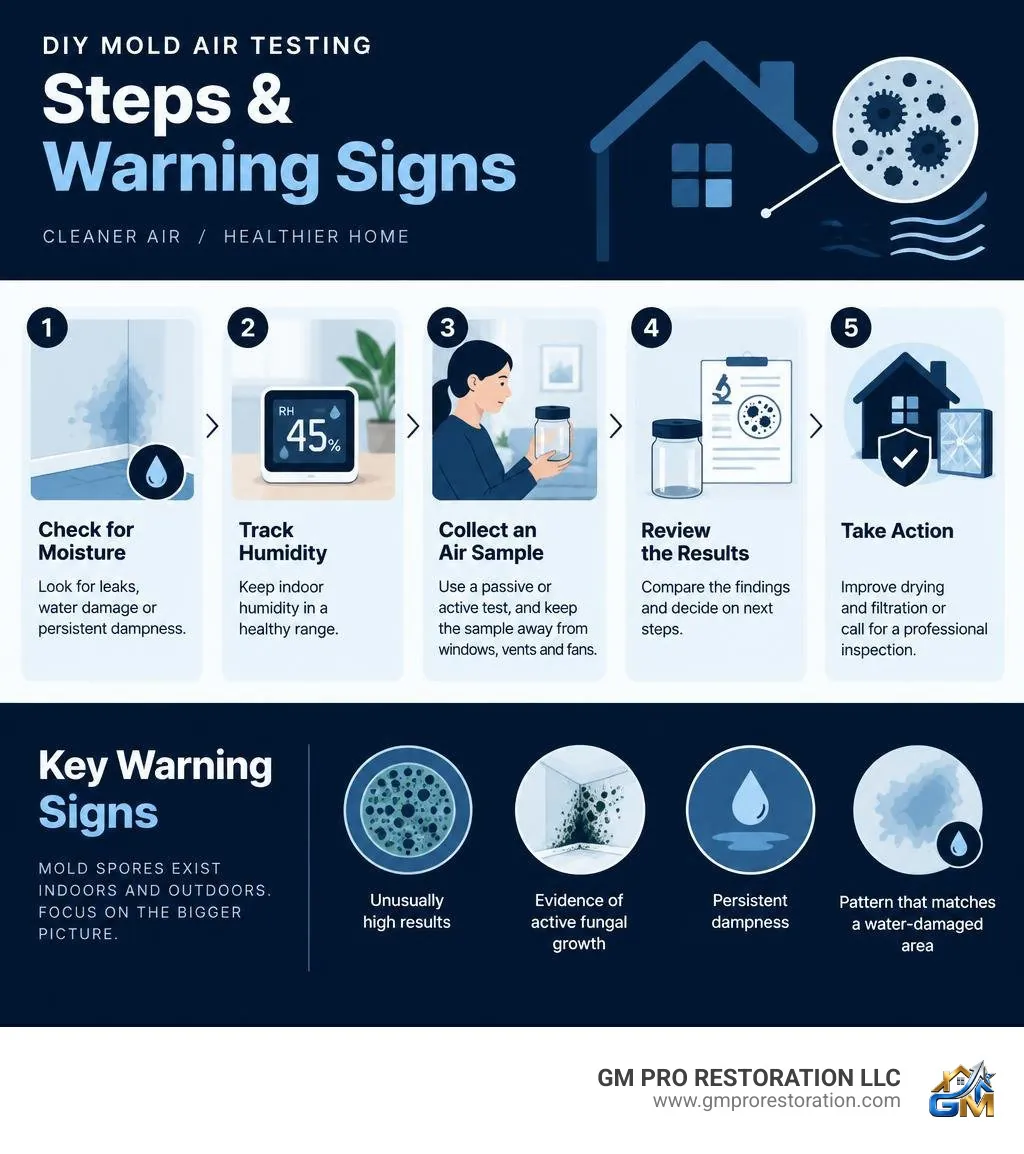
To perform an air quality check for mold, start by looking for moisture problems, tracking indoor humidity, and collecting an air sample in the room where you notice musty odors, water damage, or symptoms that improve when you leave home. Keep the sample away from open windows, supply vents, and fans. Then use the results to decide whether better drying and filtration are enough or whether the problem needs a professional inspection.
DIY testing can be useful after a leak, flood, or repeated condensation issue. A passive air test collects particles that settle naturally over several days, while an active pump test draws a measured amount of air through a collection device. Both can find airborne spores, but no home test can identify the moisture source or prove a home is "mold-free."
For Charlotte homeowners, the most important result is not simply finding a spore. Mold spores exist indoors and outdoors. The warning signs are unusually high results, evidence of active fungal growth, persistent dampness, or a pattern that matches a water-damaged area.
This guide explains when it makes sense to test the air yourself, how to avoid misleading results, and when to call for help before mold damage spreads.
Understanding Airborne Spores and Indoor Pollutants
Indoor air contains a complex mix of gaseous and solid components. When we investigate indoor environments, we track particulate matter (PM), particularly microscopic particles classified by aerodynamic diameter as PM10 (coarse particles up to 10 micrometers) and PM2.5 (fine particles 2.5 micrometers or smaller).
Mold spores typically range from 2 to 100 micrometers, placing many common species and broken fungal fragments squarely within the PM2.5 and PM10 categories. Alongside biological matter like pollen, pet dander, and insect fragments, fine particles can remain suspended in the air for hours.
Outdoor air quality is widely tracked using the Air Quality Index (AQI), a standardized scale established by environmental agencies to report pollutant levels and health concerns. Public monitoring networks, such as the EPA's AirNow system, aggregate real-time data on criteria pollutants from regional stations:
- 0 to 50 (Good / Green): Air quality is satisfactory; little to no risk.
- 51 to 100 (Moderate / Yellow): Acceptable quality; some pollutants may moderately affect unusually sensitive individuals.
- 101 to 150 (Unhealthy for Sensitive Groups / Orange): General public is less likely to be affected; individuals with lung disease, older adults, and children are at greater risk.
- 151 to 200 (Unhealthy / Red): Everyone may begin to experience health effects; sensitive groups experience more serious effects.
- 201 to 300 (Very Unhealthy / Purple): Health alert; widespread exposure risks.
- 301+ (Hazardous / Maroon): Emergency health warnings.
While outdoor AQI focuses on regional combustion byproducts, ground-level ozone, and outdoor dust, indoor air quality depends heavily on indoor sources, ventilation rates, and relative humidity.
Particulate Matter, Humidity, and Biological Contaminants
Relative humidity serves as the primary catalyst for biological amplification indoors. When indoor relative humidity climbs above 55% to 60%, conditions become favorable for dormant mold spores to germinate.
Modern digital monitors use sensors like the BME280 to measure ambient temperature, relative humidity, and barometric pressure, while optical laser counters like the PMS5003 measure PM1.0, PM2.5, and PM10. Temperature drops near exterior walls or uninsulated ductwork often cause localized humidity spikes and dew point condensation.
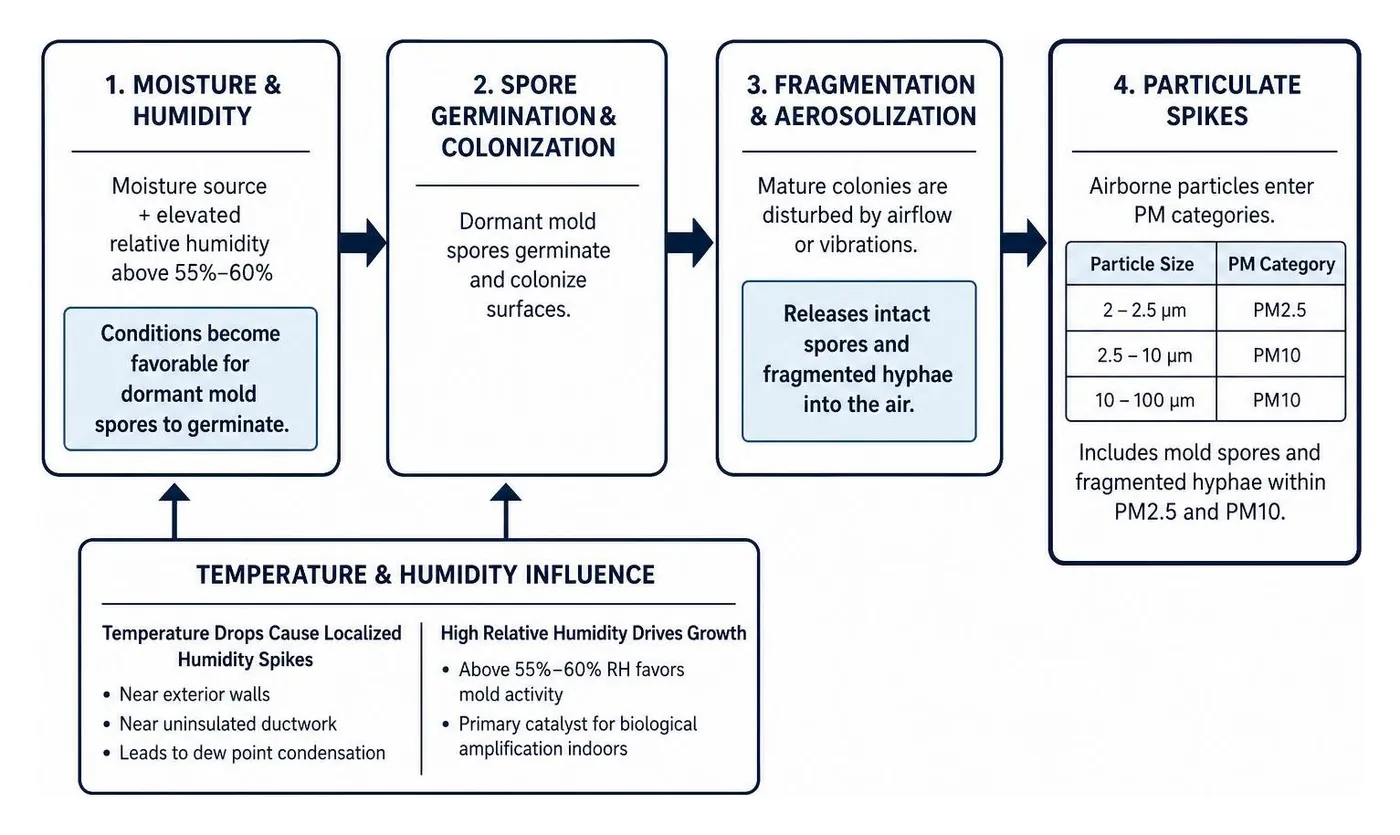
When mold colonies mature, airflow or physical vibrations disturb the growth, releasing both intact spores and fragmented hyphae into the air. These microscopic fragments easily circulate through residential HVAC systems, triggering allergy symptoms, sinus irritation, and asthma flare-ups.
EPA Standards and Criteria Air Pollutants
Under the Clean Air Act, the EPA establishes National Ambient Air Quality Standards (NAAQS) for six principal criteria pollutants: ground-level ozone, particulate matter (PM2.5 and PM10), carbon monoxide, sulfur dioxide, nitrogen dioxide, and lead (Pb).
Unlike biological contaminants like mold—which currently have no federal numerical thresholds due to varying individual health sensitivities—chemical pollutants have strictly regulated ambient limits:
- Lead (Pb): The legal limit under the NAAQS was set at 1.5 µg/m³ in 1978 and substantially tightened in the 2008 standard to 0.15 µg/m³ evaluated over a rolling 3-month average. Following subsequent review cycles (including the 2016 review and ongoing updates through 2026), the 0.15 µg/m³ threshold remains the benchmark for outdoor ambient safety. Lead air emissions stem primarily from industrial smelters, aviation fuel in piston-engine aircraft, and contaminated dust from older lead-based paints during structural renovation.
- Health Impacts: Inhaled lead crosses directly into the bloodstream, posing severe neurotoxic risks, developmental delays, and behavioral issues in young children, as well as hypertension and kidney impairment in adults.
- Environmental Interactions: Particulate lead and mold spores behave similarly in indoor air currents. Both settle on horizontal surfaces during calm air conditions and become resuspended when disturbed by foot traffic or vacuuming without HEPA filtration.
Active vs. Passive Sampling: Choosing the Right Test Method
Selecting an appropriate method depends on whether you want a quick volumetric snapshot or a long-term assessment of what naturally settles into your breathing zone.
| Feature | Passive Air Sampling | Active Air Sampling |
|---|---|---|
| Mechanism | Natural gravity settling onto collection media | Calibrated pump pulling air through a spore trap |
| Airflow Manipulation | None; measures ambient settling | Draws 15 L/min for a set duration (e.g., 5–10 mins) |
| Duration | Multi-day exposure (typically ~4 days indoors) | Short interval (5 to 10 minutes per location) |
| Species Identification | Identifies culturable and non-culturable spores | Captures all airborne particles on an adhesive slide |
| Best Used For | Continuous baseline exposure tracking | Comparative outdoor vs. indoor volumetric counts |
| Equipment Cost | Low to moderate DIY investment | Higher equipment cost; requires calibrated pump |
Passive Gravity Settling vs. Active Pump Testing
Active air sampling uses a calibrated vacuum pump to draw a precise volume of air (such as 15 liters per minute for 5 to 10 minutes) through a cassette containing an adhesive glass slide. The laboratory analyzes the slide under a microscope to calculate total spore concentration per cubic meter (spores/m³). Active sampling gives an immediate snapshot, but it can miss intermittent spore releases if the colony is undisturbed during that short window.
Passive air sampling relies on natural settling over an extended period. Because indoor air circulation is calmer and spore concentrations can fluctuate throughout the day, passive collection typically requires an exposure window of approximately 4 days. This allows the sample to capture what you breathe over time without artificial air disturbance. Laboratory microscopic analysis then identifies individual mold spores, fungal structures (such as hyphae), plant debris, textile fibers, and animal fragments, classifying overall presence into qualitative categories (high, medium, or low).
Citizen Science and DIY Environmental Sensors
Low-cost microcontrollers and sensor breakout boards have expanded access to citizen science environmental monitoring. Hardware setups like the Raspberry Pi paired with an Enviro+ board allow homeowners to log temperature, pressure, relative humidity, light levels, reducing/oxidizing gases, and particulate concentrations using laser-scattering PM sensors (such as the PMS5003).
These setups can continuously stream data to open-source environmental databases like the Sensor.Community platform. However, DIY sensors have specific limitations:
- Lack of Biological Specificity: Optical particulate sensors cannot distinguish a Stachybotrys spore from an inert drywall dust particle or cooking aerosol; they only measure particle size and count.
- Baseline Drift and Calibration: Low-cost gas and PM sensors can drift over time due to temperature fluctuations and high humidity, requiring baseline recalibration.
- Data Interpretation: Citizen science data is valuable for identifying trends—such as sudden PM2.5 spikes paired with 70%+ relative humidity—but physical microscopic or culture analysis is still required to confirm the presence of mold.
Running a DIY Test at Home
When testing your home's air, following a clean, methodical process prevents sample contamination and ensures reliable data for laboratory analysis.
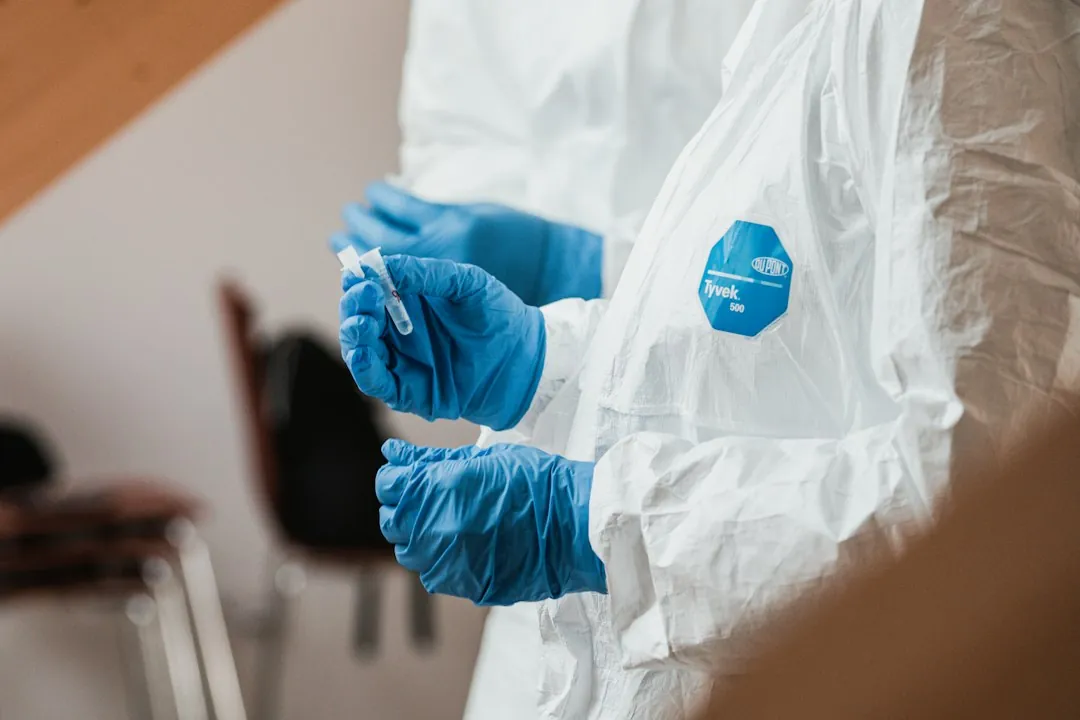
Essential Tools and Safety Gear
- Personal Protective Equipment (PPE): N95 or P100 particulate respirator to prevent inhaling concentrated spores, nitrile gloves, and safety goggles.
- Sampling Media: Passive gravity settling cassettes or an active pump with single-use collection cassettes.
- Diagnostics: Digital thermo-hygrometer to record temperature and relative humidity at each test location.
- Documentation: Chain-of-custody tracking forms, permanent marker, and sealable sample bags.
The Sampling Sequence, Step by Step
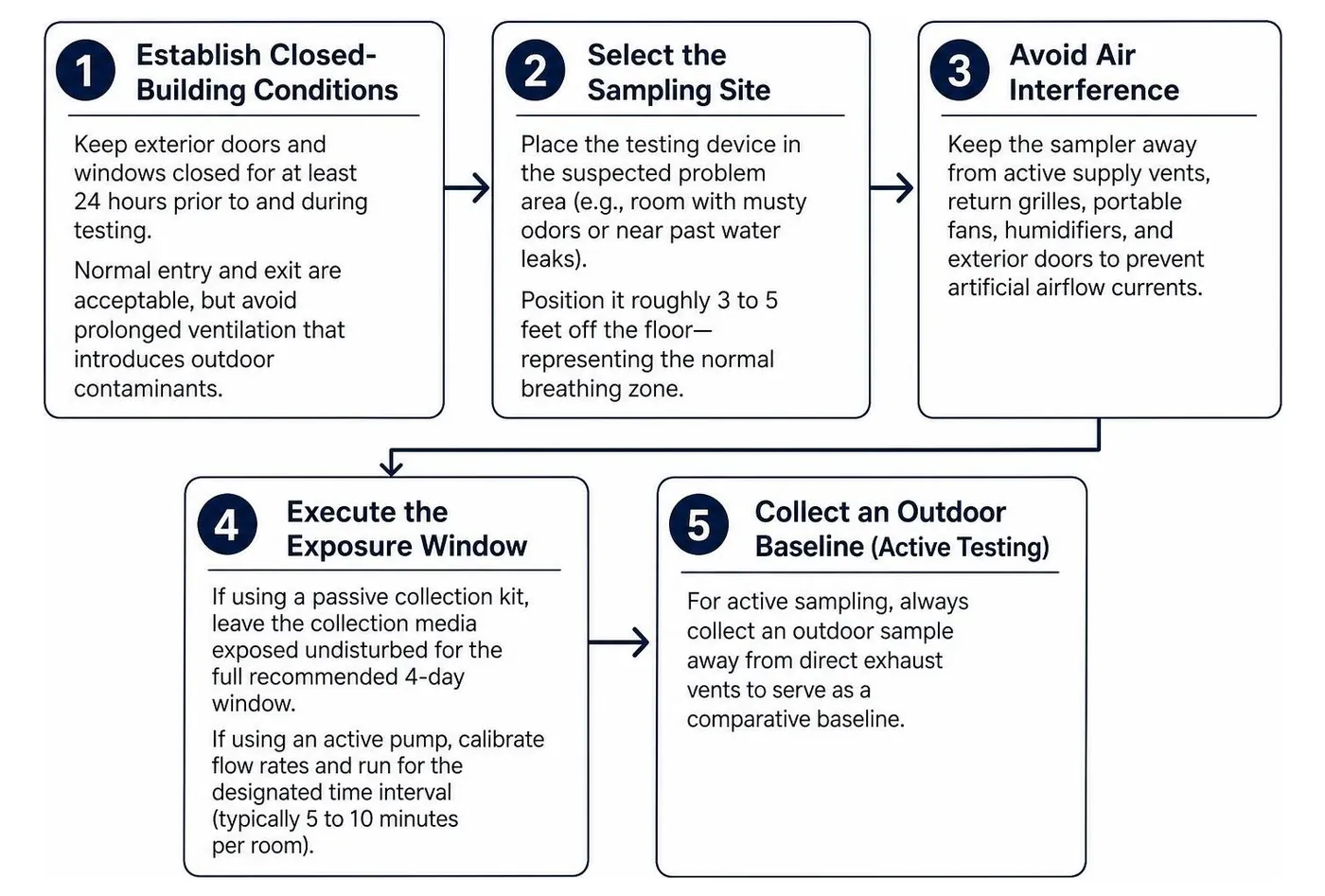
- Establish Closed-Building Conditions: Keep exterior doors and windows closed for at least 24 hours prior to and during testing. Normal entry and exit are acceptable, but avoid prolonged ventilation that introduces outdoor contaminants.
- Select the Sampling Site: Place the testing device in the suspected problem area (e.g., room with musty odors or near past water leaks). Position it roughly 3 to 5 feet off the floor—representing the normal breathing zone.
- Avoid Air Interference: Keep the sampler away from active supply vents, return grilles, portable fans, humidifiers, and exterior doors to prevent artificial airflow currents.
- Execute the Exposure Window: If using a passive collection kit, leave the collection media exposed undisturbed for the full recommended 4-day window. If using an active pump, calibrate flow rates and run for the designated time interval (typically 5 to 10 minutes per room).
- Collect an Outdoor Baseline (Active Testing): For active sampling, always collect an outdoor sample away from direct exhaust vents to serve as a comparative baseline.
- Package and Ship: Seal the sample media immediately after exposure, complete the chain-of-custody documentation with exact exposure times, and ship it to the laboratory promptly.
Recommended Actions for Elevated Indoor Spore Levels
If laboratory analysis or monitoring devices reveal elevated spore counts or prolonged humidity spikes, take immediate steps to stabilize the space:
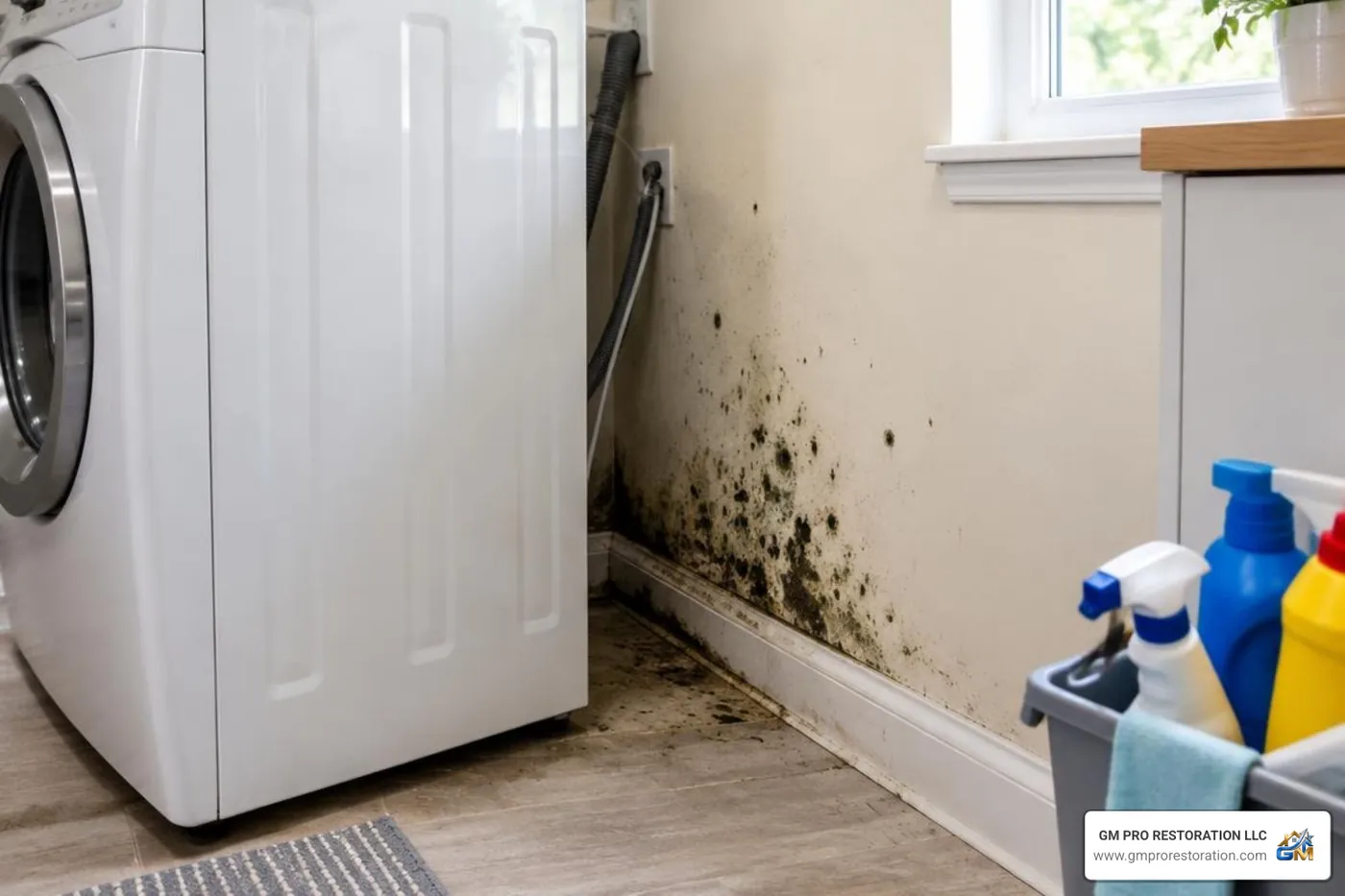
- Control the Moisture Source: Repair plumbing leaks, clean backed-up condensate lines, or seal building envelope failures immediately. Mold cannot grow without moisture.
- Dehumidify: Run commercial or residential dehumidifiers to drop indoor relative humidity below 50%.
- HEPA Air Filtration: Set up portable air cleaners equipped with true HEPA filters (rated to capture 99.97% of particles down to 0.3 microns) in affected living spaces to pull circulating spores from the air.
- Isolate the Area: If visible growth exceeds 10 square feet, close off the room's HVAC dampers and hang poly sheeting across doorways to prevent cross-contaminating clean rooms while planning remediation.
Interpreting Test Results and Environmental Factors
Reading a mold lab report requires understanding comparative ecology rather than looking for a simple "pass/fail" number. Outdoor air always contains background levels of common molds like Cladosporium, Alternaria, and Penicillium/Aspergillus types.
A healthy indoor environment should reflect outdoor spore compositions at lower concentrations. Red flags on a lab report include:
- Indoor Spore Counts Exceeding Outdoor Baselines: If indoor Penicillium/Aspergillus counts are significantly higher than the outdoor control sample, an indoor source is actively shedding spores.
- Presence of Indicator Molds: Finding hydrophilic (water-loving) molds such as Stachybotrys chartarum, Chaetomium, or Memnoniella indoors—even in low numbers—signals chronic water damage, as these heavier spores do not easily drift indoors under normal conditions.
- Elevated Qualitative Density: On passive reports, a "High" classification combined with fungal debris indicates a heavy indoor bioburden.
Identifying Fungal Structures and Active Colonization
A key benefit of comprehensive laboratory microscopic analysis is the ability to distinguish between dormant, passing spores and active fungal growth.
When mold actively colonizes building materials like drywall, baseboards, or subflooring, it develops vegetative structures called hyphae, along with conidiophores (spore-bearing structures).
If a laboratory identifies intact fungal structures, hyphal fragments, and clusters of immature spores on an air sample, it indicates active reproduction in the immediate vicinity rather than settled dust blown in through an open window.
When DIY Is Not Enough
DIY testing provides helpful initial data, but certain situations call for professional diagnostic equipment:
- Visible Mold Growth Exceeding 10 Square Feet: The EPA recommends professional remediation protocols for large affected areas to ensure proper negative-pressure containment.
- Persistent Musty Odors with Clean DIY Tests: Mold often grows inside wall cavities, ceiling plenums, or subfloor systems where passive settling plates cannot capture it.
- Health Symptoms in Sensitive Individuals: If occupants experience persistent respiratory issues, chronic headaches, or sinus infections that improve when away from home, comprehensive investigations are warranted.
- Post-Remediation Verification (Clearance Testing): After extensive remediation, clearance testing requires calibrated active air pumps and strict chain-of-custody documentation to confirm the area is safe for re-occupancy.
For properties in the Charlotte metropolitan area requiring formal diagnostic evaluations, GM PRO RESTORATION LLC provides certified assessment protocols. Homeowners can schedule indoor air quality testing in Charlotte, NC to pinpoint hidden moisture sources, assess structural colonization, and build effective remediation plans.
Frequently Asked Questions About Mold and Air Quality Testing
How do DIY mold test kits compare to professional lab tests?
DIY kits generally provide qualitative or passive settling data, showing what lands on a collection surface over time. Professional assessments utilize calibrated active air pumps, thermal imaging cameras, invasive moisture meters, and strict outdoor baseline comparisons to locate hidden moisture problems behind building materials.
What AQI levels indicate a serious indoor mold problem?
The EPA's outdoor AQI scale does not directly track mold. However, if an indoor laser particle monitor records PM2.5 levels consistently above 35 µg/m³ (AQI > 100) without cooking, smoking, or outdoor wildfire smoke present, elevated airborne biological particles or mold fragments could be contributing to the load.
Can humidity sensors and particulate monitors detect mold growth?
Sensors cannot identify mold species, but they detect the conditions that cause it. Maintaining relative humidity above 60% alongside continuous PM2.5 or PM10 elevations indicates a high risk for fungal colonization, serving as an early indicator to inspect for hidden water leaks.
Conclusion
Conducting a home air check helps you track indoor conditions, verify suspicions after plumbing leaks, and identify when biological contaminants are rising. By measuring indoor relative humidity, watching for fine particulate spikes, and using passive or active sampling, you can make informed decisions about your home's air quality.
Testing is only one part of the equation. Finding and fixing the moisture source is what permanently resolves mold issues. When DIY tests indicate high spore levels, or when musty odors persist behind walls and under floors, our team at GM PRO RESTORATION LLC is ready to provide honest, root-cause assessments and complete remediation services to keep your indoor air safe.